Sone Church

Sone Church

Sightseeing
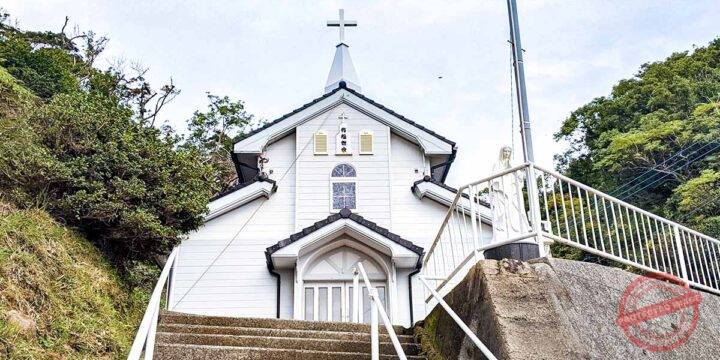
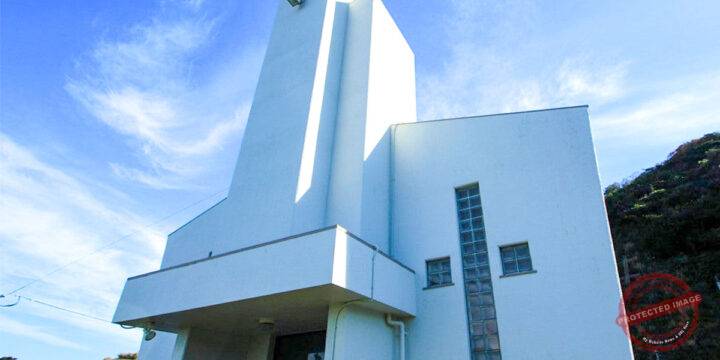
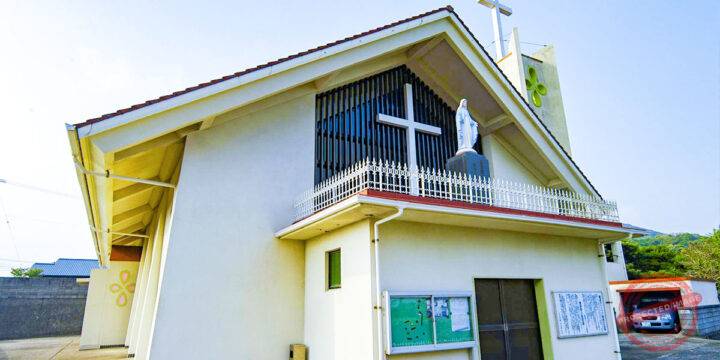
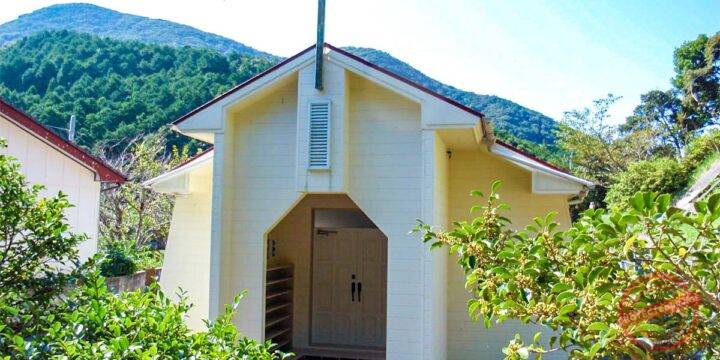
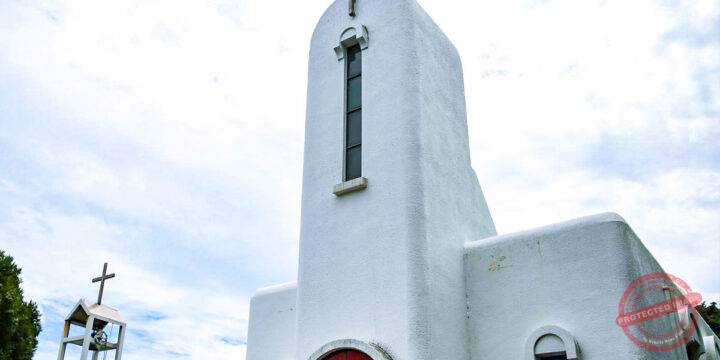
Sone Church is a panoramic sanctuary in Shinkamigoto, uniquely positioned on a narrow ridge where you can witness both the sunrise over the Goto-nada Sea and the sunset over the East China Sea. Sone Catholic Church occupies one of the most geographically spectacular sites in the archipelago. Situated on a high, slender strip of land, the church offers a dual vista: to the east lies the tranquil Arikawa Bay and the Goto-nada Sea, while to the west, the horizon opens up to the vast East China Sea. This unique orientation allows visitors to experience the rare phenomenon of watching the sun rise over one sea and set over another from the exact same location. The church also holds a significant place in architectural history as the site where a young…
Read More
Inoura Church

Inoura Church

Sightseeing
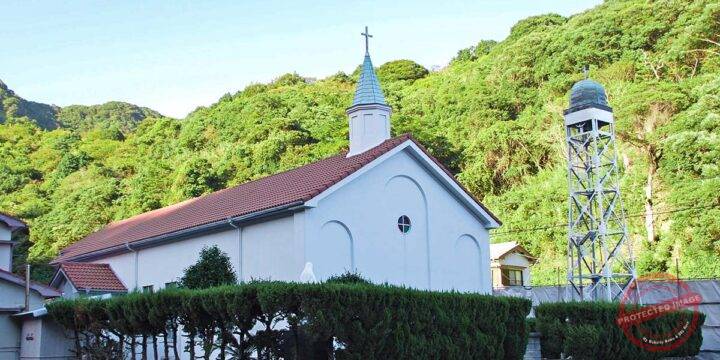
A secluded sanctuary in Shinkamigoto, hidden deep within a coastal inlet and serving as a tranquil monument to the faith of local salt-making families. Inoura Catholic Church is one of the most hidden spiritual sites in the Goto Islands, purposefully situated deep inside a narrow inlet that remains completely invisible to those passing on the open sea. The village of Inoura has a long history of salt production, once housing a "salt pot" that was central to the local economy until the industry was abandoned during the Meiji Restoration. In the mid-Meiji period, Catholic families began to settle in this sheltered location, seeking both livelihood and peace. For decades, the devoted parishioners of Inoura demonstrated remarkable endurance by making regular pilgrimages to Oso Church using rowboats. It wasn't until 1947…
Read More
Takaitabi Church

Takaitabi Church

Sightseeing
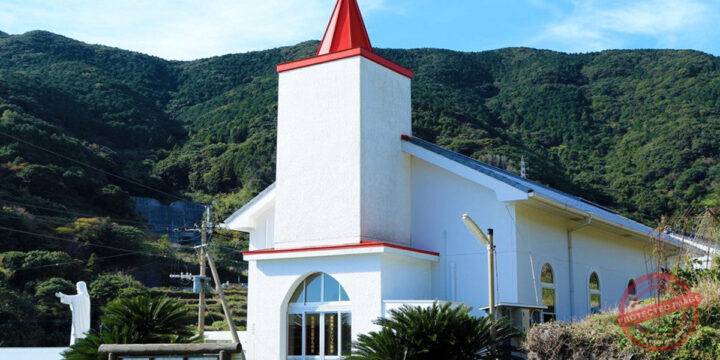
A picturesque coastal sanctuary in Shinkamigoto, known for its vibrant red roof and its legacy as a site of a historic mass baptism. Takaitabi Catholic Church is one of the most visually striking churches in the region, perched on a hill overlooking the emerald waters and white sands of Takaitabi Beach. The community was founded by families from the Sotome district who settled in this remote coastal area to preserve their religious traditions. A defining moment in the parish's history occurred in 1939, when a historic mass baptism reportedly brought approximately 100 local residents into the Catholic faith at once. The current cathedral was completed in 1961 and is celebrated for its classic island aesthetic. Its bright white walls and vivid red roof make it a prominent landmark for those…
Read More
Yoneyama Church

Yoneyama Church

Sightseeing
Yoneyama Church is the northernmost sanctuary of Shinkamigoto, standing as a quiet beacon of faith for the descendants of Sotome migrants at the edge of the island.   Yoneyama Catholic Church occupies a dramatic and isolated position at the northernmost tip of the Shinkamigoto archipelago. Like many of the parishes in this region, the community was founded by families who fled the Sotome district of the Omura Domain, seeking the safety of the remote northern cliffs to practice their faith in secret. This geographical isolation, once a means of survival, now provides the church with one of the most ruggedly beautiful settings in Nagasaki Prefecture.The original wooden cathedral was constructed in 1903, shortly after religious freedom was fully realized in the region. However, the harsh coastal winds and salty air…
Read More
Tainoura Church

Tainoura Church

Sightseeing
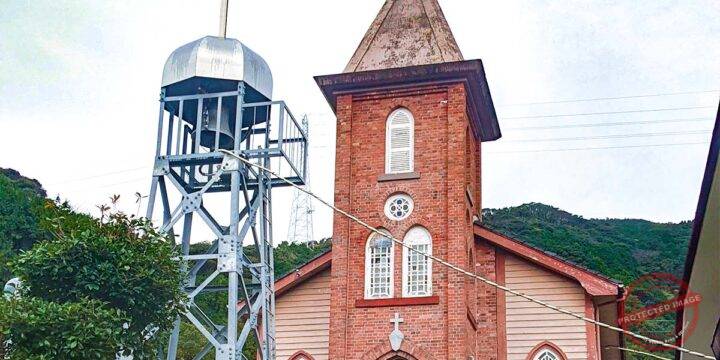
A site of profound historical layers in Shinkamigoto, featuring an old brick tower built with artifacts from the atomic-bombed Urakami Cathedral.  Tainoura Catholic Church occupies a pivotal place in the religious geography of the Goto Islands. Established by migrants from the Shitsu district of Sotome, the community endured the "Goto Kuzure" persecution before becoming the primary pastoral base for all of Kamigoto following the arrival of Father Brel in 1880. The site consists of two distinct structures: the historic old church situated on the hillside and the modern cathedral built below it in 1979. The Old Tainoura Church (built in 1903) carries the scars and symbols of 20th-century history. Near the end of World War II, the building was requisitioned by the Imperial Japanese Navy. Following the war, the return…
Read More
Wakamatsu Oura Church

Wakamatsu Oura Church

Sightseeing
A humble, residential-style sanctuary on Wakamatsu Island, home to a unique "Japanese-style" Virgin Mary statue crafted by local parishioners.   Wakamatsu Oura Church is a small, intimate place of worship that embodies the "hidden" nature of the Goto Islands' faith. Located in the Oura district of Wakamatsu Island, this church is tucked away within a residential neighborhood. From the main road, it is remarkably easy to miss, as its simple architecture blends seamlessly with the surrounding local homes, reflecting a time when Christian practice was deeply integrated into private, domestic life.The church's most defining feature is the statue of the Virgin Mary located above the altar. Unlike the idealized marble statues imported from Europe, this figure was hand-crafted by the local believers of the Oura community. The statue is a…
Read More
Hamakushi Church

Hamakushi Church

Sightseeing
A serene white-walled sanctuary in Shinkamigoto, founded by Sotome migrants and rebuilt in 1966 with a legendary "Our Lady of Hope" watching over the harbor.   Hamakushi Catholic Church is a striking landmark on the southern coast of Shinkamigoto, known for its brilliant white walls that contrast sharply with the deep blue of the surrounding sea. The community was established by Hidden Christians who made the perilous journey from the Sotome district of the mainland, seeking a remote refuge where they could maintain their faith in isolation.The village's prosperity and its religious life were historically tied to the sea. The first formal church was constructed in 1899, funded significantly by the profits from the local whaling industry, which was then a primary source of livelihood for the islanders. As the…
Read More
Matenoura Church

Matenoura Church

Sightseeing
A contemporary sanctuary in Shinkamigoto, tracing its lineage from a humble village "Orasho Hall" to a vibrant, independent parish rebuilt in 2010.   Matenoura Catholic Church stands as a symbol of the steady growth and modernization of the Christian communities in central Kamigoto. The village’s spiritual roots are centered around the "Orasho Hall" (Prayer Hall), a modest site located near the entrance of the village from the national highway. While its exact origins remain a mystery, this hall served as the community's primary sanctuary during the centuries of hidden practice and the early years of religious freedom.As the congregation outgrew its original meeting spaces, a dedicated church was constructed at the current hillside location in 1956. This milestone was followed by the community achieving its independence as the Matenoura Parish…
Read More
Aokata Church

Aokata Church

Sightseeing
A modern spiritual landmark in the heart of Kamigoto, representing the contemporary growth and central revitalization of the local Catholic community. Aokata Catholic Church serves as the primary religious hub for the Aokata district, which evolved into the administrative and commercial center of the Kamigoto region during the mid-20th century. Between the 1960s and 1970s, a significant demographic shift occurred as parishioners from smaller, outlying islands and remote coastal villages relocated to Aokata for better access to employment and services. To accommodate this rapidly expanding congregation, a substantial cathedral was first constructed in 1975. As the community continued to flourish into the new millennium, the facility was completely rebuilt in 2000. Unlike the historic brick and wood churches of the Meiji era, the current Aokata Church features a bold, contemporary…
Read More
Fukumi Church

Fukumi Church

Sightseeing
A unique red-brick sanctuary in Shinkamigoto, distinguished by its rare Japanese-style coffered ceiling and a history of deep communal resilience. Fukumi Catholic Church represents the homecoming and steadfastness of the local Christian community. The congregation traces its roots back to 1799, when families from Kurosaki in the Sotome region migrated here to escape growing pressure. Although they fled once more during the "Goto Kuzure" (the Great Persecution) of the late 1860s, they returned as soon as the ban was lifted to find their homes in ruins. Through immense effort, they reclaimed the land and built their first church in 1882. After that structure was lost to a powerful windstorm, the current brick edifice was completed in 1913. The church is an architectural rarity, blending Western masonry with traditional Japanese aesthetic…
Read More