Former Gorin Church

Former Gorin Church

Sightseeing
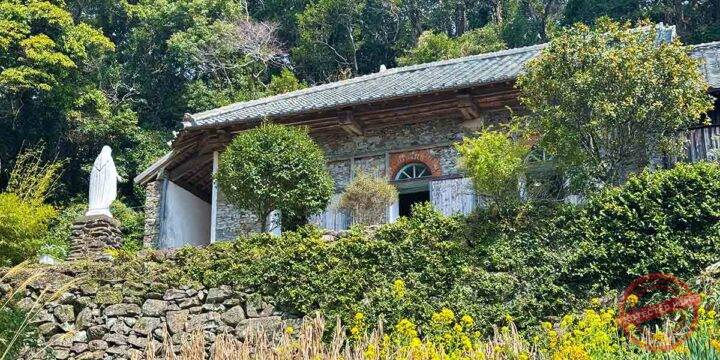
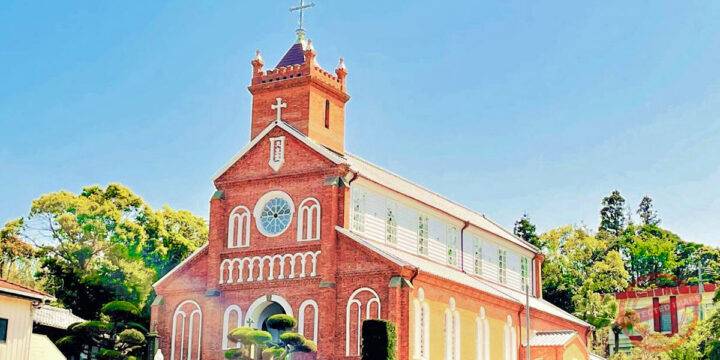
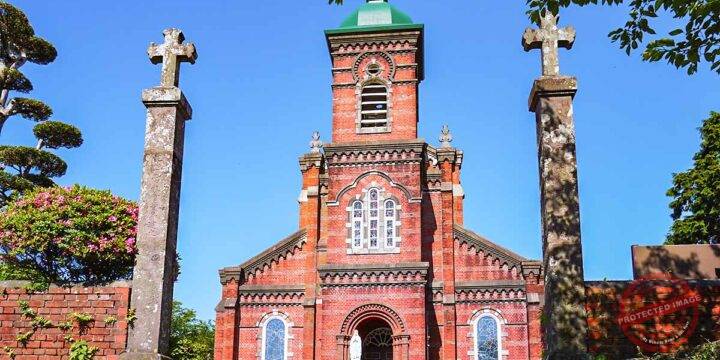
A rare early Meiji-era wooden sanctuary and UNESCO World Heritage site, preserved on the isolated shores of Hisaka Island.   Former Gorin Church stands as one of the most significant examples of early Christian architecture in Japan, representing a pivotal transition from hidden devotion to public worship. Originally constructed in 1881, the building served as the primary place of worship for the small community on Hisaka Island. In 1931, when a new church was built nearby, the original structure was slated for demolition. However, through the intervention and advocacy of local Buddhist residents who recognized its historical value, the sanctuary was spared and relocated to its current coastal site.The structure is a masterwork of hybrid architecture, blending traditional Japanese wooden construction with Western ecclesiastical forms. Its exterior maintains the appearance…
Read More
Mizunoura Church

Mizunoura Church

Sightseeing
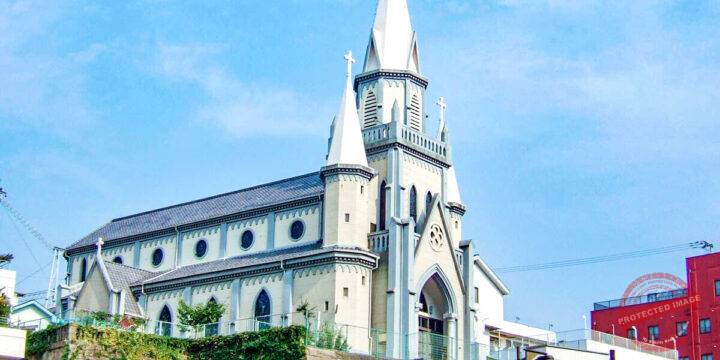
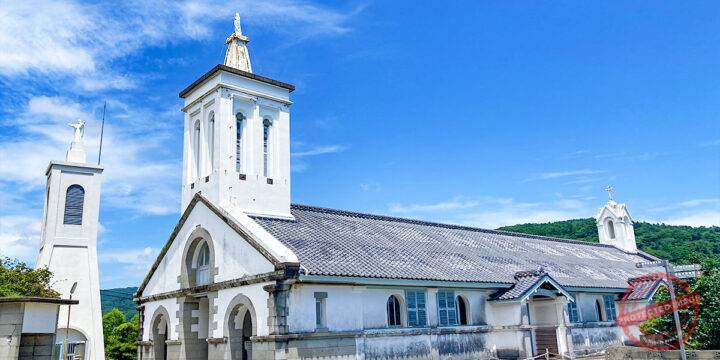
Mizunoura Church is Japan’s largest wooden church, a white-clad architectural masterpiece in Goto reflecting the resilience of the 1797 settler community.   Mizunoura Catholic Church stands as an imposing yet graceful landmark on the coast of the Goto Islands. While its history began with the arrival of hidden Christian settlers in 1797, the current structure was completed in 1938. It represents a significant achievement for master builder Yosuke Tetsukawa, who designed it as the largest wooden church in Japan. The edifice is celebrated for its striking white exterior and a steeple that serves as a focal point against the island's maritime horizon.The architecture is a sophisticated hybrid, seamlessly integrating Romanesque and Gothic motifs with traditional Japanese wooden construction. This blend is most evident in the interior's vaulted ceilings and the…
Read More
Kuroshima Cathedral

Kuroshima Cathedral

Sightseeing
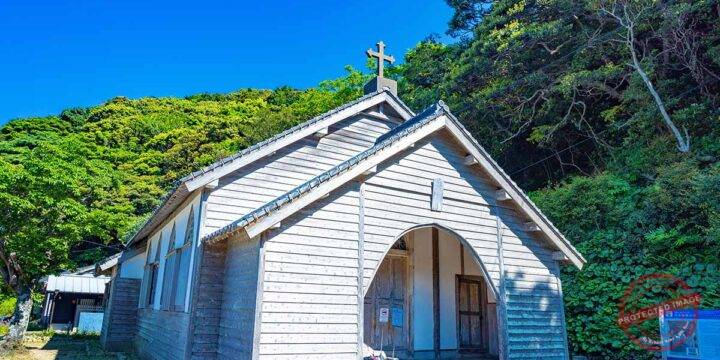
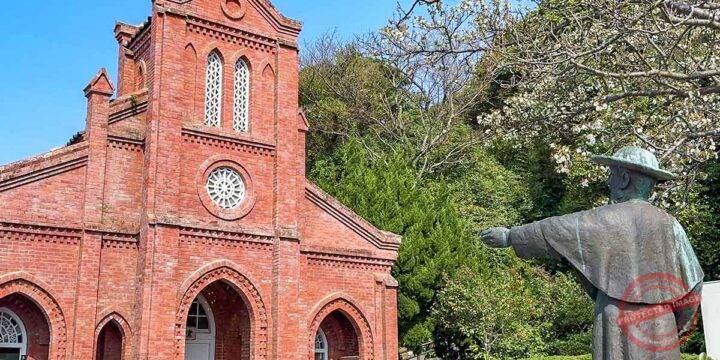
Kuroshima Cathedral is a UNESCO World Heritage Romanesque masterpiece, meticulously crafted from 400,000 bricks by the island's resilient Catholic community.   Kuroshima Catholic Church serves as a profound monument to the collective spirit of a community that once sought sanctuary on this remote island. The congregation consists largely of descendants of Hidden Christians who migrated from Ikitsuki and Sotome during the era of prohibition. In 1902, the current cathedral was realized under the direction of Father Marmand. The project was a massive communal undertaking. Nearly every believer on the island participated in the construction, contributing labor and resources to establish a permanent spiritual home.Architecturally, the cathedral is a triumph of Romanesque design, renowned for its flawless symmetry and imposing scale. The structure is composed of approximately 400,000 locally fired bricks,…
Read More
Dozaki Church

Dozaki Church

Sightseeing
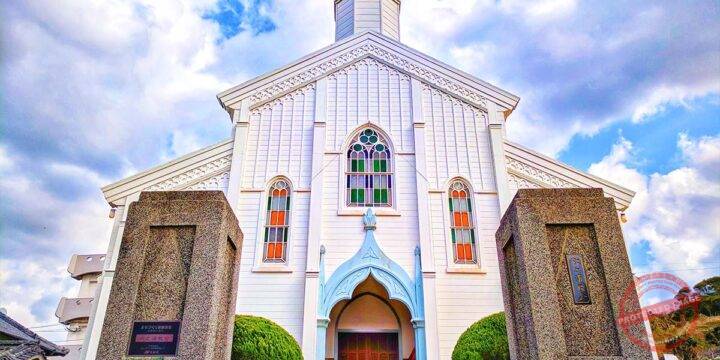
Dozaki Church is the first brick cathedral of the Goto Islands, now serving as a museum that preserves the legacy of the region's Christian heritage.   Dozaki Church stands as a definitive symbol of the restoration of faith in the Goto Islands. Following the end of the national ban on Christianity, French missionaries Fathers Freneau and Marmand were dispatched to the archipelago to revitalize the community. In 1880, Father Marmand established the islands' first wooden house of worship, a modest precursor to the architectural landmark that stands today. The current structure, a red-brick Gothic-style edifice, was completed in 1908 under the direction of Father Pelu.The architecture is characterized by its sophisticated use of materials, some of which were imported from Italy to ensure the cathedral’s structural and aesthetic integrity. While…
Read More
Egami Cathedral

Egami Cathedral

Sightseeing
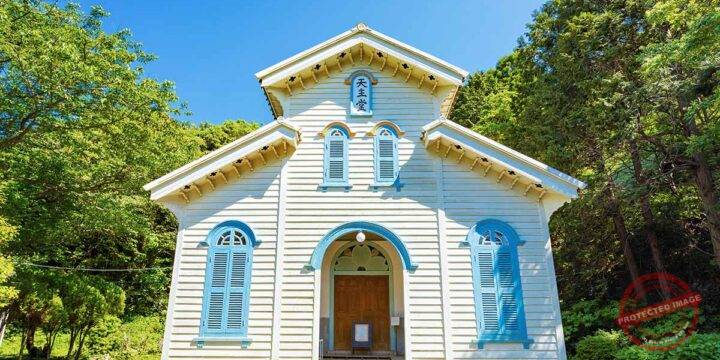
A wooden architectural treasure and UNESCO World Heritage site, built by the Naru Island fishing community in 1918.   Egami Catholic Church serves as a rare and sophisticated example of early 20th-century wooden ecclesiastical architecture. Located on Naru Island within the Goto archipelago, the church was established in 1918 by a community of approximately fifty parishioner families. The construction was funded primarily through the local seine fishing industry, specifically the harvest of silver stripe herring, reflecting a profound communal sacrifice. Designed by the master builder Yosuke Tetsukawa, the structure is celebrated for its cream-colored wooden exterior and light blue window frames, which provide a serene visual harmony with the surrounding forest.The interior of the cathedral is noted for its refined acoustic and aesthetic details, specifically its bat-wing vaulted ceilings designed…
Read More
Shitsu Church

Shitsu Church

Sightseeing
A UNESCO World Heritage site in Nagasaki, built in 1882 by Father de Rotz as a resilient sanctuary for the coastal community of Sotome.   Shitsu Catholic Church stands as an enduring monument to the altruism of Father Marc Marie de Rotz, a French missionary who arrived in the Sotome district in 1879. Situated on a windswept hillside plateau overlooking the rugged Nagasaki coastline, the church was completed in 1882 using Father de Rotz’s personal funds. Its architecture is a study in practical resilience, designed to withstand the region's frequent and powerful typhoons through a low-profile silhouette and sturdy stone construction.The structure is characterized by its unique "De Rotz tiles", and whitewashed brick walls that anchor the building to its dramatic natural setting. The interior features a rare, vaulted ceiling…
Read More
Tabira Cathedral

Tabira Cathedral

Sightseeing
A red-brick Romanesque masterpiece and the final major work of master builder Yosuke Tetsukawa, symbolizing deep-rooted communal faith.   Tabira Cathedral stands as a definitive achievement in Japanese ecclesiastical architecture, representing the final brick-built masterpiece by the renowned master craftsman Yosuke Tetsukawa. The origins of the parish date back to 1886, established by families who migrated from the islands of Kuroshima and the coastal region of Sotome. These settlers, supported by the dedicated efforts of French missionaries Fathers Laguet and de Rotz, sought to establish a permanent center for their community. The project culminated in 1918 with the completion of the current structure, a feat made possible through the leadership and financial contributions of Father Tokichi Nakata.The cathedral is a sophisticated example of Romanesque design, distinguished by its intricate brickwork…
Read More
Hirado Xavier Memorial Church

Hirado Xavier Memorial Church

Sightseeing
A striking Gothic landmark in Hirado, celebrating the legacy of St. Francis Xavier and the region's resilient faith.   The Hirado Xavier Memorial Church stands as a sophisticated example of early 20th-century Gothic architecture, characterized by its slender spires and a distinctive pale-green exterior that contrasts elegantly with the surrounding Japanese landscape. Constructed in 1931, the church was originally dedicated to St. Michael the Archangel. Its establishment marked a period of architectural and cultural revival for the Hirado community, following the restoration of religious freedom in the late 19th century.The edifice gained its current designation in 1971 when a statue of St. Francis Xavier was installed on the grounds to commemorate his missionary efforts in the region during the 16th century. This addition bridged the gap between the town’s medieval…
Read More
The Site of the Martyrs of the Twenty Six Martyrs of Japan (Nishizaka Park)

The Site of the Martyrs of the Twenty Six Martyrs of Japan (Nishizaka Park)

Sightseeing
Nishizaka Park is a dignified memorial site in Nagasaki, commemorating the 26 Martyrs of Japan and serving as an international symbol of religious resilience.   Nishizaka Park occupies a somber and significant place in Japan’s heritage, marking the site where twenty-six individuals were executed on February 5, 1597. The location was reportedly selected at the request of the martyrs themselves, who saw in the hill’s topography a resemblance to Golgotha. This event initiated a period of profound trial for the Catholic community in Japan, and the hill remained a site of recorded martyrdom for many years following the initial executions.The site’s transition from a place of tragedy to one of international cultural significance was formalized in 1950 when Pope Pius XII designated Nishizaka as an official site of pilgrimage. Its…
Read More
Urakami Church

Urakami Church

Sightseeing
A Romanesque landmark in Nagasaki, rebuilt as a symbol of resilience following the 1945 atomic bombing and centuries of hidden faith.   Urakami Cathedral stands as a monumental tribute to the perseverance of a community that endured centuries of prohibition. Following the 1873 lifting of the ban on Christianity in Japan, the local faithful envisioned a grand place of worship, though the realization of this dream required decades of communal sacrifice and fundraising. Construction finally commenced in 1895 under the architectural direction of Father Frédéric Frenot. Upon its completion in 1914, the cathedral was celebrated as the largest brick Romanesque structure in the Orient, characterized by its twin belfries and imported French Angelus bells.The original edifice was tragically destroyed during the atomic bombing of 1945, a moment of profound loss…
Read More