Yamano Church

Yamano Church

Sightseeing
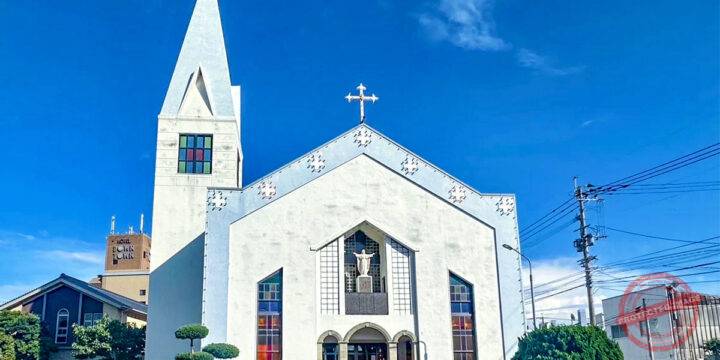
A secluded, historic chapel on the Hirado coast, featuring a rare "bat-shaped" ceiling and a legacy of faith spanning over two centuries of migration.   Yamano Catholic Church is a quiet, evocative sanctuary nestled in a tiny, tucked-away settlement in the northern Hirado region. Its story is one of deep movement and resilience. The community’s ancestors first fled the Sotome district in the early 1800s, stopping briefly in the Goto Islands before finally settling in the remote hills of Yamano to find safety for their faith. The parish's formal return to Catholicism was led by a local resident who traveled to Nagasaki in 1872 to be baptized and return as a spiritual leader. The current church, completed in 1924, is a humble wooden structure that holds a hidden architectural gem…
Read More
Hirado Sacred Sites and Villages (Nakaenoshima Island)

Hirado Sacred Sites and Villages (Nakaenoshima Island)

Sightseeing
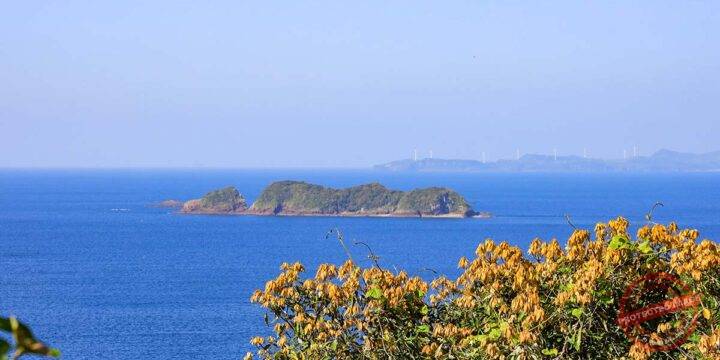
Nakaenoshima Island is a rugged, uninhabited World Heritage site off Hirado, revered by Hidden Christians as a sacred source of holy water and a site of early martyrdom.   Nakaenoshima Island is a small, uninhabited rocky outcrop that holds immense spiritual weight. Visible from the coasts of both Hirado and Ikitsuki, this island is a key component of the UNESCO World Heritage site, "Hidden Christian Sites in the Nagasaki Region". Its significance stems from its dual role as a place of ultimate sacrifice and a source of spiritual renewal during the centuries of religious prohibition. During the early 1600s, the Hirado Domain used this isolated island as an execution ground for Christians who refused to apostatize. Rather than deterring the faithful, the site became sanctified in the eyes of the…
Read More
Unzen Church

Unzen Church

Sightseeing
A powerful site of pilgrimage in the Unzen highlands, dedicated to the memory of Blessed Antonio Ishida and the martyrs who suffered for their faith amidst the "Unzen Hell" boiling springs.   Unzen Catholic Church stands as a solemn monument to the endurance of the human spirit in a landscape of dramatic natural beauty and historical tragedy. Unlike many of the churches on the Goto Islands which were built as centers for "Hidden" communities, this church was completed in 1981 to specifically honor the Martyrs of Unzen. The site is a place of deep prayer, situated near the volcanic springs where early Christians were subjected to extreme trials during the early 17th-century persecutions. The church is dedicated to Antonio Ishida, a Shimabara-born priest who fearlessly ministered to the faithful in…
Read More
Miiraku Church

Miiraku Church

Sightseeing
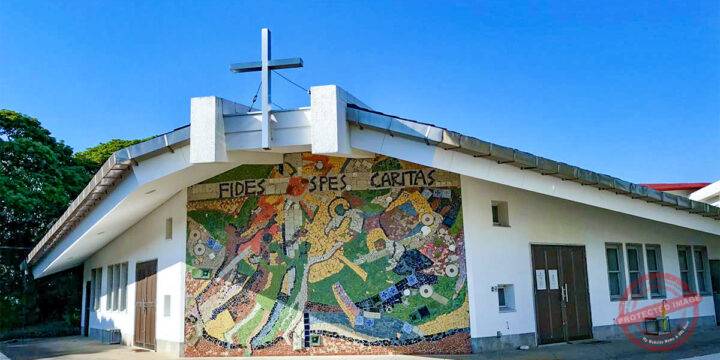
Miiraku Church is a vibrant sanctuary in the Goto Islands, renowned for its modern mosaics and stained glass depicting the region's enduring Catholic history.   Miiraku Church serves as the spiritual heart of one of the oldest Christian communities in the Goto archipelago. The site’s heritage dates back to 1797, when families fleeing persecution in the Omura domain sought sanctuary in this remote coastal region, maintaining their traditions in secrecy for nearly a century. While the first formal Gothic-style wooden church was consecrated in 1880, the current edifice was constructed in 1971 to preserve the parish’s continuity after the original structure succumbed to the elements and age. The architecture of the modern church is defined by its remarkable integration of light and local artistry. The facade features striking mosaic murals…
Read More
Former Nokubi Church

Former Nokubi Church

Sightseeing
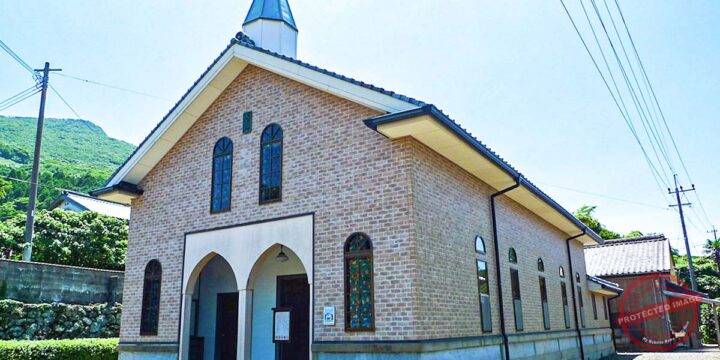
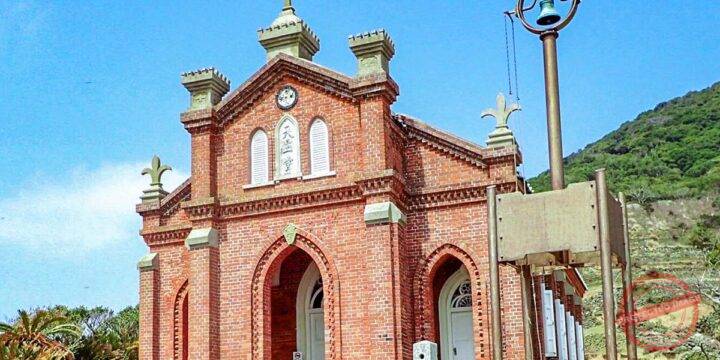
Former Nokubi Church is a UNESCO World Heritage site and Japan’s first brick church, standing as a lone monument to the faith of seventeen island families.   Former Nokubi Church occupies a solitary and striking position on a hilltop on Nozaki Island, overlooking a landscape that has largely returned to its natural state. The church's history is inextricably linked to the seventeen Hidden Christian households who settled this rugged terrain in the 19th century, enduring extreme isolation to maintain their spiritual identity. Completed in 1908, the structure represents a landmark achievement in Japanese architectural history: it was the first brick church designed and constructed by the master architect Yosuke Tetsukawa, marking the technological transition from traditional timber frames to permanent masonry. The cathedral is celebrated for its sophisticated proportions and…
Read More
Hoki Church

Hoki Church

Sightseeing
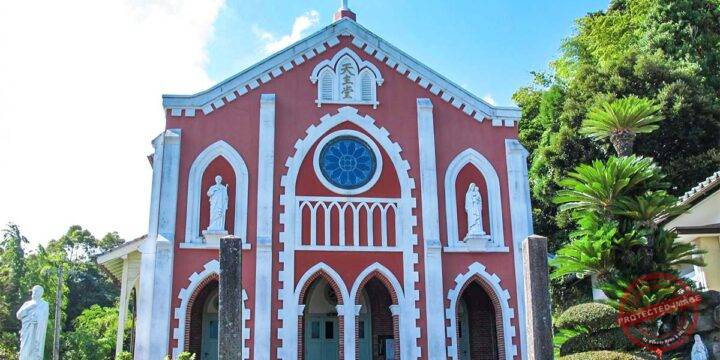
Hoki Church is an 1898 architectural landmark in Hirado, celebrated for its unique side verandas and its vibrant red-brick facade overlooking the sea.   Hoki Catholic Church occupies a commanding position on a hillside overlooking the eastern coast of Hirado, standing as one of the region’s most architecturally distinct houses of worship. Completed in 1898, the structure was built by a master carpenter from Ukushima, drawing upon the deep cultural and religious ties shared with the Christian community of nearby Kuroshima. While the church was once characterized by a whitewashed exterior, its facade now features a striking red-brick finish that provides a bold contrast against the surrounding greenery and the blue of the Hirado Strait. The building is particularly noted for its idiosyncratic architectural fusion. It retains a unique side…
Read More
Yamada Church

Yamada Church

Sightseeing
A graceful 1912 brick sanctuary in Hirado, designed by Yosuke Tetsukawa to mark the community’s return to the Catholic faith. Yamada Church stands as a dignified landmark on the island of Ikitsuki, representing a significant chapter in the revitalization of the Catholic faith within the Hirado region. The parish’s origins are rooted in the mission of Father Pelu (Peru), who arrived in 1878 to minister to the local Hidden Christian communities. His work facilitated a transition for many practitioners, leading to the public embrace of the Church. To provide a permanent home for this growing congregation, the current brick edifice was commissioned and completed in 1912. The structure is another exceptional work by the master architect Yosuke Tetsukawa, whose influence defined the ecclesiastical landscape of Nagasaki. Yamada Church is particularly…
Read More
Hirado Sacred Sites and Villages (Kasuga Village and Mount Yasuman)

Hirado Sacred Sites and Villages (Kasuga Village and Mount Yasuman)

Sightseeing
The Hirado Sacred Sites and Villages comprise a UNESCO World Heritage landscape where traditional rice terraces meet the sacred peaks of Mount Yasuman.   Kasuga Village represents a profoundly authentic landscape where the spiritual and the agricultural have been inextricably linked for centuries. Following the prohibition of Christianity in the 17th century, the inhabitants of this coastal region practiced their faith in secret, a tradition that evolved to incorporate the natural environment as objects of veneration. In 2010, the area was recognized as a National Important Cultural Landscape, and it later gained UNESCO World Heritage status as a critical component of the "Hidden Christian Sites in the Nagasaki Region". The village is architecturally and visually defined by its sweeping rice terraces, which descend in a dramatic tapestry from the foothills…
Read More
Oono Church

Oono Church

Sightseeing
Ohno Church is a UNESCO World Heritage site in Nagasaki, a resilient stone sanctuary designed by Father de Rotz and hand-built by his parishioners in 1893.   Ohno Church stands as a remarkably intimate example of the "De Rotz style", reflecting the pragmatic and compassionate architecture of Father Marc Marie de Rotz. The local community is believed to have roots in the Koteda clan, who sought refuge in the rugged Sotome region after fleeing persecution in Hirado at the turn of the 17th century. In 1893, Father de Rotz personally funded and designed this permanent house of worship, which he constructed alongside the local faithful using materials sourced directly from the surrounding landscape.The church is distinguished by its unique "Ohno Wall" construction, a masonry technique utilizing local basalt stones set…
Read More
Catholic Miuramachi Church

Catholic Miuramachi Church

Sightseeing
A resilient Gothic landmark in Sasebo, celebrated for surviving the Pacific War as a symbol of peace and enduring faith.   Catholic Miuramachi Church stands as a commanding sentinel over the port city of Sasebo, serving as a rare architectural survivor of the early 20th century. As Sasebo transformed into a major naval hub, the influx of workers from surrounding regions brought a growing Catholic population, necessitating a grander space for worship. The current structure was completed in 1931, replacing a smaller 1899 predecessor. While the names of the original architect and builder remain unrecorded, the church’s sophisticated Gothic Revival style suggests a high degree of craftsmanship and adherence to European ecclesiastical standards.The church's history is inextricably linked to the trials of the Pacific War. During this period, the military…
Read More