Tsuwano Town

Tsuwano Town

Sightseeing
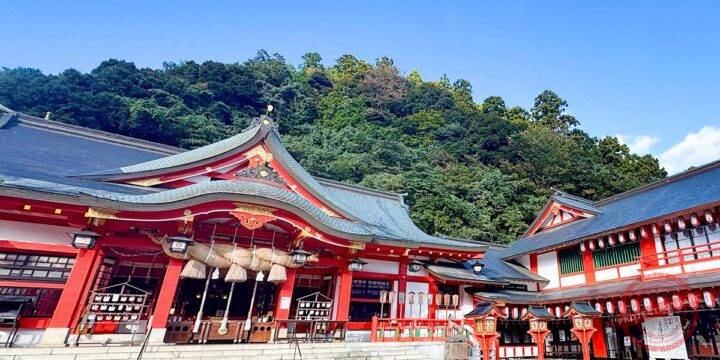
Experience the timeless elegance of Tsuwano, a preserved valley settlement where historic white-walled residences and koi-filled waterways reflect the cultural depth of old Japan.   Tsuwano, often referred to as the "Little Kyoto" of the San'in region, is a former castle town that reached its cultural peak during the Edo period under the rule of the Kamei clan. The town is architecturally defined by the Tonomachi district, where traditional samurai residences with distinctive white-plaster walls ("namako-kabe") line the streets. A hallmark of the town’s sophisticated infrastructure is the network of clear-water canals running alongside the thoroughfares. These channels are famously inhabited by thousands of vibrant koi carp, a practical tradition originally intended to maintain water quality that has evolved into a symbol of the town’s serene character.The significance of Tsuwano…
Read More
St. Francis Xavier Memorial Church & Museum in Yamaguchi

St. Francis Xavier Memorial Church & Museum in Yamaguchi

Sightseeing
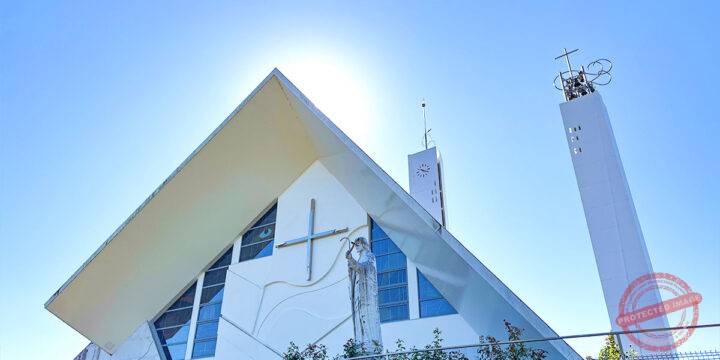
Explore the sophisticated legacy of the St. Francis Xavier Memorial Church & Museum, a landmark of contemporary architecture and historical dialogue in Yamaguchi. The St. Francis Xavier Memorial Church, reconstructed in 1998 following the loss of the original 1952 structure, is a masterpiece of modern ecclesiastical design. Its striking silhouette, defined by two soaring white towers that reach toward the sky, symbolizes the sails of the ship that brought the Jesuit missionary to Japan in 1549. The architecture employs a bold use of geometric lines and vast interior spaces, utilizing light and height to create a sense of transcendence. The craftsmanship is evidenced by the seamless integration of glass and steel, which allows natural light to illuminate the interior in a way that feels both innovative and reverent.The significance of…
Read More
Nakatsu Catholic Church

Nakatsu Catholic Church

Sightseeing
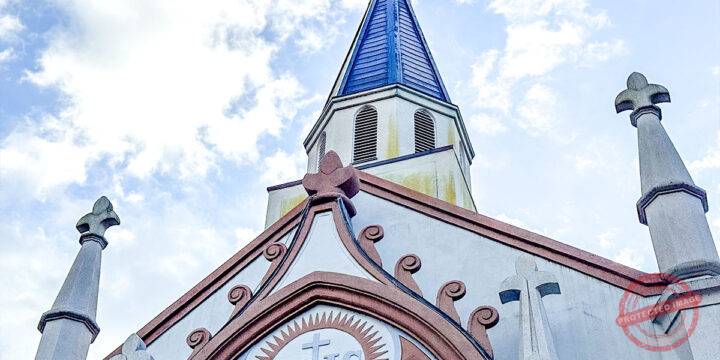
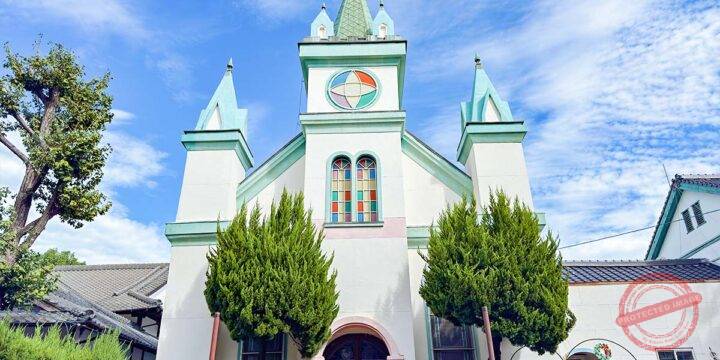
Discover the artistic and historical depth of the Nakatsu Catholic Church, a structure celebrated for its world-class stained glass and its deep roots in the early missionary history of Kyushu.   The Nakatsu Catholic Church is an architectural testament to international collaboration. While the original parish was established in 1887 by Father Belair of the Paris Foreign Missions Society, the current cathedral was completed in 1938. The building underwent a transformative renovation in 1982 led by the Italian priest Father Secchi, who integrated high-quality craftsmanship from his home country into the Japanese structure. The most striking feature of the interior is the collection of 48 stained-glass windows, which were commissioned and imported directly from Italy. These windows utilize light and color to create a radiant, contemplative environment that bridges European…
Read More
Suizenji Japanese Garden

Suizenji Japanese Garden

Sightseeing
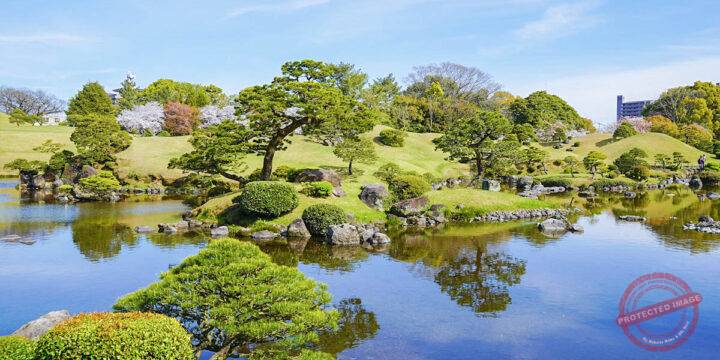
Experience the serene precision of Suizenji Jojuen Garden, a 17th-century "tsukiyama" (hill-style) stroll garden that serves as a masterpiece of Edo-period landscape architecture.   Originally established in 1636 by Lord Hosokawa Tadatoshi as a tea retreat, the garden was later expanded into its current form by his grandson, Tsunatoshi. The design is architecturally significant for its "Suizenji-fuji", a perfectly manicured conical hill that serves as a symbolic miniature of Mount Fuji. The garden is structured around a massive, crystal-clear pond fed by subterranean spring water from Mount Aso, which maintains a constant temperature and clarity throughout the year. The layout follows a disciplined path that represents the 53 stations of the Tokaido, the historic road connecting Edo and Kyoto, allowing visitors to experience a compressed journey across the Japanese landscape.The…
Read More
Amakusa Christian Museum

Amakusa Christian Museum

Sightseeing
A premier historical repository in Amakusa City, housing over 200 artifacts including the legendary Amakusa Shiro Battle Flag and poignant relics of Japan's Hidden Christians.   The Amakusa Christian Museum serves as a profound window into the turbulent and resilient history of faith in the Amakusa region. Located on a hilltop that once served as the site of Hondo Castle, the museum provides a chronological journey through the introduction of Western culture, the heights of Christian prosperity, the tragedy of the Shimabara-Amakusa Rebellion, and the centuries of secret devotion that followed.The museum’s collection of approximately 200 items is anchored by the Amakusa Shiro Battle Flag, a National Important Cultural Property. This 17th-century banner, used by the teenage leader Amakusa Shiro during the final siege at Hara Castle, is one of…
Read More
Amakusa Collegio Museum

Amakusa Collegio Museum

Sightseeing
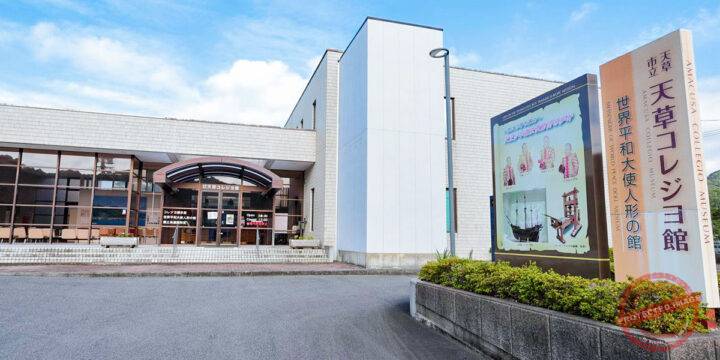
Explore the intellectual legacy of the Amakusa Collegio Museum, where rare printing heritage and scholarly history reveal the profound cultural exchange of 16th-century Japan.   Established in 1591, the Amakusa Collegio served as a sophisticated Jesuit college and a vital center for Renaissance humanism in East Asia. Following the return of the Tensho Embassy from Europe, the institution became the site of a remarkable technological milestone: the introduction of the Gutenberg printing press. This facility facilitated the production of the "Amakusa Editions", a collection of rare texts that utilized movable type to bridge the linguistic and philosophical divide between European thought and Japanese tradition.The museum today preserves this dignified history, displaying meticulously crafted replicas of the period’s printing machinery and scholarly artifacts. The construction of the Collegio represented a unique…
Read More
Minatoya Sakitsu Museum

Minatoya Sakitsu Museum

Sightseeing
Experience the authentic maritime heritage of the Minatoya Sakitsu Museum, a restored residence showcasing the unique intersection of fishing traditions and hidden faith.   The Sakitsu Museum, housed in a meticulously restored building from the early Showa period, serves as a vital cultural repository for the village of Sakitsu, which is part of a UNESCO World Heritage site. Originally a traditional Japanese inn, the structure itself reflects the architectural character of the region, utilizing local timber and craftsmanship that harmonize with the village’s narrow, historic streets known as "kake". The museum documents the transition of the community from the era of religious prohibition through to its modern maritime identity.Within its walls, the collection features a curated selection of historical artifacts and photographs that illustrate the dual life of the villagers.…
Read More
Sakitsu Church

Sakitsu Church

Sightseeing
A stunning Gothic-style UNESCO World Heritage site in Amakusa, uniquely built over the site of the efumi (image-trampling) trials to symbolize the triumph of faith.   Sakitsu Church is a centerpiece of the UNESCO World Heritage "Hidden Christian Sites in the Nagasaki Region". Located in a quiet fishing village in Amakusa, this church is an architectural and historical marvel. While the current structure was completed in 1934, its roots go back to the 1880s when missionaries first began re-establishing contact with the local Hidden Christian community.The church was designed and built by the legendary architect Yosuke Tetsukawa, often called the "Father of Church Architecture" in Japan. It is world-renowned for its "Gothic on the Sea" aesthetic. Inside, the floor is covered in tatami mats, a rare feature that reflects how…
Read More
Amakusa Rosario-kan

Amakusa Rosario-kan

Sightseeing
Discover the profound cultural heritage of the Amakusa Rosario Museum, a sanctuary dedicated to the artistry and resilient history of the region’s hidden Christian communities.   The Amakusa Rosario Museum stands as a testament to the period of religious prohibition in Japan, specifically focusing on the 17th through 19th centuries. During this era, the "Kakure Kirishitan" (hidden Christians) maintained their heritage through the use of devotional objects disguised as common household items. The museum’s collection is defined by its assembly of intricately crafted rosaries, some fashioned from local materials and others influenced by European imports, which served as silent anchors of identity for generations.The craftsmanship on display reveals a sophisticated blend of Western iconography and Japanese aesthetic sensibilities. Many items were designed with hidden symbols, demonstrating the remarkable ingenuity required…
Read More
Myokenura Observation

Myokenura Observation

Sightseeing
Survey the dramatic geological theater of Myoken-ura, a nationally designated Place of Scenic Beauty that showcases the raw power of volcanic activity and marine erosion along the Amakusa coast.   The observation area is architecturally defined by its high-altitude vantage point, which provides an authoritative perspective on the rugged cliffs and sea caves that populate this stretch of the East China Sea. The landscape is characterized by its white rhyolite rock formations, which contrast sharply against the deep cobalt blue of the water. One of the most distinctive features is a large sea-eroded rock that resembles a colossal elephant wading into the ocean, a sight that has been a staple of regional travel records for centuries. The site is part of the Unzen-Amakusa National Park, and its disciplined hiking trails…
Read More