Megane Bridge
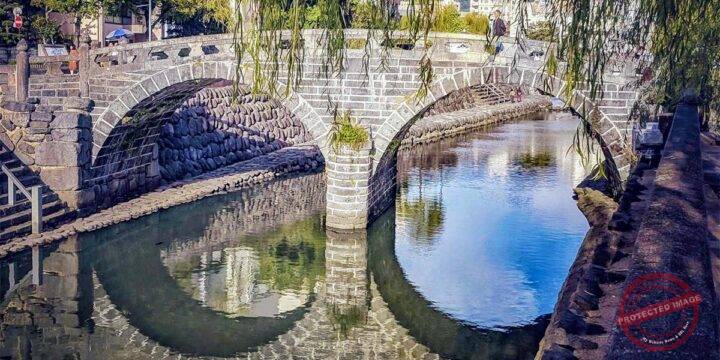
Discover the architectural grace of Megane-bashi (Megane Bridge), or the "Spectacles Bridge", a double-arched stone structure that stands as one of the oldest and most significant examples of 17th-century civil engineering in Japan.Spanning the Nakashima River, the bridge was constructed in 1634 by the Chinese monk Mokusyo Nyojo, the second-generation abbot of Kofukuji Temple. The bridge is architecturally defined by its two symmetrical stone arches which, when reflected in the tranquil waters of the river, create the distinct visual illusion of a pair of spectacles. This design reflects a sophisticated level of stonemasonry introduced from China during the early Edo period. The construction utilizes meticulously carved basalt and stone blocks, fitted with a precision that has allowed the bridge to survive numerous floods and urban developments for nearly four centuries.…