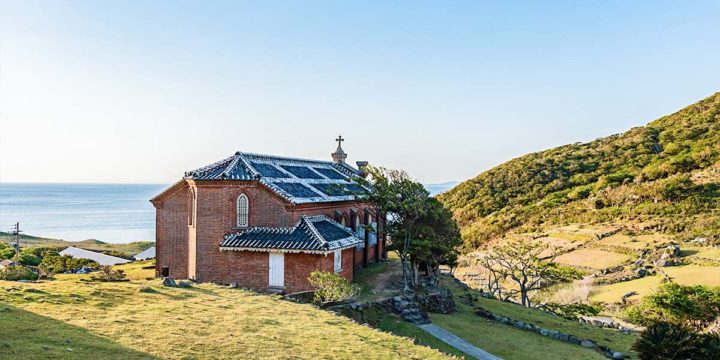
Remains of Villages on Nozaki Island & Former Nobuki Church

Remains of Villages on Nozaki Island & Former Nobuki Church

Sightseeing
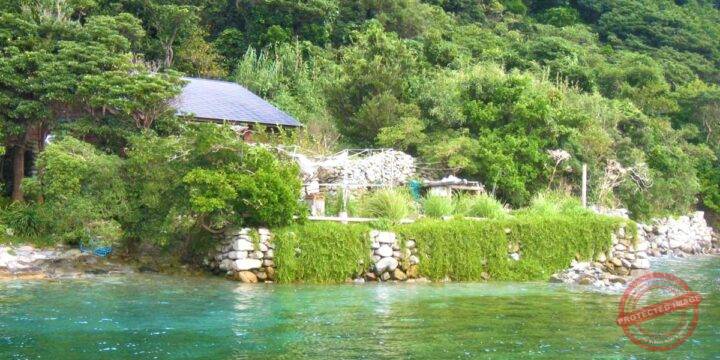
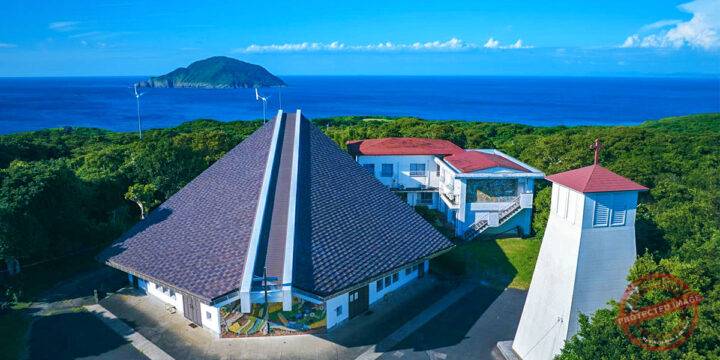
Brick church and village ruins on Nozaki Island reflect a Hidden Christian legacy, where faith, endurance, and daily life shaped an isolated community.On Nozaki Island, the former Nobuki Church and the Remains of Villages together compose a singular cultural landscape shaped by Hidden Christian history. The quiet brick church, completed in 1908, rises on a gentle hill above the foundations of settlements that once sustained a close-knit community. Nearby, terraced fields and stone dwelling walls trace the contours of lives lived in both discretion and devotion. During the period when Christianity was prohibited, believers migrated to remote islands such as Nozaki, where geographic isolation provided relative safety. In villages including Nokubi, faith was preserved privately across generations, integrated into the demanding routines of farming steep volcanic slopes. The terraced fields…
Read More
Nagasaki City

Nagasaki City

Gallery
Oura Catheral Urakami Cathedral Urakami Cathedral Urakami Cathedral The Twenty-Six Martyrs of Japan Memorial Museum Explore more Unzen, Shimabara & Amakusa Overseas churches Gotō Islands  
Read More
Akogi: Village of the Hidden Christians

Akogi: Village of the Hidden Christians

Sightseeing
A dedicated research hub and coastal museum preserving the profound legacy of the Hidden Christians through meticulous study and rare artifacts.Since 2008, this site has served as a sophisticated center for the study of Hidden Christian history within the Goto Islands. Dedicated to uncovering the nuanced narratives of faith and survival, the institution actively shares its academic findings to illuminate this significant cultural heritage. In July 2022, the site expanded its reach with the opening of a refined museum along the shore. This gallery houses a curated collection of approximately 150 historical artifacts, offering guests an intimate look at the private lives and enduring spirit of the Hidden Christian community. 
Read More
Mount Onidake

Mount Onidake

Sightseeing
A signature landmark of Fukue Island, Mount Onidake offers a pristine scoria cone landscape with sweeping panoramic views of the city and the surrounding sea.Rising 315 meters above the horizon, Mount Onidake stands as the iconic symbol of Fukue Island. This extinct volcano is a masterpiece of natural symmetry, characterized by its elegant, streamlined scoria cone and a lush mantle of emerald-green grass that covers its slopes.The ascent rewarded visitors with an unobstructed 360 degree vista, capturing the refined cityscape of Fukue and the expansive blue of the Goto Islands’ waters. The mountain’s gentle terrain and open skies make it a premier destination for elevated leisure. Guests can immerse themselves in the quiet beauty of the landscape through trekking, while the clear, dark skies offer an exceptional setting for evening…
Read More
Imochiura Catholic Church and Lourdes

Imochiura Catholic Church and Lourdes

Sightseeing
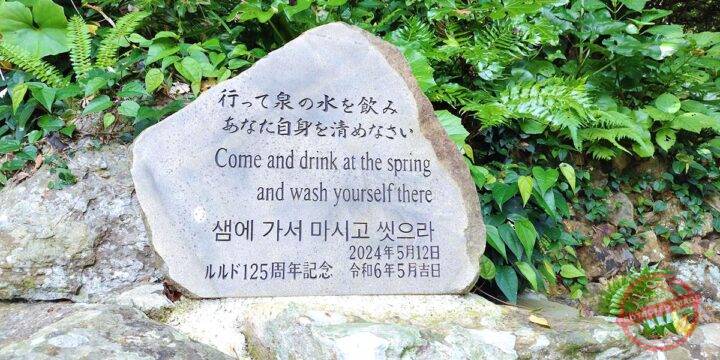
The church is renowned for its Lourdes Grotto, recognized as the oldest in Japan. The spring water flowing from the grotto is traditionally believed to have healing properties. The Lourdes Grotto at Imochiura Church is renowned for its spring water, which was blessed with water brought from Lourdes in France. It is also the only Lourdes site in Japan with a natural spring and is believed to possess healing properties. The site continues to draw believers from across the country on quiet pilgrimage. In 1891, Father Pellew, then pastoral director of the Goto Islands, learned that the Vatican had reconstructed the Lourdes Grotto and subsequently invited parishioners throughout the islands to gather distinctive stones from their surroundings. In 1899, these offerings were assembled to create Japan’s first Lourdes Grotto. A…
Read More
Miiraku Catholic Church

Miiraku Catholic Church

Sightseeing
A striking presence on the landscape, Miiraku Church is renowned for its vibrant exterior mosaics and masterfully crafted stained glass artistry. Miiraku Church makes an immediate impression with its sophisticated exterior, featuring an expansive ceramic mosaic mural dedicated to the theme of "All Saints". This artistic exterior serves as a prelude to the meticulously detailed beauty found within the sanctuary. The interior is defined by its exquisite stained glass, which bathes the space in a curated play of light and color. These windows represent a true community legacy; they were funded by a local philanthropist and hand-crafted over several years by a dedicated group of Miiraku volunteers. This collaborative masterpiece was brought to its final completion in 2005, blending local devotion with high-end craftsmanship.
Read More
Best Time to See Autumn Leaves in Akita

Best Time to See Autumn Leaves in Akita

Sightseeing
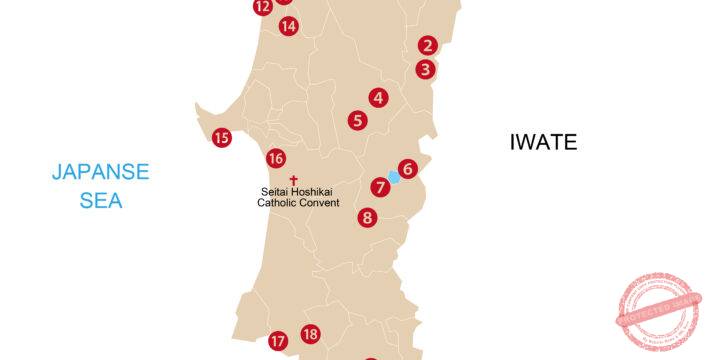
Explore Tohoku autumn leaves in Akita, Japan. Find peak foliage times, scenic mountain views, samurai districts, and hidden fall color gems.1. Lake Towada: Mid-October to Early NovemberThe lakeside Yasumiya area typically reaches its peak in late October. 2. Yuze Gorge: Late October to Early NovemberEnjoy the striking contrast between the beautiful valley and the vibrant fall foliage. 3. Hachimantai: Late September to Mid-OctoberThe earliest fall foliage spot in the prefecture, with colors descending from the summit to the foothills. 4. Lake Taihei and Komata Gorge: Mid-October to Late OctoberThe fall leaves viewed from a sightseeing boat offer a truly spectacular experience. 5. Mt. Moriyoshi: Early October to Late OctoberThe golden beech forest seen from the gondola is especially breathtaking. 6. Dakigaeri Gorge: Late October to Early NovemberThe vivid contrast between…
Read More
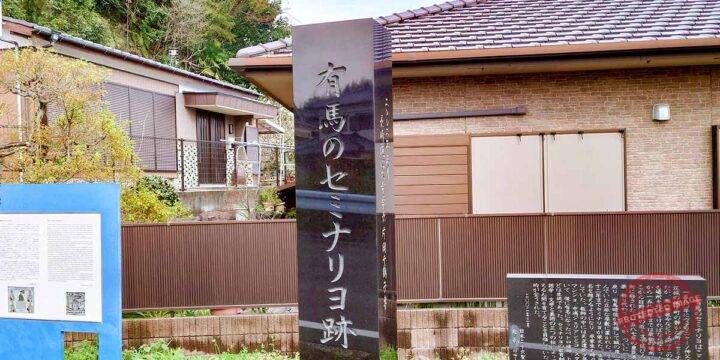
The Legacy of the Arima Seminary

The Legacy of the Arima Seminary

Sightseeing
This historic site marks the beginning of Jesuit education in Japan, established in 1580 under the patronage of the Christian daimyo Arima Harunobu.This Christian primary education institution was established in 1580 during the tenure of Arima Harunobu, a leader who provided steadfast support for the faith. While Japan's first seminaries were founded in Arima and Azuchi, the Arima location was relocated three times to accommodate its expanding influence and scale. This final site, situated near Hinoe Castle, the official residence of the Arima clan, served as the definitive home for the seminary. Here, young students in their early teens were immersed in a rigorous curriculum that included Western music and Latin. In 1582, four of these early students were chosen for the historic Junior Embassy to Europe. Traveling as representatives…
Read More
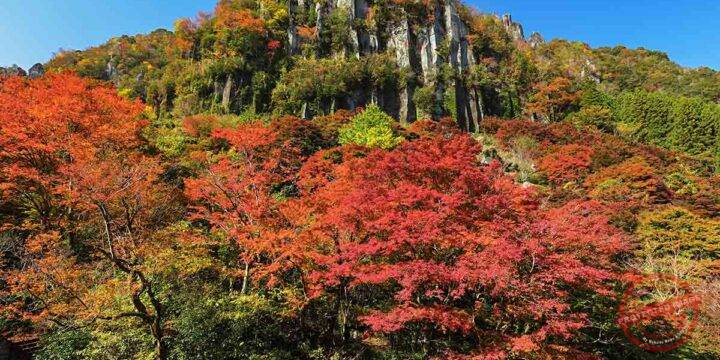
Hitome Hakkei Observation Deck

Hitome Hakkei Observation Deck

Sightseeing
Hitome Hakkei in Nakatsu City stands as a premier destination within the Shin-Yabakei Gorge, renowned for its dramatic rock formations and brilliant autumn colors.Located in Nakatsu City, Oita Prefecture, Hitome Hakkei is widely regarded as one of the most distinguished foliage viewing sites in the Shin-Yabakei region. The name, which translates to "eight views at a single glance", refers to the singular vantage point from which 8 unique volcanic rock peaks can be admired simultaneously in a sweeping, majestic panorama. The area is celebrated for the striking contrast between these rugged stone spires and the vivid crimsons and golds of the surrounding maple and deciduous trees. This sophisticated interplay of natural architecture and seasonal color has established the gorge as a top-tier destination within Kyushu, drawing those who appreciate the…
Read More
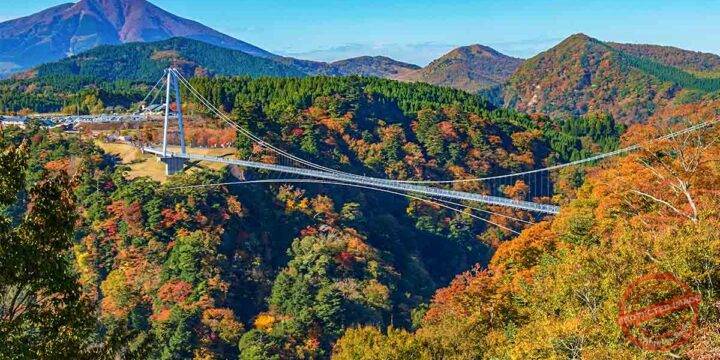
Kokonoe Yume Suspension Bridge

Kokonoe Yume Suspension Bridge

Sightseeing
The Kokonoe "Yume" Grand Suspension Bridge in Oita Prefecture stands as Japan’s highest pedestrian bridge, offering an unparalleled vantage point over nature.Located in Kokonoe Town, the Kokonoe "Yume" Grand Suspension Bridge spans 390 meters in length and rises 173 meters above the valley floor. As the highest pedestrian-only suspension bridge in the nation, it serves as a premier destination for those seeking a sophisticated perspective on the Japanese landscape. During the autumn months, the surrounding Naruko River Valley, also known as Kyusuikei, transforms into a vibrant canvas of crimson and gold. From the center of the span, guests are treated to an expansive 360-degree view of the deep ravine, where the mountain slopes are meticulously draped in the season’s finest maple and deciduous foliage. This elevated promenade offers a rare…
Read More