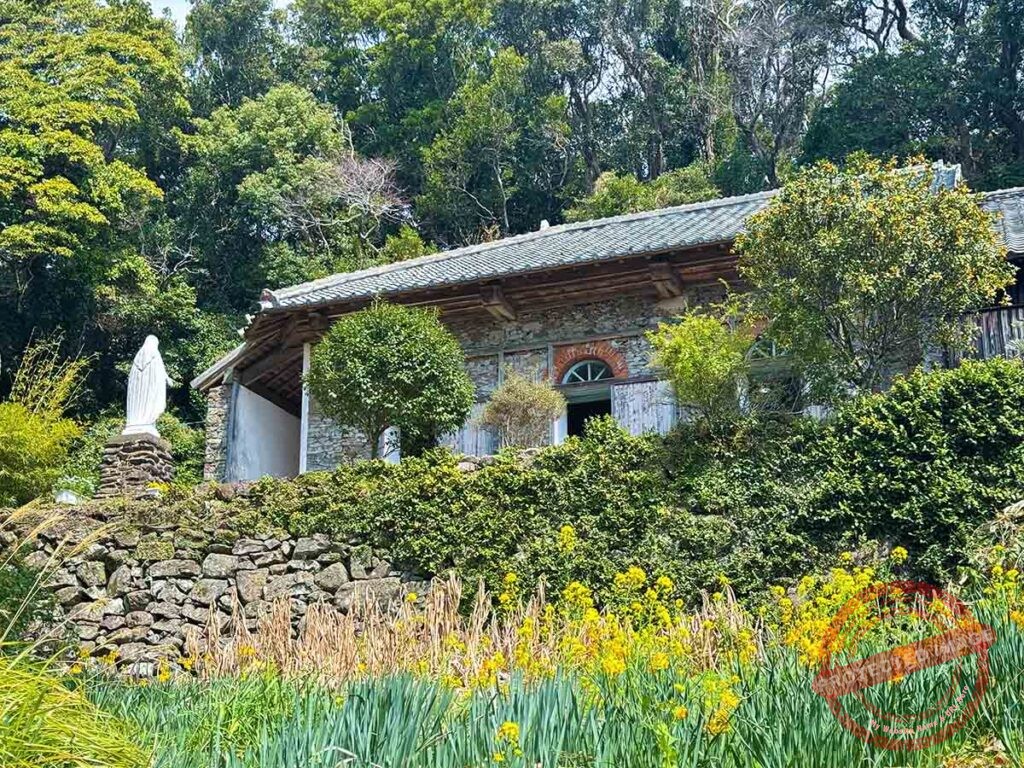
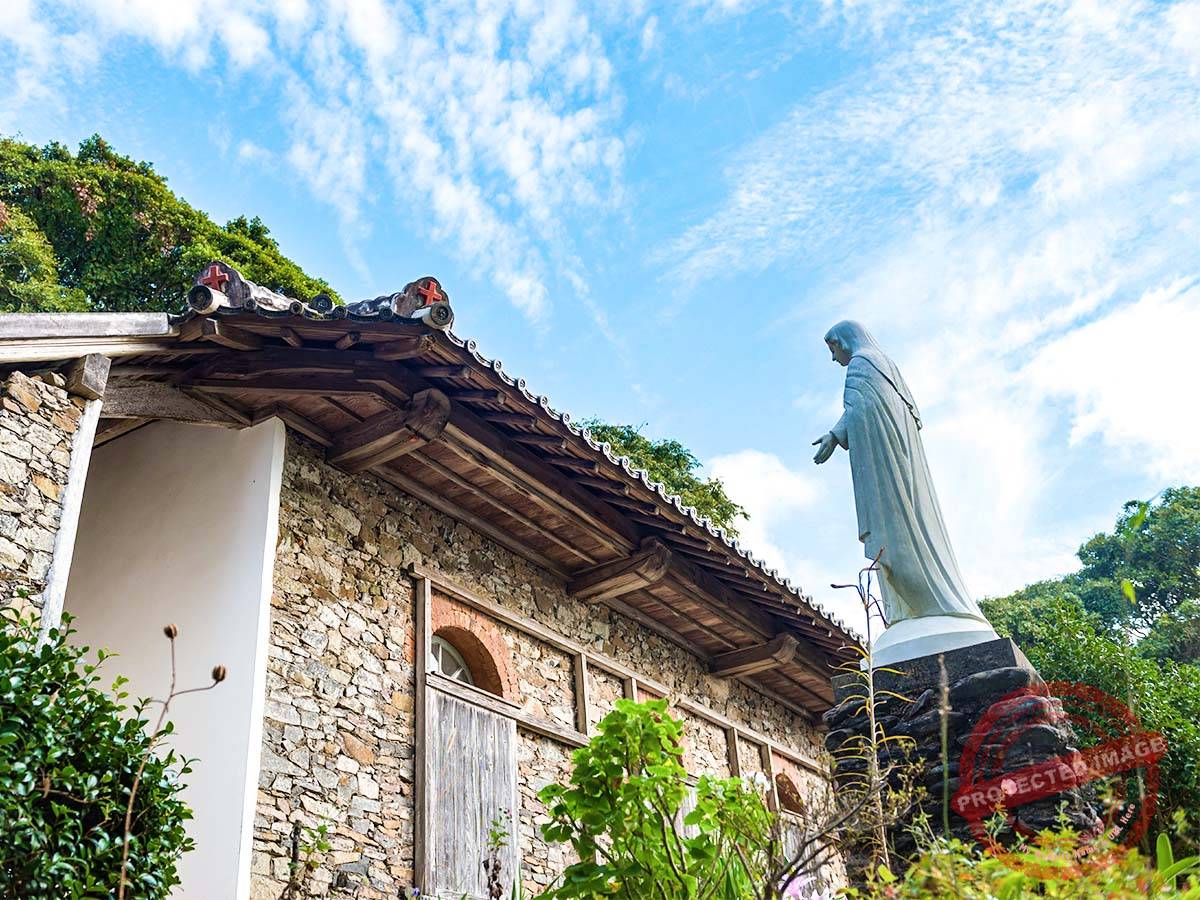
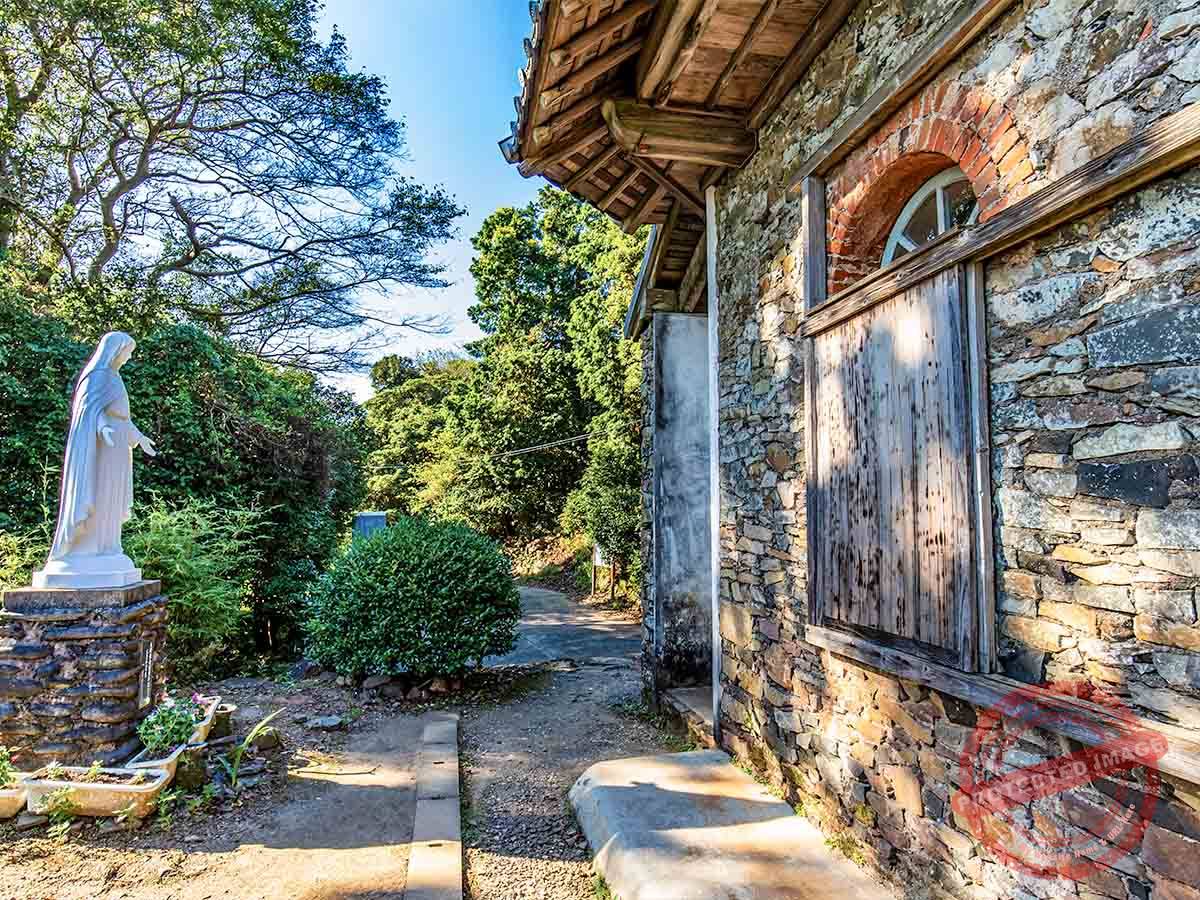
Ohno Church stands as a remarkably intimate example of the “De Rotz style”, reflecting the pragmatic and compassionate architecture of Father Marc Marie de Rotz. The local community is believed to have roots in the Koteda clan, who sought refuge in the rugged Sotome region after fleeing persecution in Hirado at the turn of the 17th century. In 1893, Father de Rotz personally funded and designed this permanent house of worship, which he constructed alongside the local faithful using materials sourced directly from the surrounding landscape.
The church is distinguished by its unique “Ohno Wall” construction, a masonry technique utilizing local basalt stones set with a specialized lime mortar known as “De Rotz mortar”. This method resulted in a structure of exceptional durability, designed to withstand the harsh coastal winds of the Nagasaki peninsula. The building’s low-slung, modest silhouette harmonizes with the natural contours of the hillside, preserving a sense of humble, private devotion.
As a component of the UNESCO World Heritage “Hidden Christian Sites in the Nagasaki Region”, Ohno Church is celebrated for its authenticity and its direct link to the recovery of the faith community. Its interior remains a serene space of quietude, defined by wooden accents and a simple, functional layout that speaks to the era’s limited resources but profound commitment. |