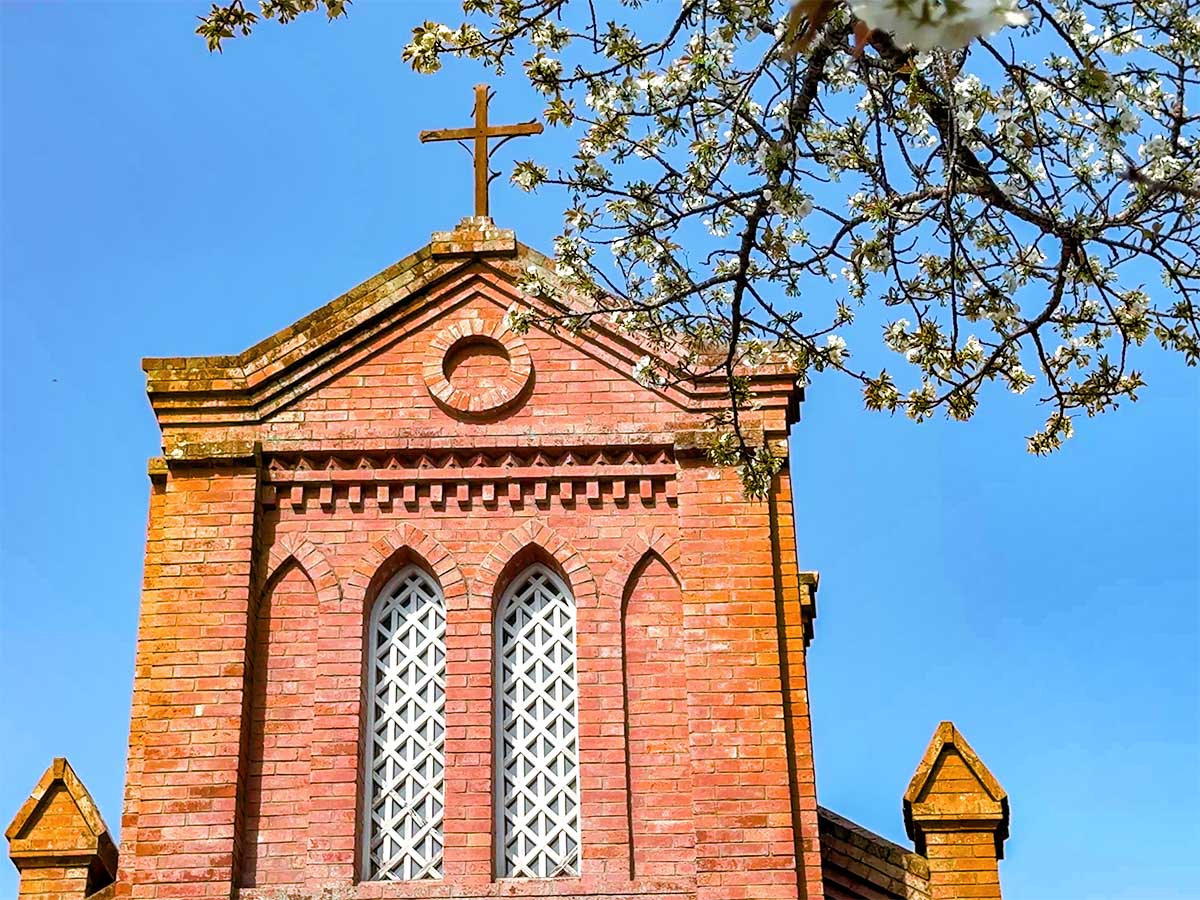
Dozaki Church is the first brick cathedral of the Goto Islands, now serving as a museum that preserves the legacy of the region’s Christian heritage.
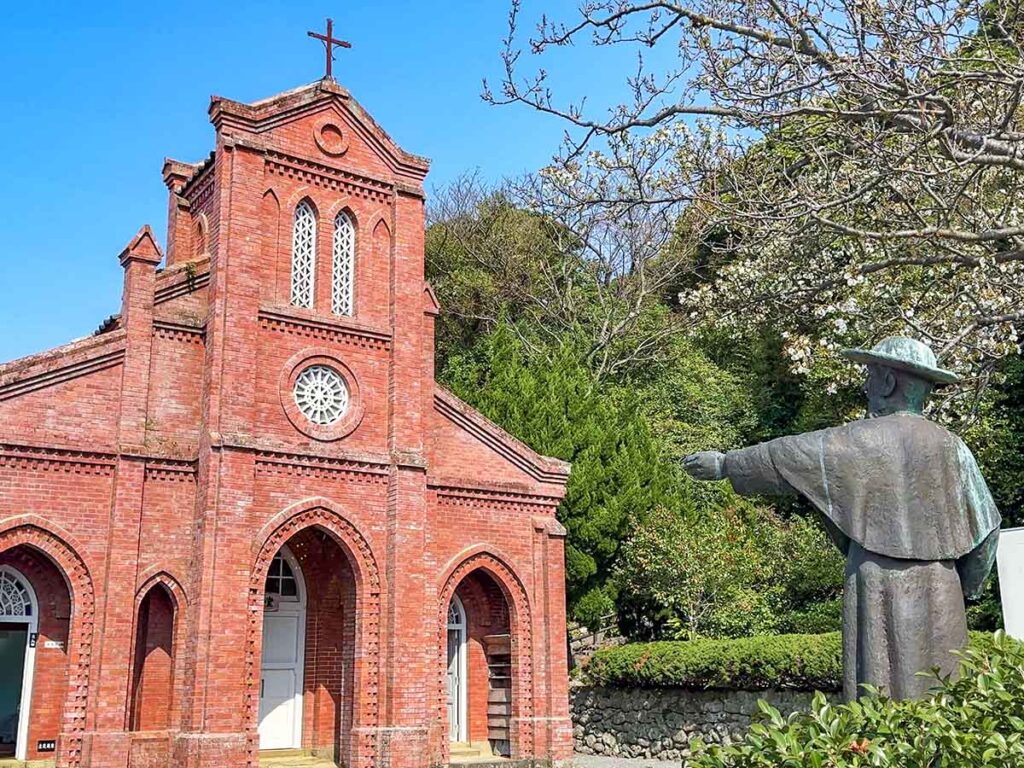
Dozaki Church stands as a definitive symbol of the restoration of faith in the Goto Islands. Following the end of the national ban on Christianity, French missionaries Fathers Freneau and Marmand were dispatched to the archipelago to revitalize the community. In 1880, Father Marmand established the islands’ first wooden house of worship, a modest precursor to the architectural landmark that stands today. The current structure, a red-brick Gothic-style edifice, was completed in 1908 under the direction of Father Pelu.
The architecture is characterized by its sophisticated use of materials, some of which were imported from Italy to ensure the cathedral’s structural and aesthetic integrity. While the exterior is defined by its robust brickwork, the interior reveals a warmer, wooden construction. Notable features include vibrant colored glass windows and a ribbed “bat-wing” vaulted ceiling, a design chosen both for its visual elegance and its superior acoustic properties for liturgical music.
Now designated as a Nagasaki Prefectural Cultural Property, the church has transitioned into a museum dedicated to the history of the “Hidden Christians”. It houses a significant collection of artifacts and documents that chronicle the centuries of prohibition and the subsequent resilience of the local practitioners. Situated on a serene waterfront, Dozaki Church offers international visitors a profound sense of place, blending European ecclesiastical tradition with the distinct maritime history of the Goto region.

.jpg)