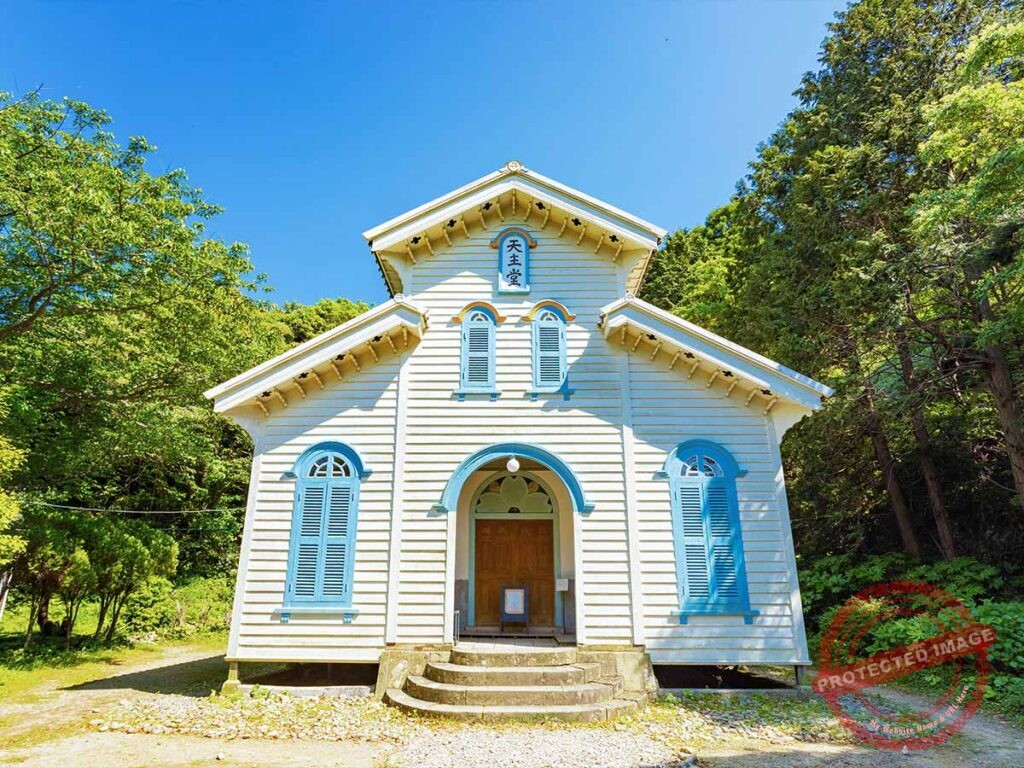
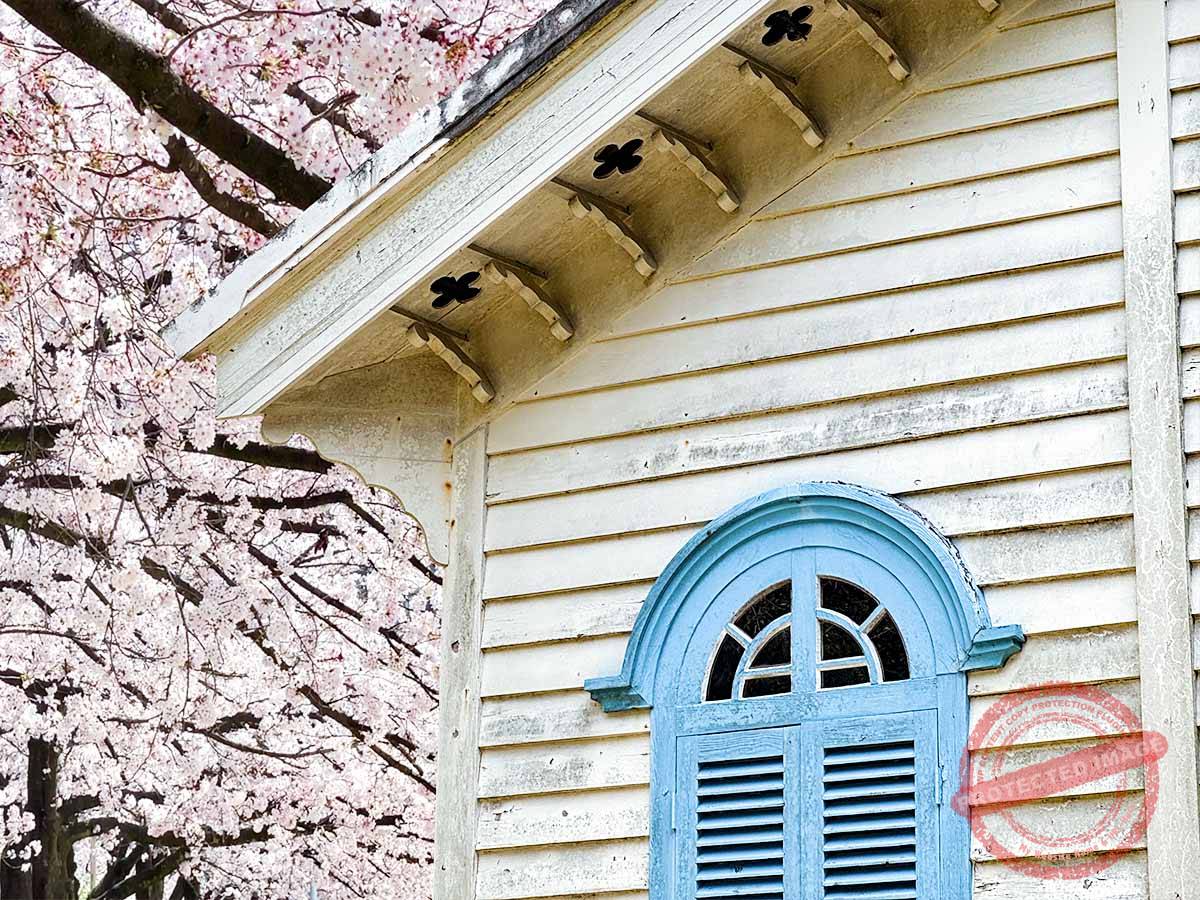
Egami Catholic Church serves as a rare and sophisticated example of early 20th-century wooden ecclesiastical architecture. Located on Naru Island within the Goto archipelago, the church was established in 1918 by a community of approximately fifty parishioner families. The construction was funded primarily through the local seine fishing industry, specifically the harvest of silver stripe herring, reflecting a profound communal sacrifice. Designed by the master builder Yosuke Tetsukawa, the structure is celebrated for its cream-colored wooden exterior and light blue window frames, which provide a serene visual harmony with the surrounding forest.
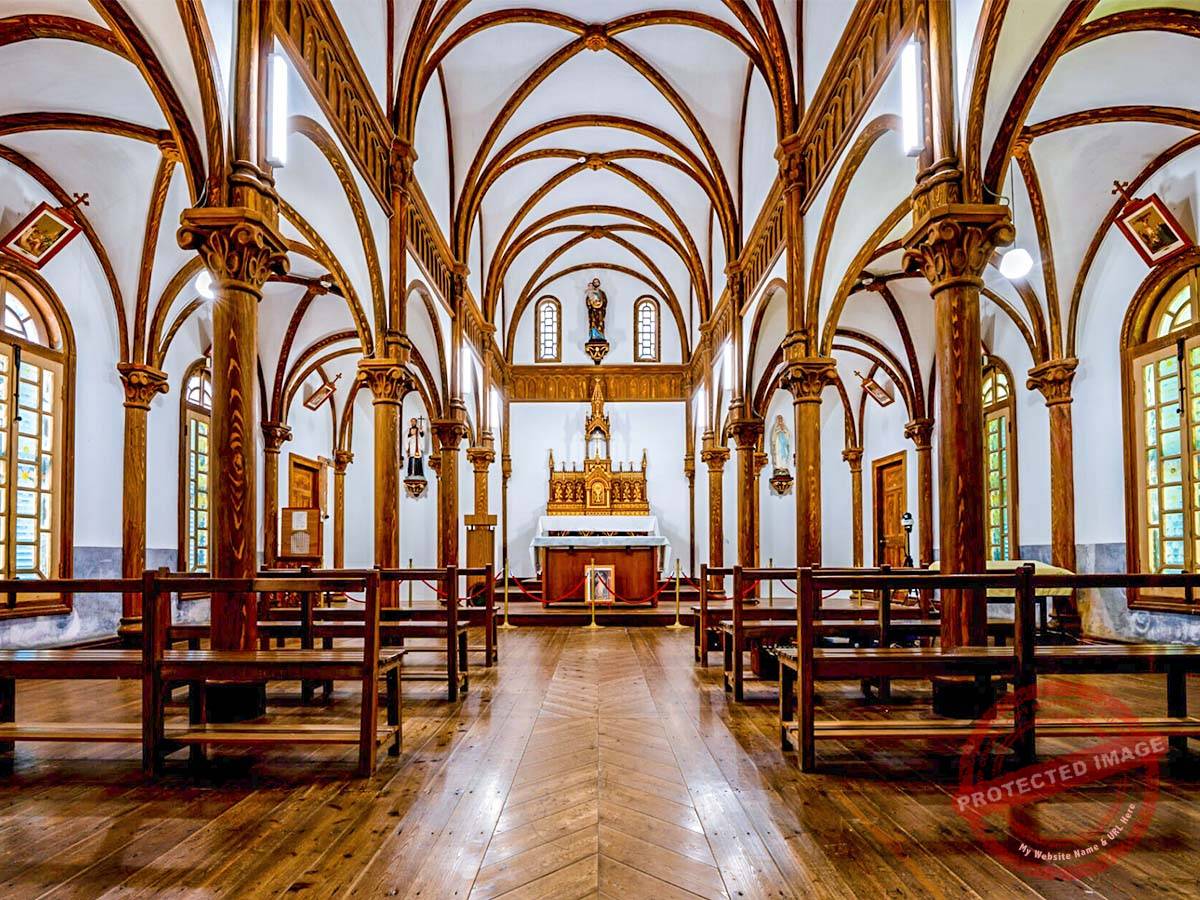
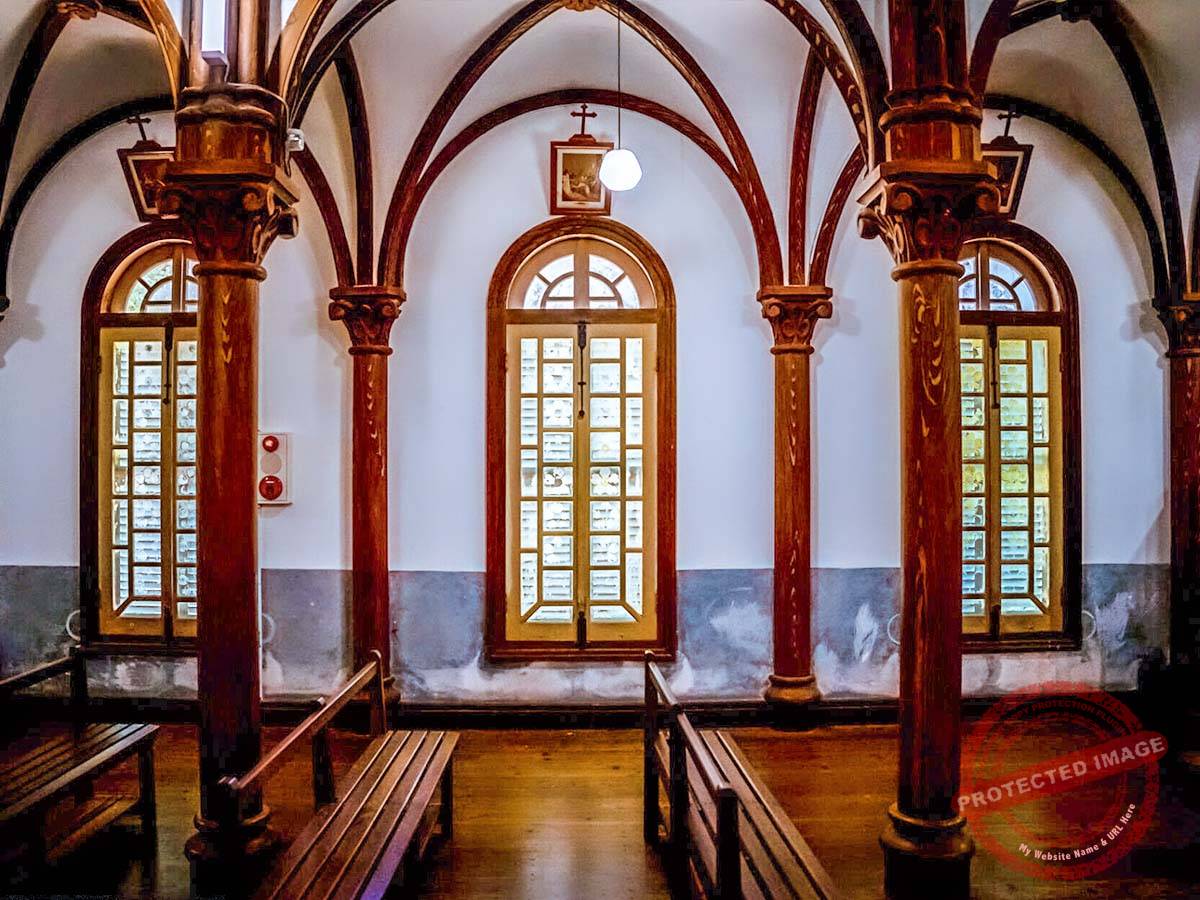
The interior of the cathedral is noted for its refined acoustic and aesthetic details, specifically its bat-wing vaulted ceilings designed to enhance the resonance of liturgical hymns. The craftsmanship is further distinguished by hand-painted motifs on the pillars and delicate floral windowpanes that utilize natural light to create a contemplative atmosphere. These artistic choices demonstrate the community’s dedication to creating a space of dignity and continuity, even with modest local materials.
Registered as a UNESCO World Heritage site in 2018 as part of the “Hidden Christian Sites in the Nagasaki Region”, the cathedral is an essential site for understanding the artisanal heritage of the region. It stands as a testament to the transition of the migrant families who settled here in 1881 and successfully preserved their cultural identity through architectural expression. |