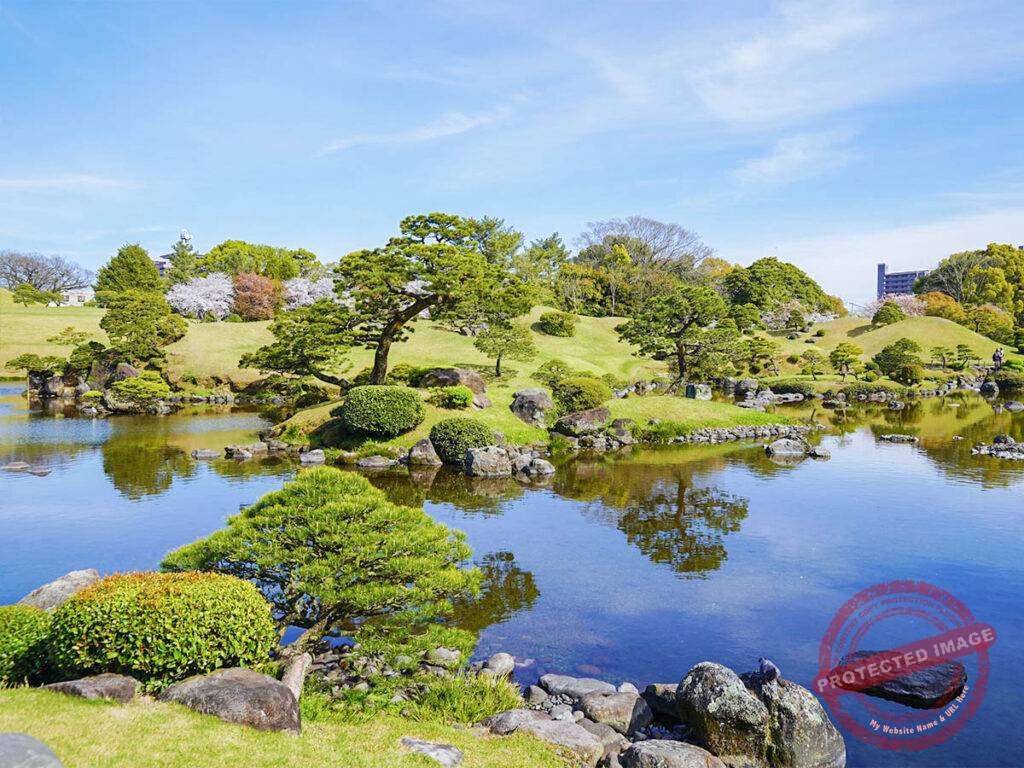
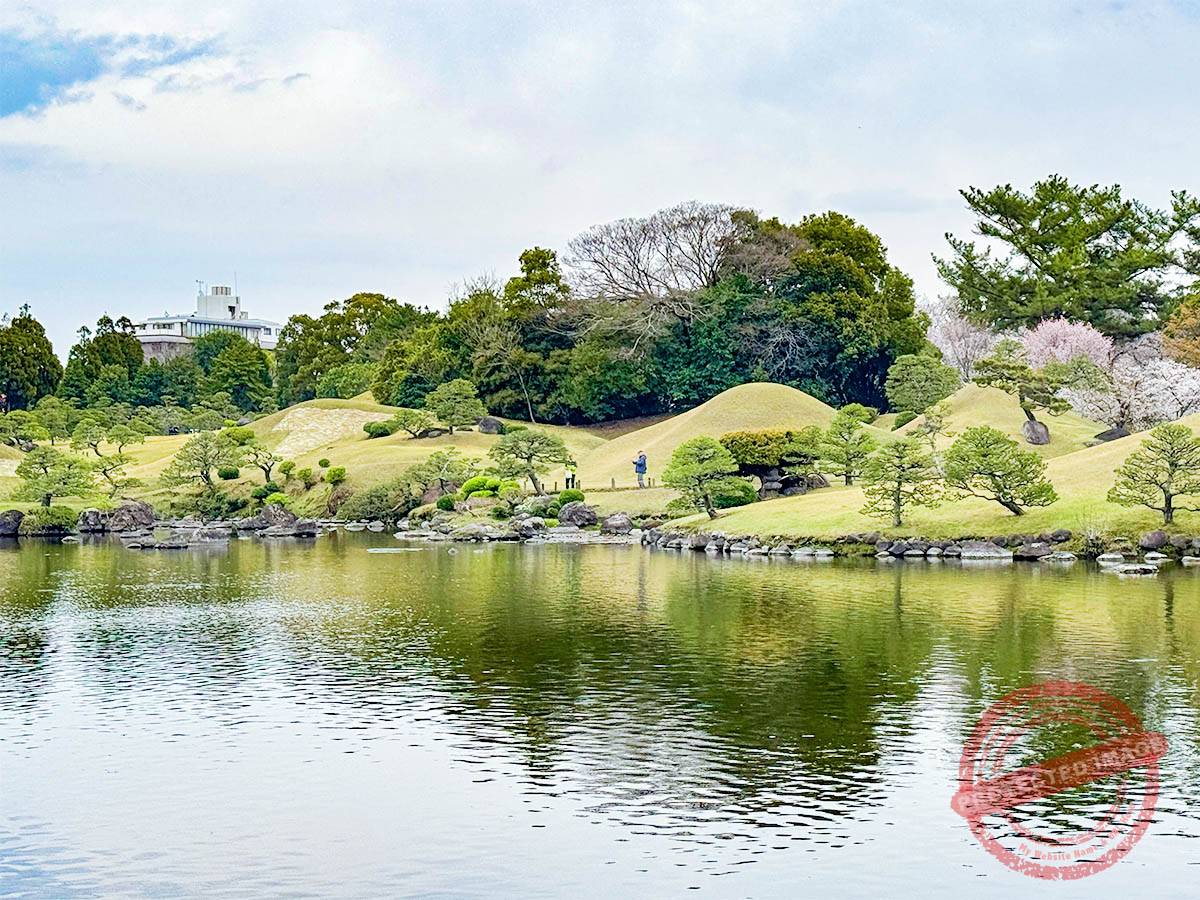
Experience the serene precision of Suizenji Jojuen Garden, a 17th-century “tsukiyama” (hill-style) stroll garden that serves as a masterpiece of Edo-period landscape architecture.
Originally established in 1636 by Lord Hosokawa Tadatoshi as a tea retreat, the garden was later expanded into its current form by his grandson, Tsunatoshi. The design is architecturally significant for its “Suizenji-fuji“, a perfectly manicured conical hill that serves as a symbolic miniature of Mount Fuji. The garden is structured around a massive, crystal-clear pond fed by subterranean spring water from Mount Aso, which maintains a constant temperature and clarity throughout the year. The layout follows a disciplined path that represents the 53 stations of the Tokaido, the historic road connecting Edo and Kyoto, allowing visitors to experience a compressed journey across the Japanese landscape.
The significance of Suizenji lies in its preservation of the aesthetic and philosophical ideals of the Hosokawa clan. Located on the garden’s edge is the “Kokindenju-no-Ma“, an elegant teahouse originally built in the Kyoto Imperial Palace and gifted to the Hosokawa family. This structure offers an authoritative perspective on “sukiya-zukuri” architecture, featuring delicate woodwork and sliding screens that frame the garden as a living painting. The site also houses the Izumi Shrine, dedicated to the ancestors of the Hosokawa family, further grounding the garden in the political and spiritual history of the Kumamoto domain.
For the cultural traveler, Suizenji Jojuen Garden provides an atmosphere of profound quietude and intellectual refinement. The contrast between the vibrant green moss, the meticulously sheared pines, and the reflective surface of the spring water creates a polished sense of place. It remains a vital cultural anchor in Kumamoto, offering a definitive example of how natural resources and human craftsmanship were harmonized to create enduring works of art.