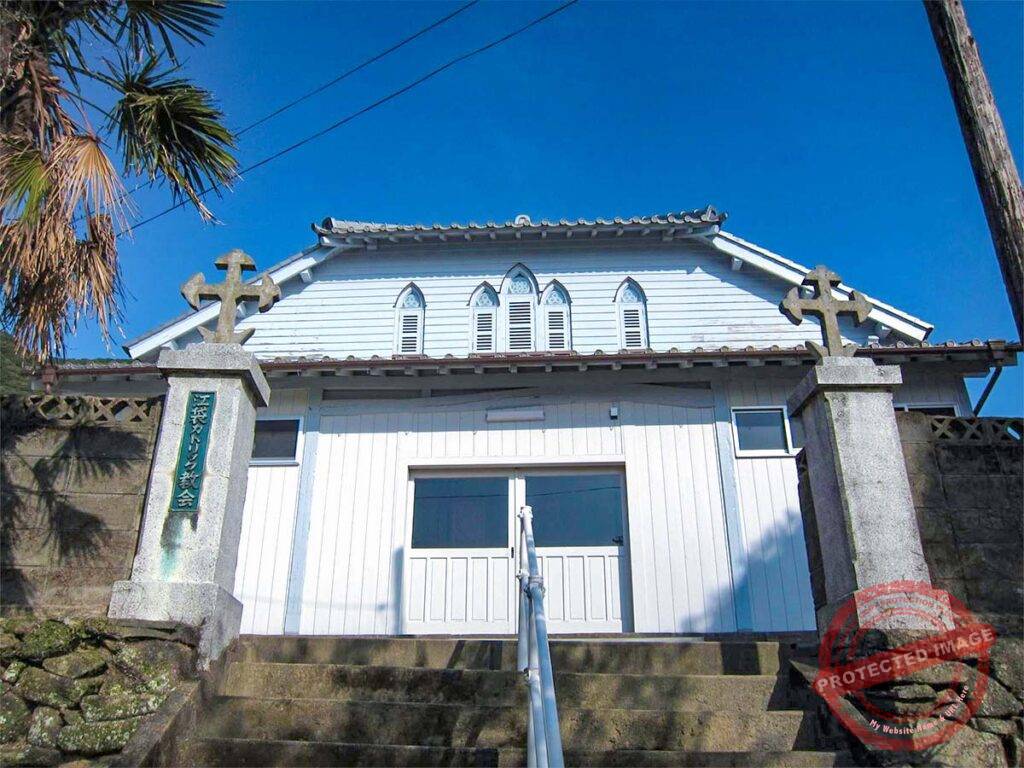
A resilient wooden sanctuary in Shinkamigoto, painstakingly restored to its Taisho-era glory after a devastating fire in 2007.
Ebukuro Church stands as a powerful symbol of communal perseverance and modern restoration. The history of the local faithful is marked by hardship. Despite the official lifting of the ban on Christianity in 1873, the believers in Ebukuro faced severe local persecution that same year. In 1882, under the spiritual guidance of Father Brel, the community succeeded in constructing their first permanent house of worship. Until the early 21st century, it held the distinction of being the oldest wooden church in the Goto Islands to feature a “bat-wing” rib-vaulted ceiling.
In 2007, a tragic fire nearly destroyed the historic structure. However, recognizing its immense cultural value, a nationwide fundraising campaign was launched to rebuild. By May 2010, the church was fully restored to its aesthetic from the end of the Taisho period (early 1920s). The restoration was meticulous, reusing charred original timbers where structurally possible to preserve the “soul” of the old building while ensuring its future for generations to come.
The interior is particularly noted for its warmth and the distinctive wooden rib-vaulting that defines the “bat ceiling” style. This architectural feature was a hallmark of the early missionary-led construction in Nagasaki, designed to replicate European stone vaults using the superior woodworking skills of Japanese shipbuilders and carpenters.