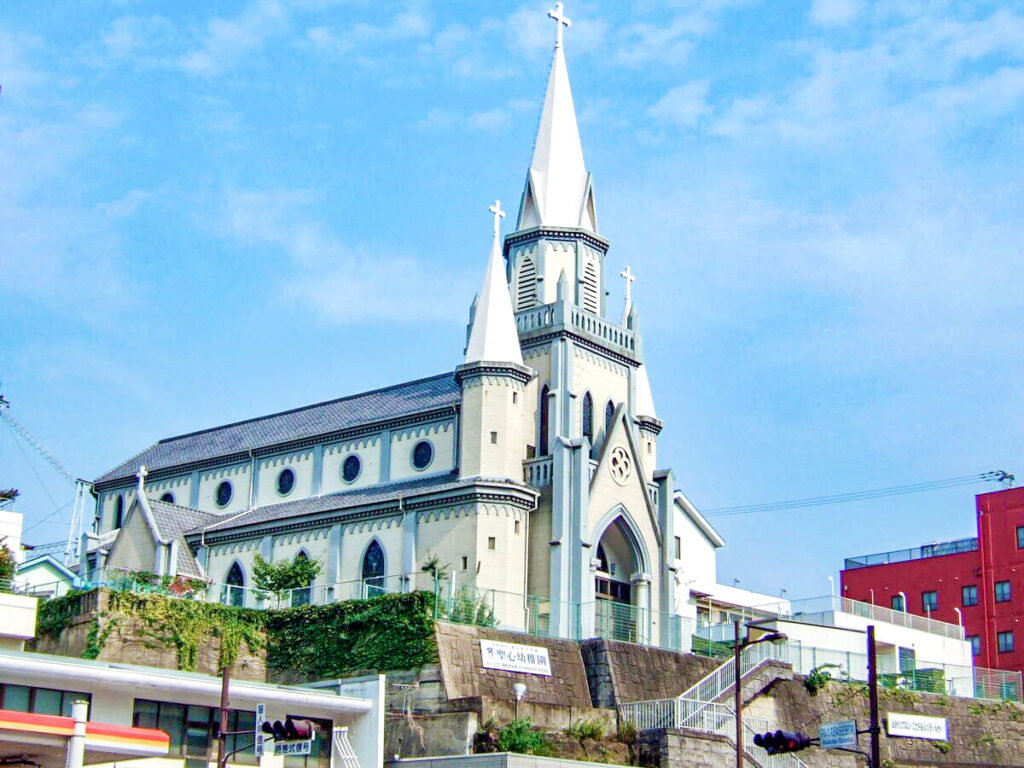
A resilient Gothic landmark in Sasebo, celebrated for surviving the Pacific War as a symbol of peace and enduring faith.
Miuramachi Church stands as a commanding sentinel over the port city of Sasebo, serving as a rare architectural survivor of the early 20th century. As Sasebo transformed into a major naval hub, the influx of workers from surrounding regions brought a growing Catholic population, necessitating a grander space for worship. The current structure was completed in 1931, replacing a smaller 1899 predecessor. While the names of the original architect and builder remain unrecorded, the church’s sophisticated Gothic Revival style suggests a high degree of craftsmanship and adherence to European ecclesiastical standards.
The church’s history is inextricably linked to the trials of the Pacific War. During this period, the military authorities viewed the cathedral with suspicion, leading to the suppression of its activities. To protect the building from becoming a target for air raids, its elegant white exterior was painted a drab, matte black to camouflage it against the hillside. This pragmatic measure, combined with its fortunate survival of the city’s intense bombings, has made the church a powerful symbol of resilience.
Today, the church has been restored to its original brilliance and is affectionately regarded by locals as a monument to the “City of Peace”. Its interior maintains a sense of quietude and historical weight, offering a dignified space for reflection on the community’s continuity. For the international traveler, Miuramachi Church provides an authoritative glimpse into the intersection of Japan’s naval history and its Catholic heritage, standing as a testament to the preservation of identity in the face of conflict.