A rare early Meiji-era wooden sanctuary and UNESCO World Heritage site, preserved on the isolated shores of Hisaka Island.
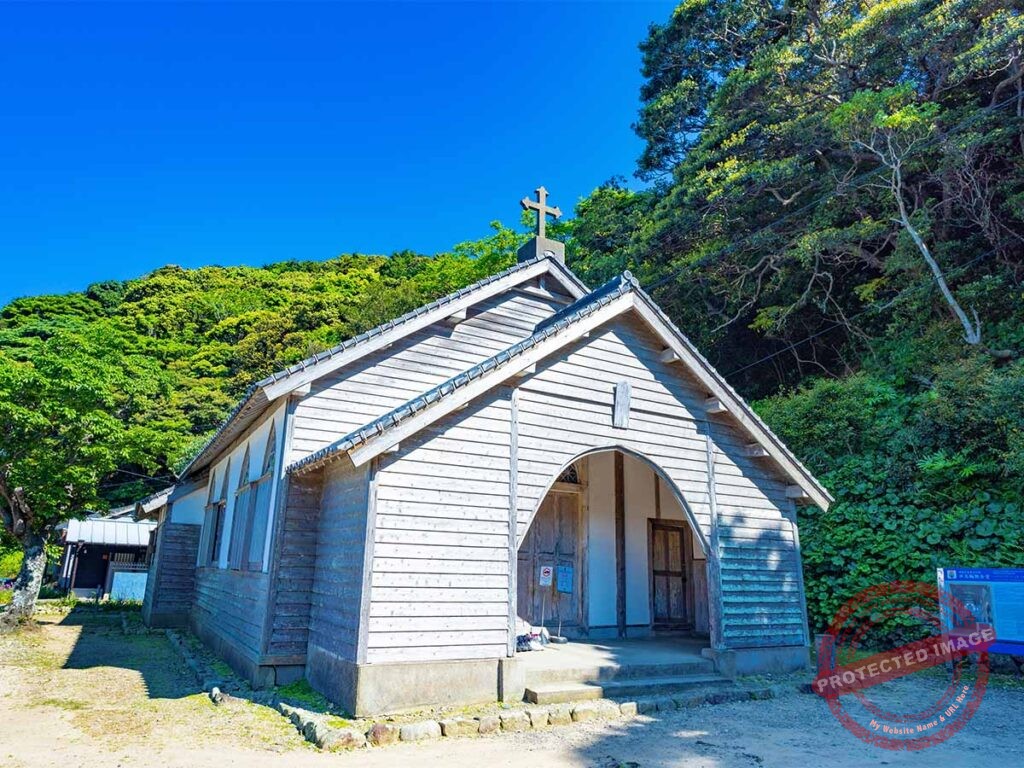
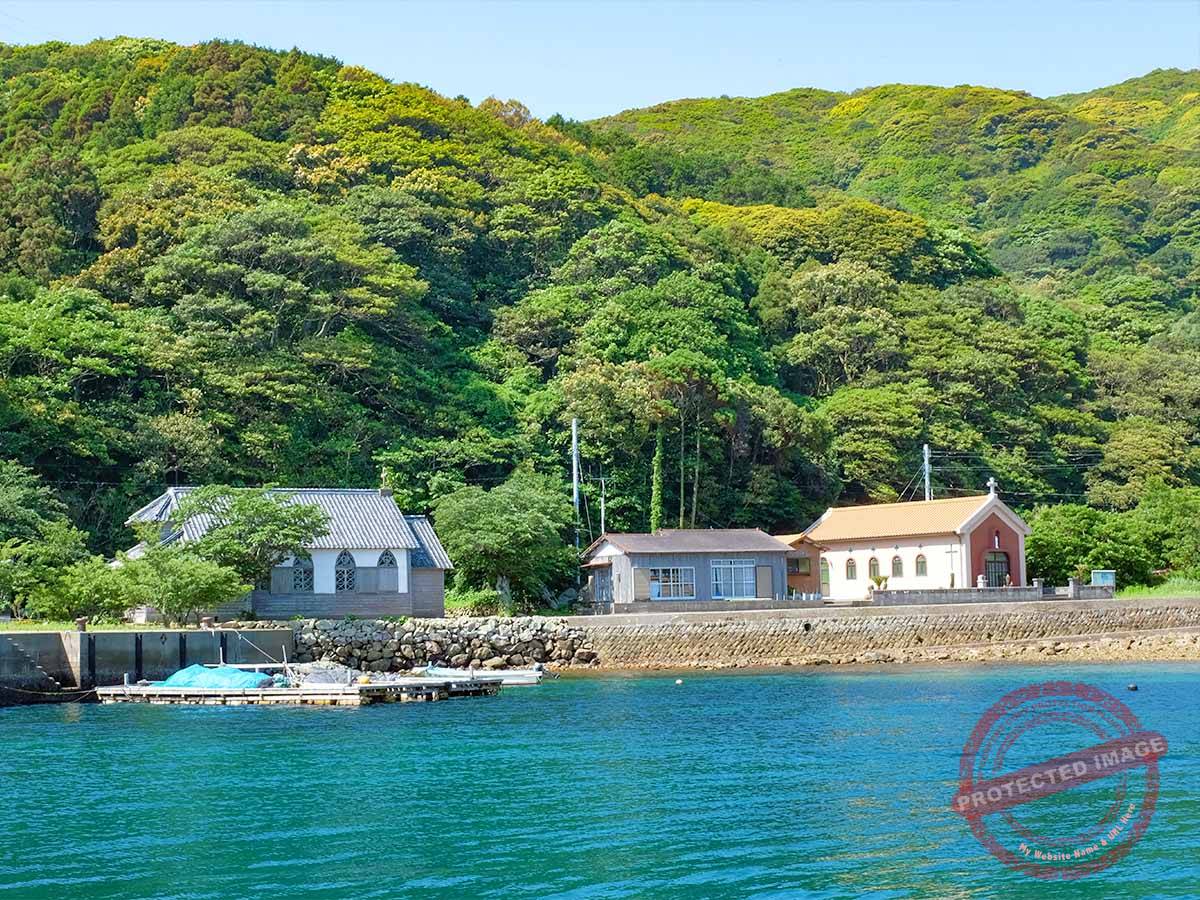
Former Gorin Church stands as one of the most significant examples of early Christian architecture in Japan, representing a pivotal transition from hidden devotion to public worship. Originally constructed in 1881, the building served as the primary place of worship for the small community on Hisaka Island. In 1931, when a new church was built nearby, the original structure was slated for demolition. However, through the intervention and advocacy of local Buddhist residents who recognized its historical value, the sanctuary was spared and relocated to its current coastal site.
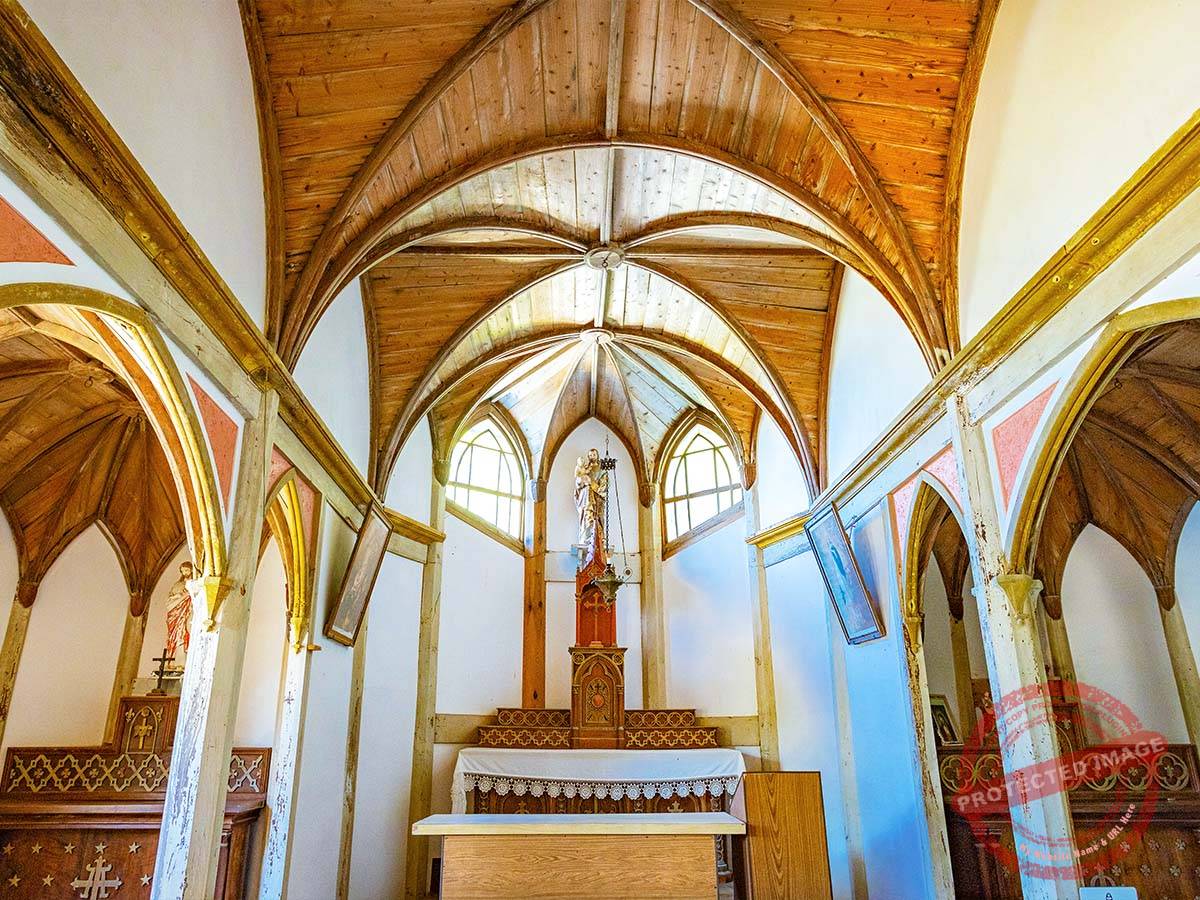
The structure is a masterwork of hybrid architecture, blending traditional Japanese wooden construction with Western ecclesiastical forms. Its exterior maintains the appearance of a traditional Japanese residence, a design choice rooted in the era’s necessity for discretion and the use of local building techniques. The interior reveals a strikingly different character, featuring a sophisticated three-aisle layout and a wooden rib-vaulted ceiling that creates a dignified, sacred atmosphere.
Located within the “Villages on Hisaka Island”, a component of the UNESCO World Heritage “Hidden Christian Sites in the Nagasaki Region”, the church remains uniquely isolated. The site is inaccessible by automobile, requiring visitors to arrive by boat or via a rugged forest trail, preserving a profound sense of the seclusion experienced by the original settlers. Now designated as a National Important Cultural Property, the church offers an authoritative look at the material and spiritual resilience of the Goto Islands.