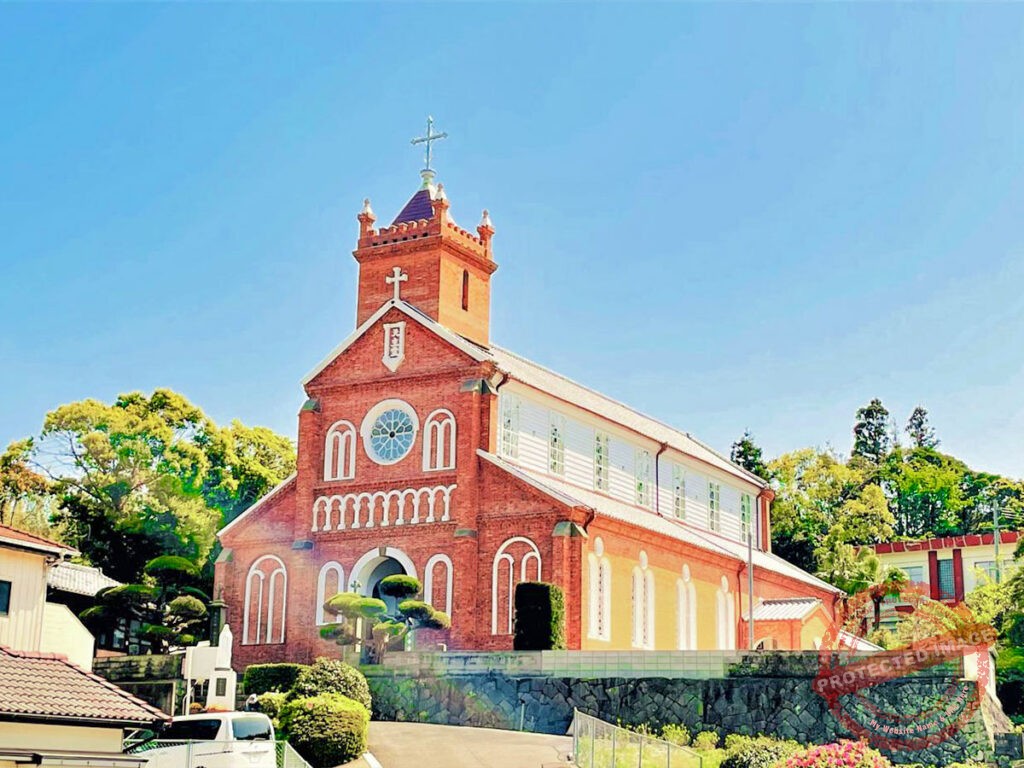
Kuroshima Church is a UNESCO World Heritage Romanesque masterpiece, meticulously crafted from 400,000 bricks by the island’s resilient Catholic community.
Kuroshima Church serves as a profound monument to the collective spirit of a community that once sought sanctuary on this remote island. The congregation consists largely of descendants of Hidden Christians who migrated from Ikitsuki and Sotome during the era of prohibition. In 1902, the current cathedral was realized under the direction of Father Marmand. The project was a massive communal undertaking. Nearly every believer on the island participated in the construction, contributing labor and resources to establish a permanent spiritual home.
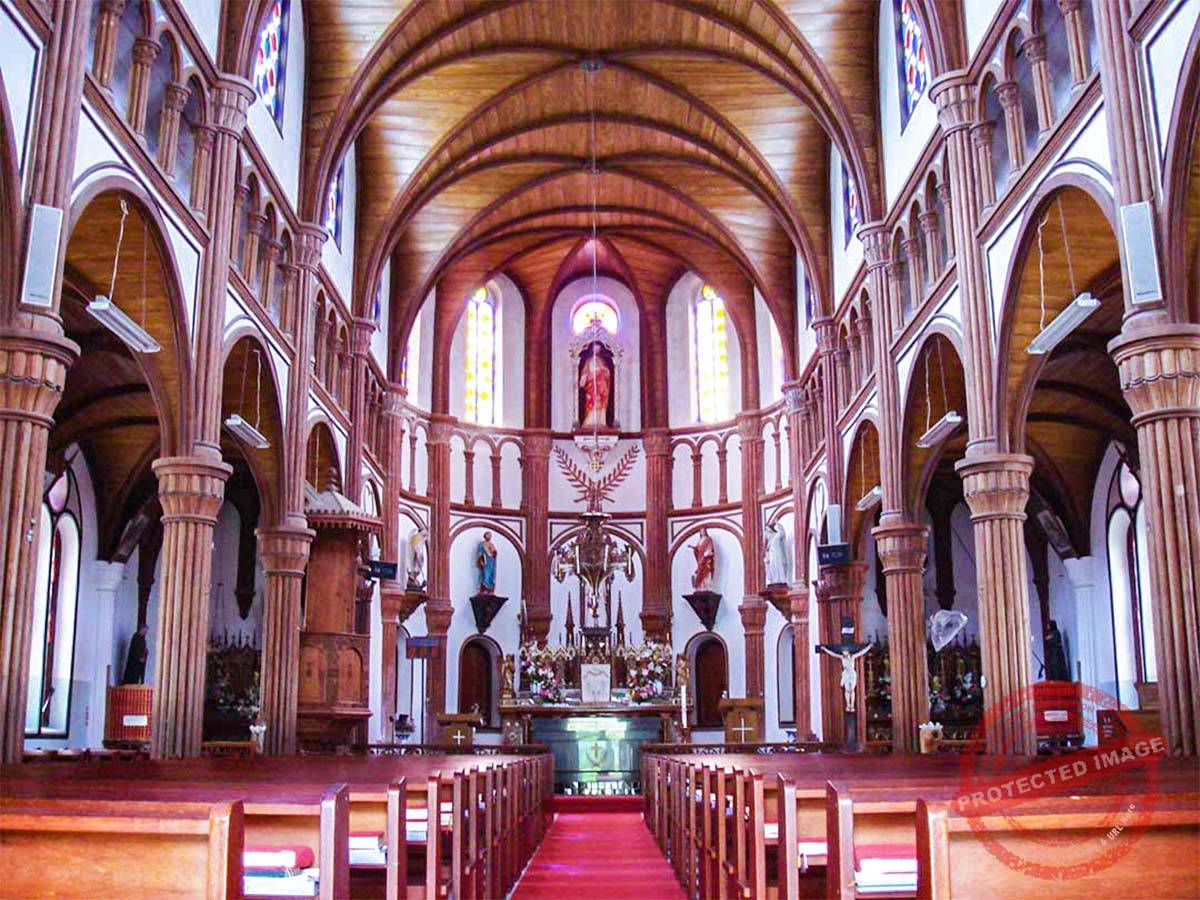
Architecturally, the cathedral is a triumph of Romanesque design, renowned for its flawless symmetry and imposing scale. The structure is composed of approximately 400,000 locally fired bricks, supported by a foundation of indigenous Kuroshima granite. While the exterior conveys a sense of formidable strength, the interior is remarkably warm, featuring intricate woodwork and a meticulously vaulted ceiling. The use of local stone alongside traditional European masonry techniques creates a distinctive aesthetic that is both grand and grounded in the island’s natural environment.
Designated as an Important Cultural Property and recognized as part of the UNESCO World Heritage “Hidden Christian Sites in the Nagasaki Region”, Kuroshima Church is one of the few large-scale brick churches from this period still in active use. Its enduring presence offers a powerful narrative of cultural continuity and communal dedication. Visitors to the island will find a site that possesses a rare sense of dignity, preserved by the same families whose ancestors built it brick by brick.