St. Mary’s Cathedral, Osaka
St. Mary’s Cathedral, serves as the cathedral of the Catholic Archdiocese of Osaka, designed by Eikichi Hasebe, features stained-glass windows depicting the life of Christ and a grand pipe organ with 2,400 pipes.

Discover a masterpiece of mid-century Japanese architecture and spiritual devotion. St. Mary’s Cathedral, also known as the Tamatsukuri Church, stands as the distinguished seat of the Catholic Archdiocese of Osaka-Takamatsu. It offers a serene escape where Western tradition meets the profound history of Japan’s feudal era.
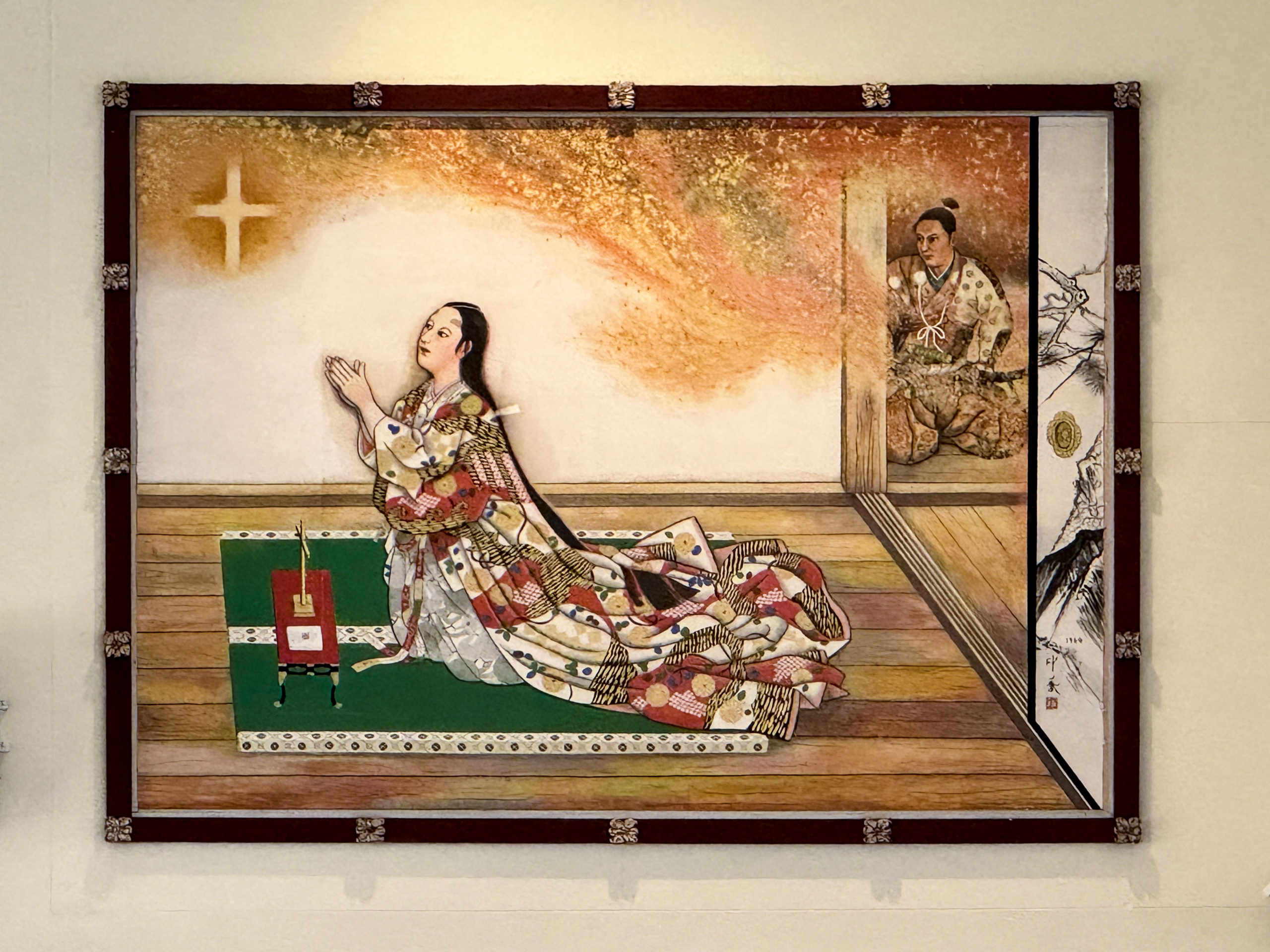
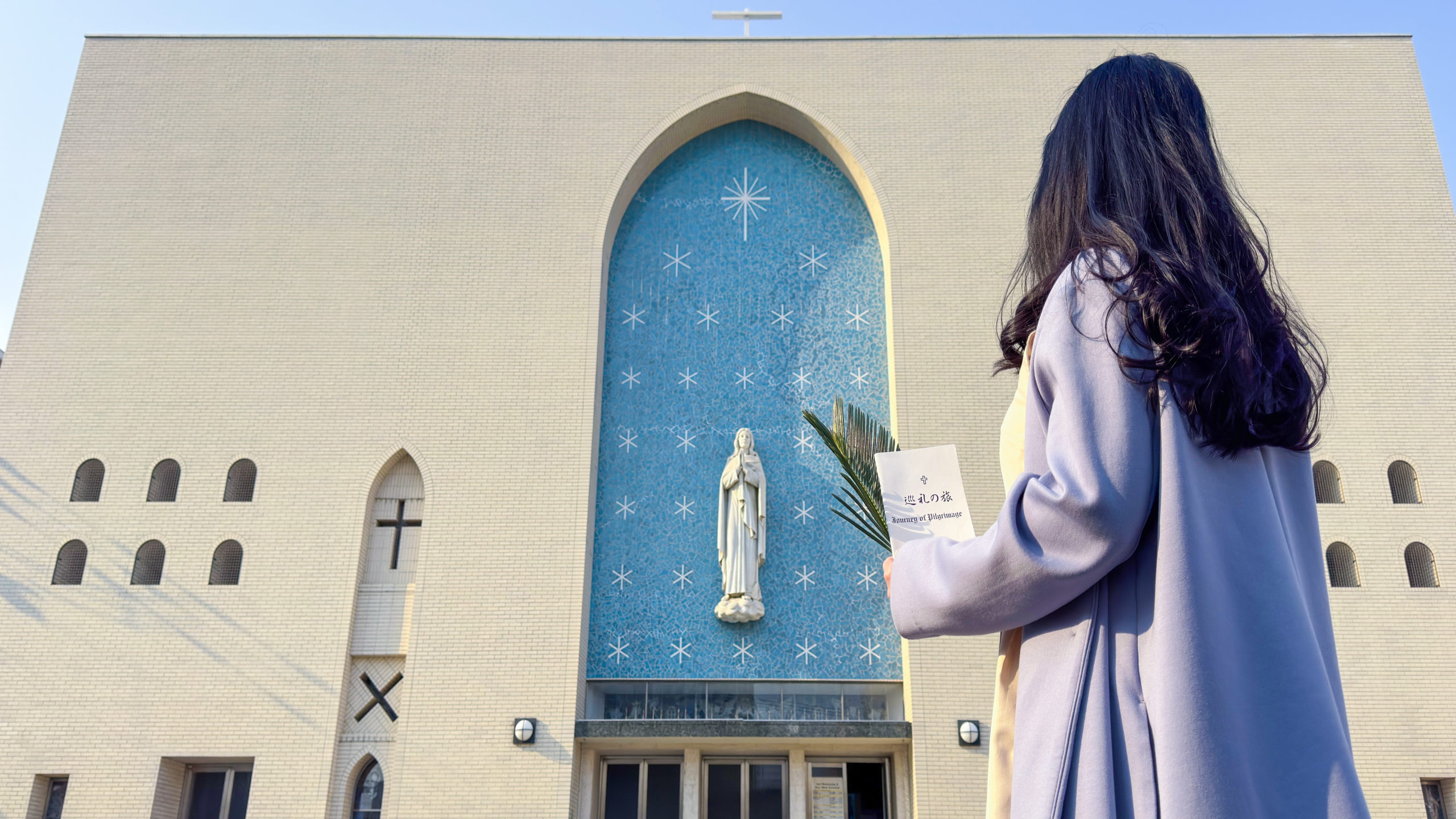
The cathedral’s cream-tiled exterior is punctuated by a striking sky-blue mosaic. Here, a breathtaking mural by the renowned Japanese painter Insho Domoto depicts the Virgin Mary and Child alongside two pivotal figures: the samurai lord Blessed Justo Takayama Ukon and the noblewoman Hosokawa Gracia.
Within the sanctuary, light filters through over 100 stained-glass windows. These vibrant panes, along with the “Stations of the Cross” wood carvings by Austrian sculptor Lungartje, create an atmosphere of quiet contemplation.
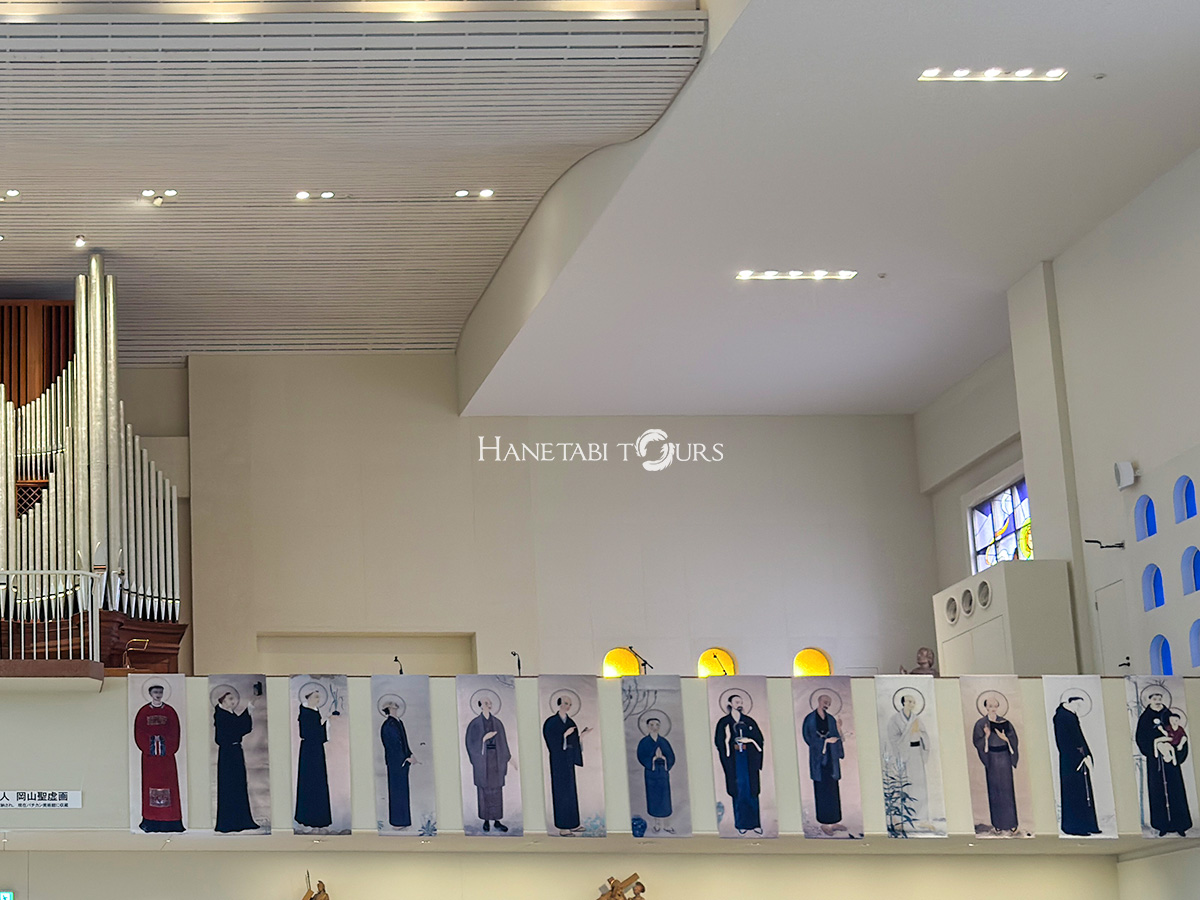
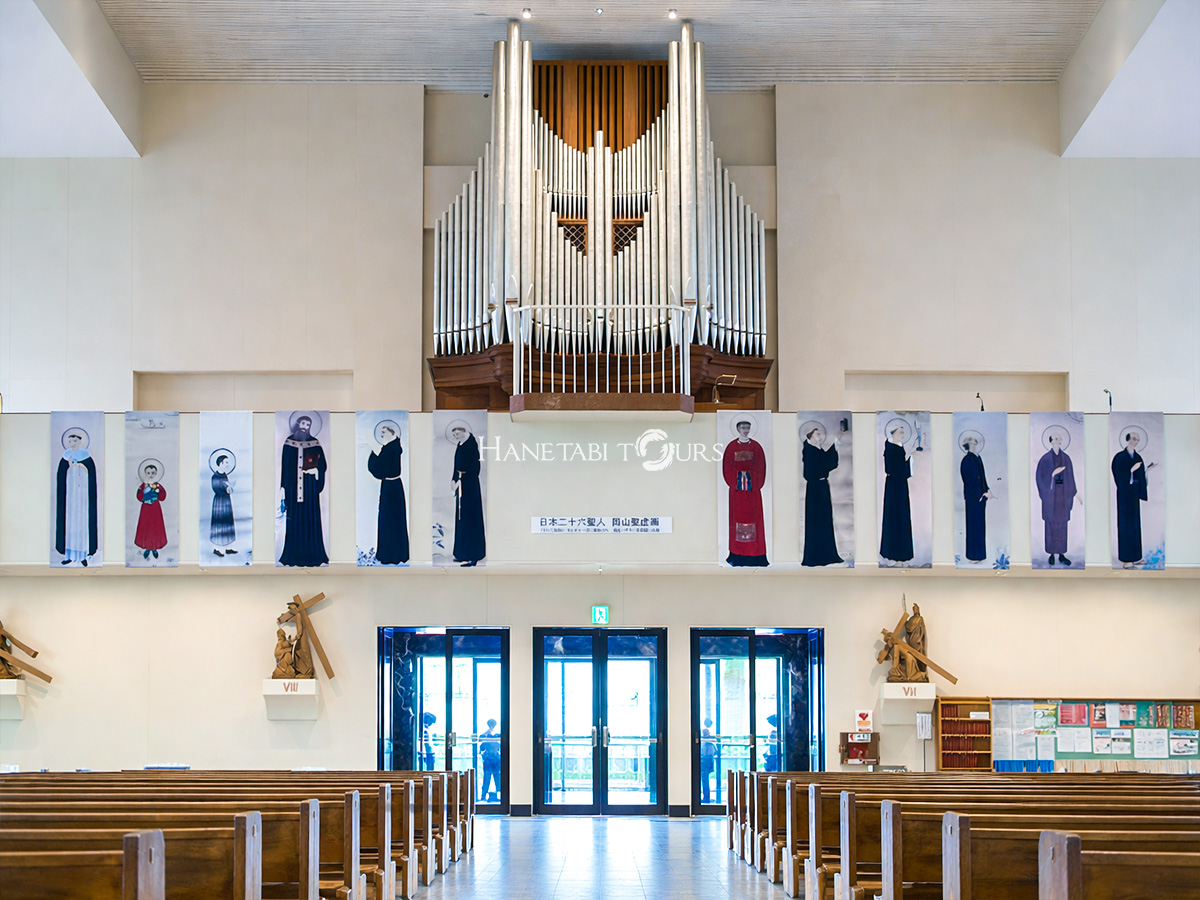
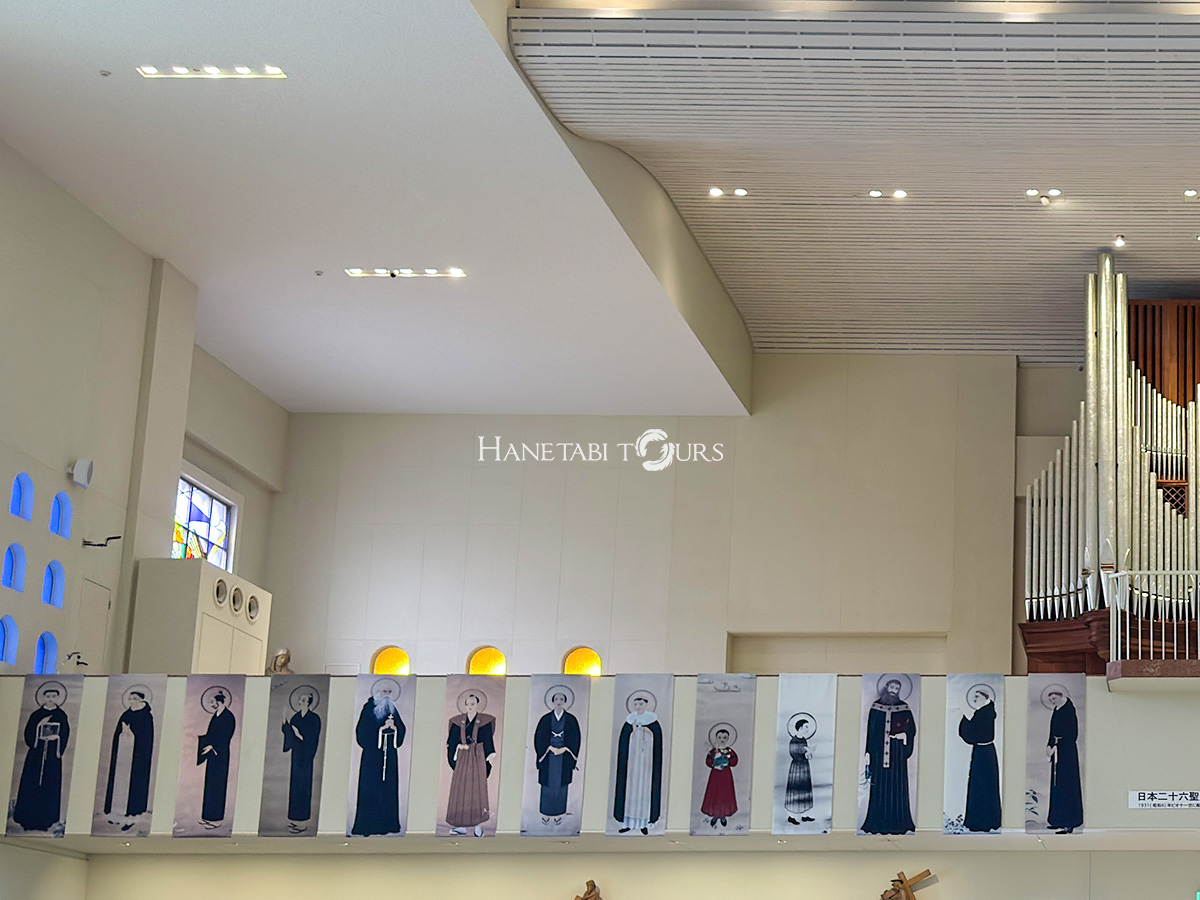
On the second level, the cathedral houses a world-class instrument by the Dutch firm L. Verschueren. With 2,400 pipes, this organ is celebrated for its exceptional clarity, often filling the nave with sublime acoustics during services and concerts.
The cathedral grounds honor the memory of the “Kirishitan” (early Japanese Christians). Statues of Hosokawa Gracia, a symbol of steadfast faith, and Takayama Ukon, the “Samurai of Christ”, stand in the plaza, inviting visitors to reflect on a legacy that has shaped the cultural fabric of Osaka for centuries.
The Blessing and Unveiling of the Bell of Love, Peace, and Hope by Cardinal Maeda Manyo
At the 2025 Osaka – Kansai Expo, a significant act of ecclesial and cultural cooperation took place between Italy, the Holy See, and the St. Mary’s Cathedral, Osaka
This collaboration was expressed through the donation of enduring symbolic gifts and through direct operational cooperation in the Vatican Pavilion.
A monumental bronze bell, installed at the entrance of the Italian Pavilion, was donated by the Molise Region of Italy, home to the historic Marinelli Foundry in Agnone, widely recognized as the world’s oldest continuously operating bell foundry. Following the conclusion of the Expo, the bell was transferred to the front garden of Catholic Tamatsukuri Church, where it now stands as a permanent spiritual and cultural legacy of Expo 2025.