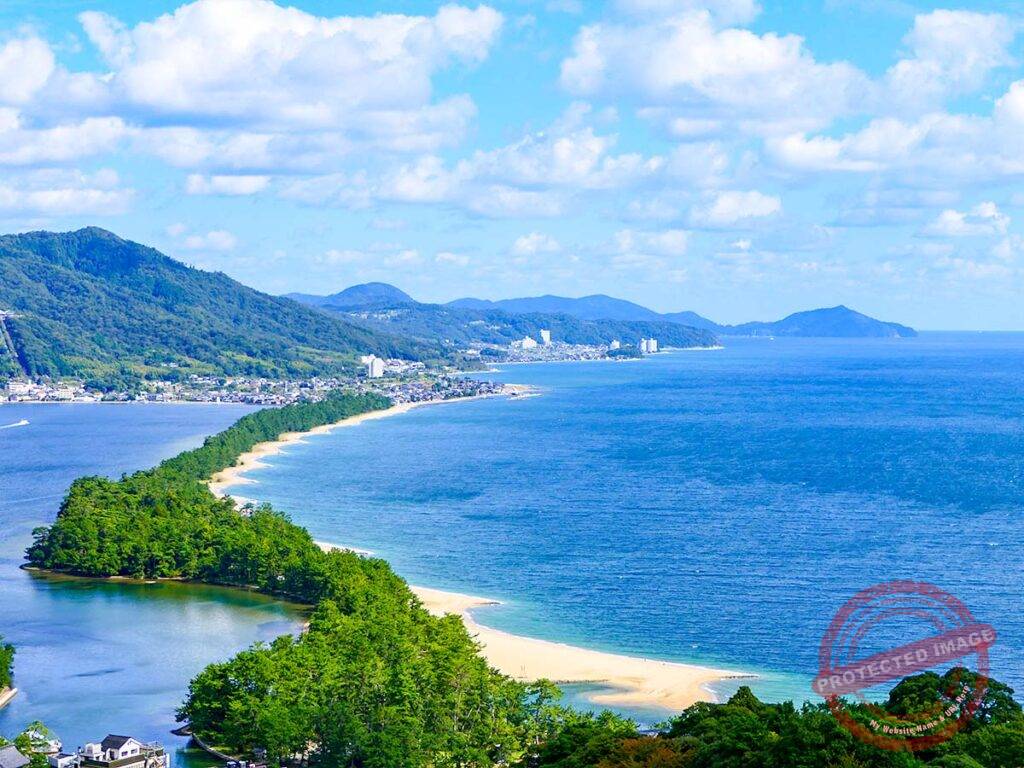
Amanohashidate rises as a monumental sandbar in northern Kyoto Prefecture. It serves as an authoritative cultural anchor and is recognized as one of the three most celebrated scenic views in Japan.
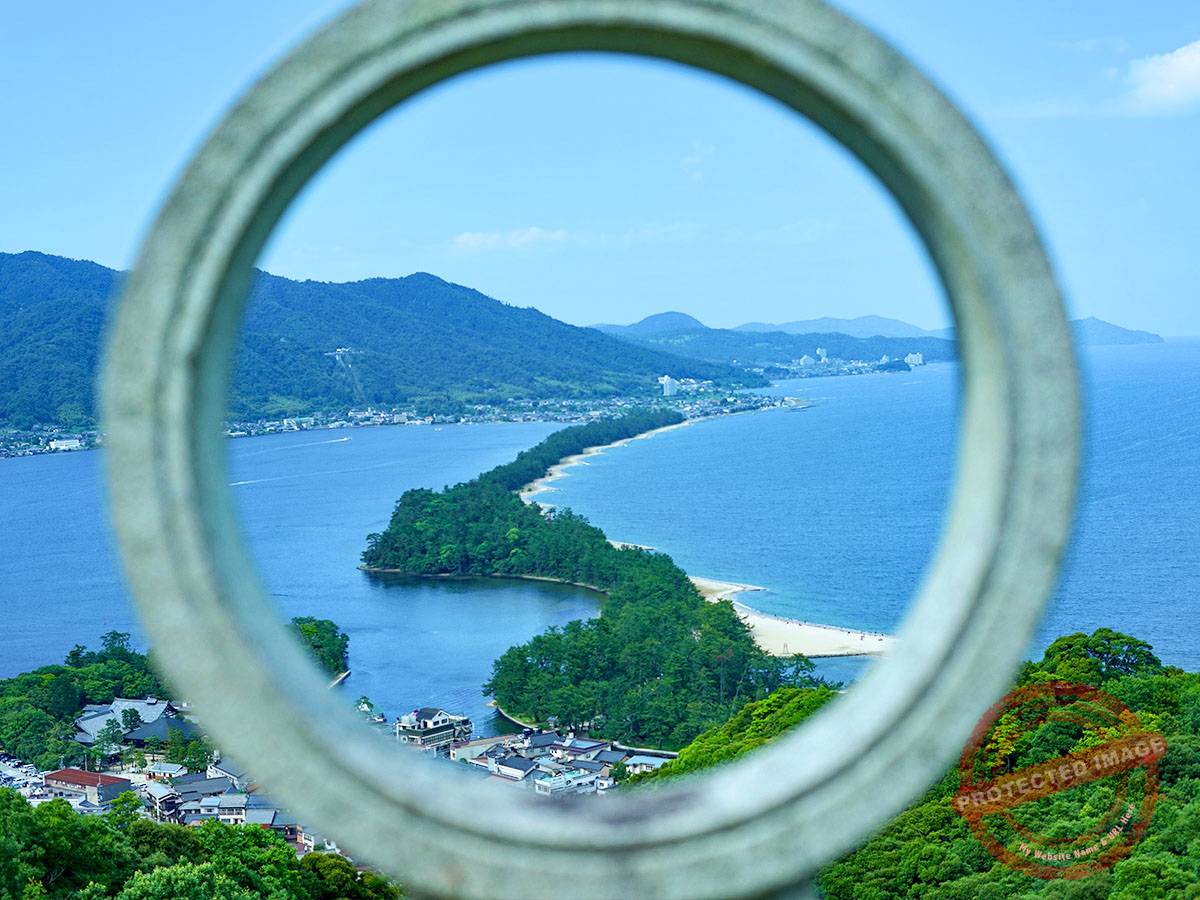
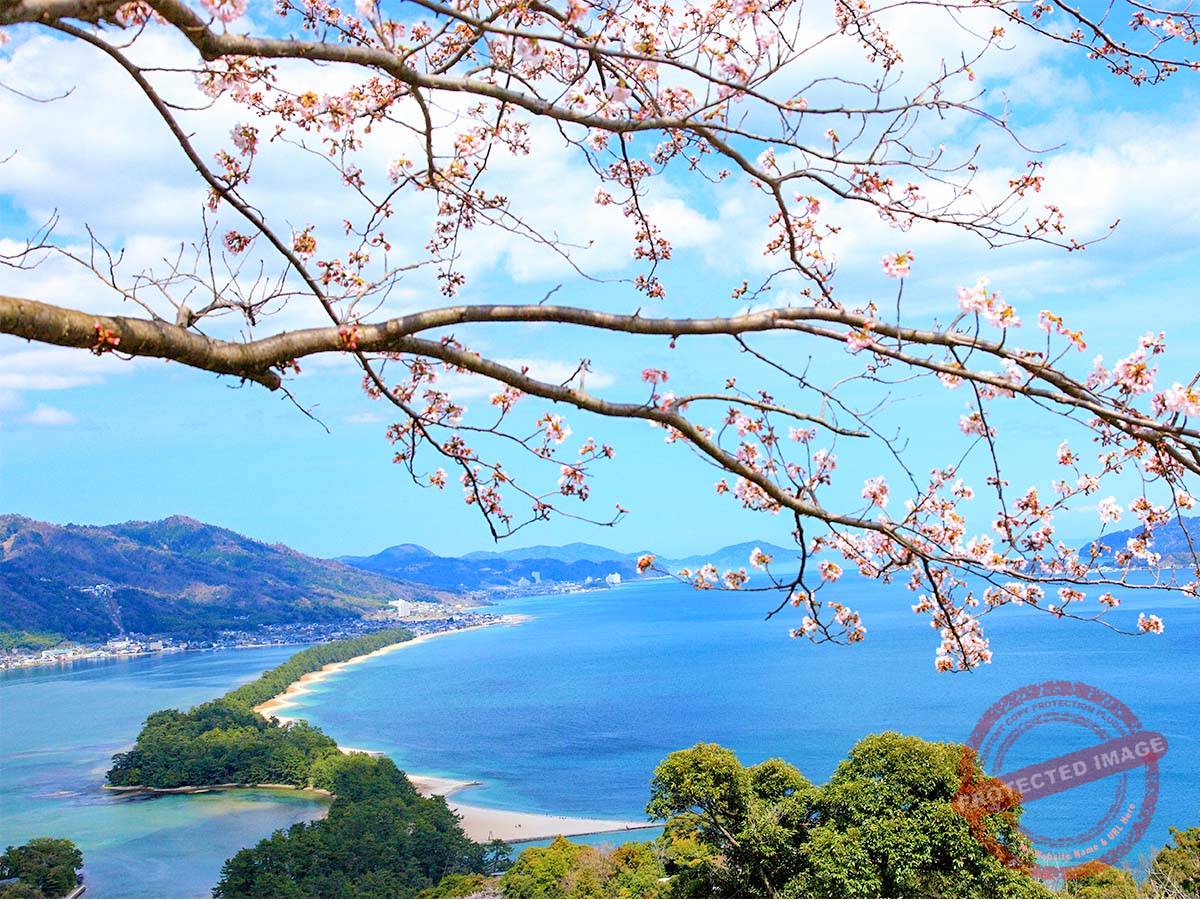
The site is topographically defined by a narrow, three-kilometer strip of land that spans the Miyazu Bay. This natural formation was created over millennia by the rhythmic deposition of sand and sediment from the Sea of Japan. The layout features a dense forest of approximately eight thousand pine trees that have been meticulously maintained for generations. The craftsmanship of the landscape is reflected in the winding trails that connect the Monju and Fuchu areas. These paths provide a disciplined transition between the coastal shrines and the elevated observation points on the surrounding mountains. The atmosphere is most visually compelling when viewed from the Kasamatsu Park or the Amanohashidate View Land. From these heights, visitors traditionally perform “matanozoki” by looking through their legs, which makes the sandbar appear as a bridge spanning toward the heavens.
The significance of Amanohashidate lies in its deep-rooted presence in classical Japanese literature and ink-wash painting. The environment is characterized by a polished sense of maritime tranquility and historical continuity. This atmosphere is historically linked to the pilgrimage routes leading to the nearby Chion-ji Temple and the Nariai-ji Temple. The sensory experience is defined by the scent of pine needles and the sound of waves lapping against the white sand beaches. It remains a premiere destination for those seeking an intellectually rewarding encounter with the enduring aesthetic values of the Tango Peninsula. The site stands as a polished witness to the spiritual and artistic reverence that the Japanese people have long held for their natural coastal contours.