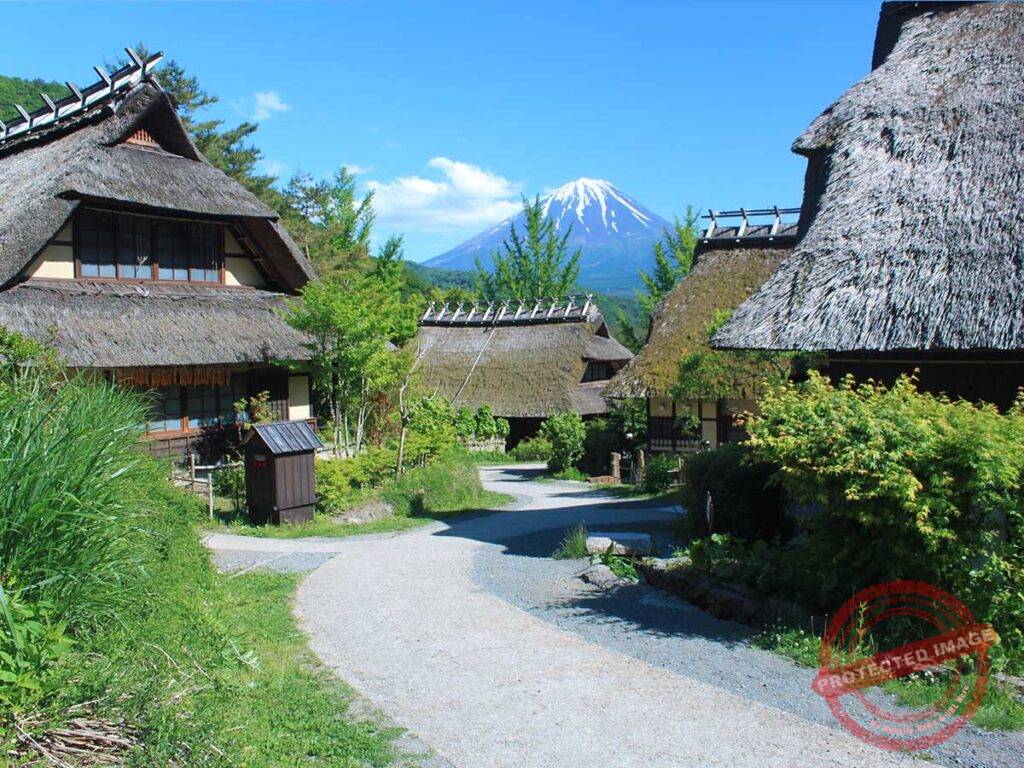
The site is topographically defined by its position on the northern slopes of Mount Fuji, occupying the former location of a traditional farming village destroyed by a landslide in 1966. The reconstruction, completed in 2006, serves as a monumental tribute to the resilient agrarian heritage of the region. The layout features twenty “kabuto-zukuri” or helmet-style thatched-roof houses. These structures are named for their distinctive shape which resembles the helmets worn by samurai. The craftsmanship of the buildings is reflected in the traditional weaving of the reeds and the heavy timber frames that were designed to withstand the significant snowfall of the Yamanashi highlands.
The significance of the village lies in its role as a living museum for regional folkways and traditional industries. The environment is characterized by a polished sense of stillness and historical continuity. This atmosphere is most visually compelling during the autumn months when the surrounding foliage turns vibrant colors or in winter when the thatched roofs are capped with snow. The sensory experience is defined by the aroma of “hoto” noodles simmering in iron pots and the tactile nature of the various craft workshops. These spaces allow for a disciplined exploration of indigo dyeing, pottery, and papermaking. Saiko Iyashinosato Nemba remains a premiere destination for those seeking a tranquil and authentic encounter with the rural rhythms of old Japan. |