
Ueno Ameyoko
| Ueno Ameyoko stands as a monumental commercial hub in Tokyo, serving as a vital cultural anchor and a living archive of the city’s post-war economic resurgence. |
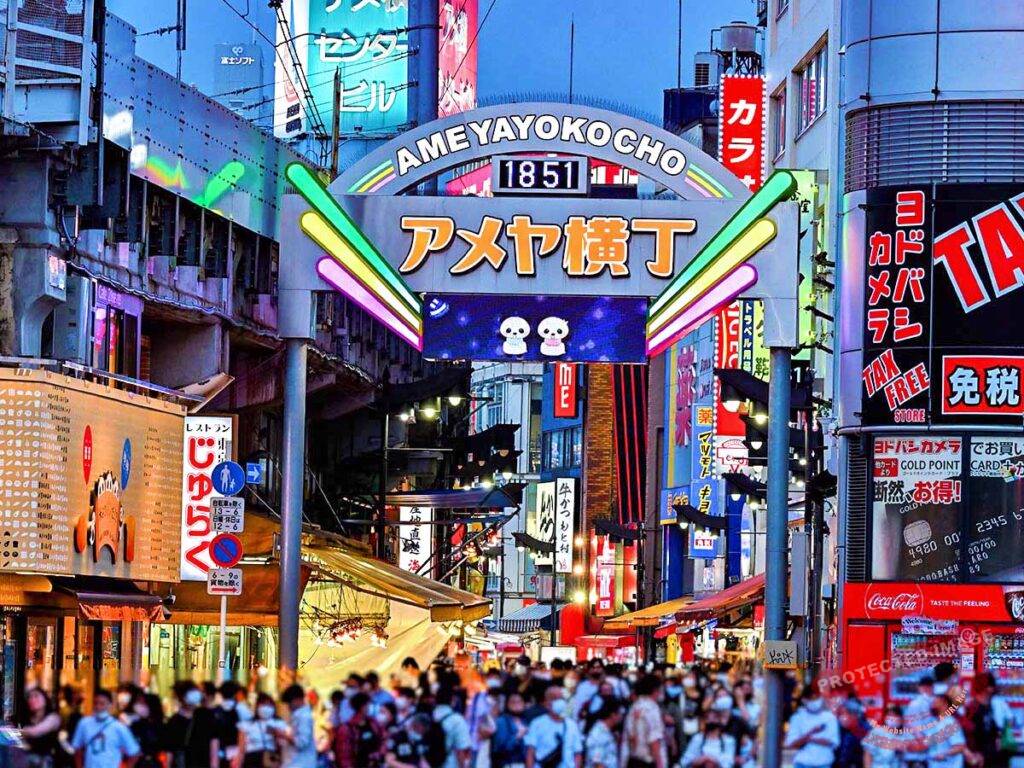
| The market is topographically defined by its location along the elevated railway tracks of the Yamanote Line, stretching between Ueno and Okachimachi Stations. The layout originated in the chaotic period following the Second World War when the area functioned as a critical black market for scarce goods. The name “Ameyoko” serves as an authoritative nod to this history, derived from “Ameya” for the candy shops that dominated the scene and “Ame” for the surplus American military goods that were once sold here. The environment is characterized by a rhythmic and high-energy atmosphere where vendors employ traditional “daikon-uri” style vocal performances to attract customers with rapid-fire sales and competitive pricing. The significance of the district lies in its role as a resilient symbol of Tokyo’s urban culture and international diversity. The environment is characterized by a polished sense of organized chaos. This atmosphere is most visually compelling in the narrow alleys that house the Ameyoko Center Building, where underground markets offer a wide range of global ingredients and specialized cosmetics. The sensory experience is defined by the diverse aromas of street food, ranging from traditional grilled seafood and specialized “takoyaki” to international flavors like Turkish kebabs. The district maintains a disciplined focus on high-volume trade, particularly during the end-of-year period when thousands of locals gather to purchase traditional “osechi” ingredients for the New Year. For the luxury and heritage traveler, Ueno Ameyoko provides a composed and intellectually rewarding environment that captures the intersection of historical necessity and contemporary commerce. The atmosphere is one of disciplined vitality. The site offers a definitive location to witness the “tataki-uri” or energetic auctioning of chocolate and dry goods, a practice that has become a hallmark of the area’s merchant identity. It remains a premiere destination for those seeking to engage with a side of Tokyo that is less curated and more visceral than the high-end districts of Ginza or Shinjuku. The market stands as a polished witness to the enduring strength of Japan’s small-scale entrepreneurial spirit. |