
Byodo-in Hoshokan Museum
| The Byodo-in Hoshokan Museum stands as a monumental cultural anchor within the temple grounds, serving as a vital facility for the preservation and display of National Treasures from the Heian period. |
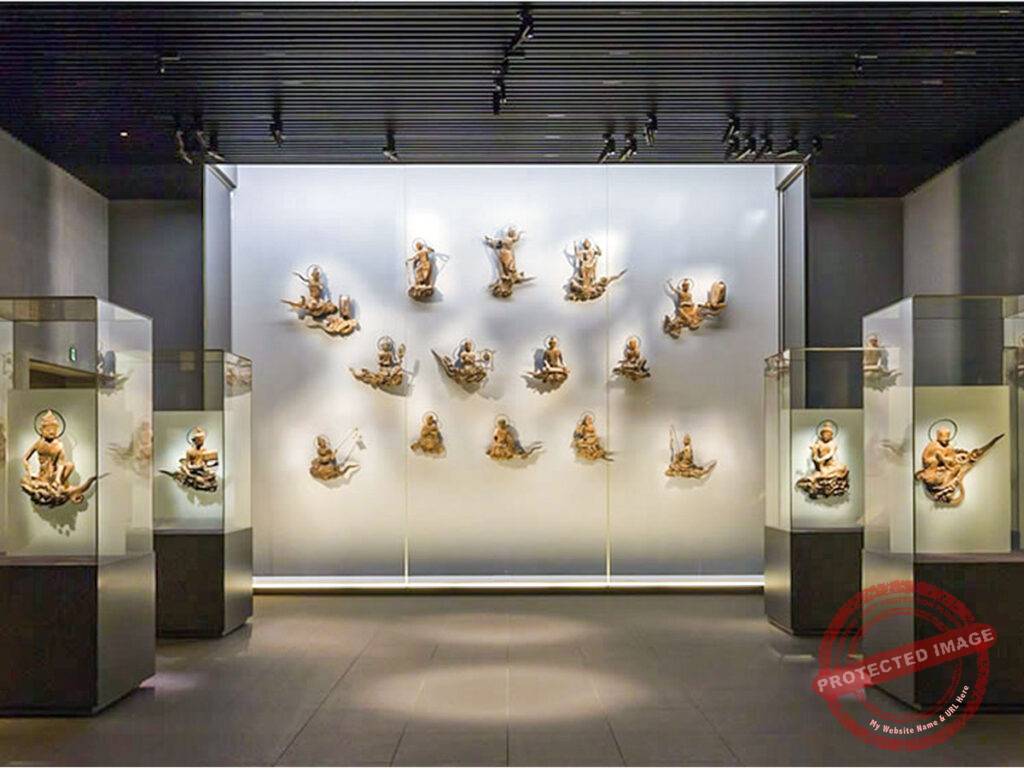
| This facility is architecturally defined by its innovative subterranean design, which was constructed to harmonize with the historical landscape while providing a climate-controlled environment for sensitive artifacts. The layout is characterized by a series of minimalist galleries that emphasize the artistic and spiritual gravity of the collection. The craftsmanship of the museum is reflected in its specialized lighting and display techniques that highlight the intricate details of nearly millennium-old masterpieces. The significance of the museum lies in its role as a safeguard for the original artistic elements of the Byodoin complex. The environment is characterized by a polished sense of reverence and scholarly depth. This atmosphere is most visually compelling in the main gallery, where the original 26 “Praying Bodhisattvas on Clouds” are displayed at eye level, allowing for a disciplined observation of their varied expressions and musical instruments. The sensory experience is defined by the contrast between the dark, atmospheric corridors and the brightly illuminated relics. The Hoshokan Museum houses the original eleventh-century bronze temple bell, which is widely considered one of the most beautiful in Japan for its elaborate relief carvings. It also displays the original pair of bronze phoenixes that once sat atop the roof of the Phoenix Hall, providing an authoritative look at the metallurgical skills of the period. Interpretive displays utilize high-resolution digital imagery to recreate the vibrant colors that once adorned the interior of the temple. The site remains a premiere destination for those seeking to engage with the refined craftsmanship of the Japanese aristocracy. |