
Byodoin Temple and Phoenix Hall
| Byodoin Temple stands as a monumental landmark in Uji, serving as a vital cultural anchor and a sublime representation of the Buddhist Pure Land on earth. |
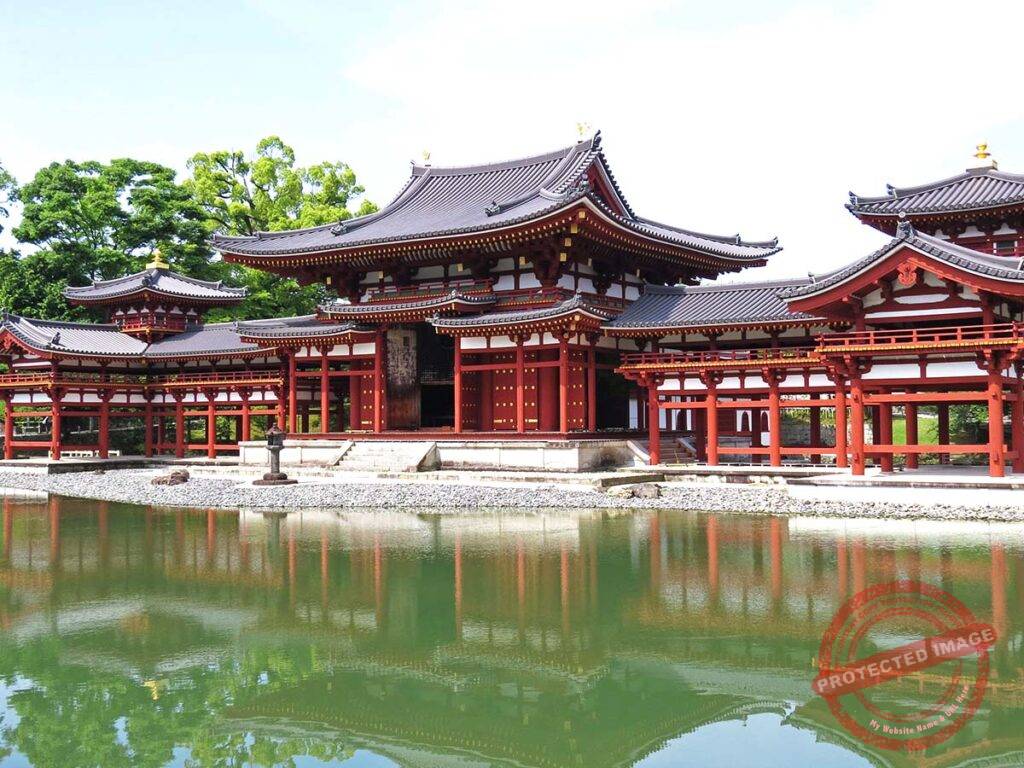
| The temple is architecturally defined by the Phoenix Hall, or “Hōō-dō”, which was originally established in 1053. The layout features a central hall flanked by two wing corridors and a tail corridor, a configuration that creates the rhythmic silhouette of a phoenix spreading its wings. The craftsmanship of the hall is reflected in its status as one of the few original wooden structures to survive from the Heian period. It avoided the fires that destroyed much of the surrounding complex. The central hall houses a 2.4-meter-tall seated statue of the Amida Buddha, an authoritative work confirming the mastery of the sculptor Jōchō. This statue is surrounded by 52 “Praying Bodhisattvas on Clouds,” which are intricate relief sculptures that appear to dance and play musical instruments around the deity. The significance of the site lies in its role as a physical manifestation of the Western Paradise, a concept that provided spiritual comfort during the “Mappō” era of perceived religious decline. The environment is characterized by a polished sense of symmetry and historical gravity. This atmosphere is most visually compelling when viewed from across the “Aji-ike” pond, where the vermilion structure is reflected perfectly in the still water. The sensory experience is defined by the contrast between the ancient exterior and the modern, underground Hoshokan Museum, which protects the original bronze phoenixes and the temple bell. The hall’s cultural authority is recognized globally through its appearance on the Japanese ten-yen coin and the ten-thousand-yen note. For the luxury and heritage traveler, Byodoin provides a composed and intellectually rewarding environment that captures the intersection of aristocratic power and delicate religious art. The atmosphere is one of disciplined elegance. The site offers a definitive location to witness the “Yamato-e” style paintings on the interior doors, which depict the various stages of the Amida Buddha’s descent to welcome the souls of the faithful. It remains a premiere destination for those seeking to engage with the peak of Heian-period aesthetic and spiritual ambition. The temple stands as a polished witness to the enduring influence of the Fujiwara clan on the Japanese cultural landscape. |