Peace Memorial Park and Atomic Bomb Dome
| The Hiroshima Peace Memorial Park and the Atomic Bomb Dome stand as a monumental testament to human history, serving as a vital cultural anchor and a global center for the advocacy of international peace. |
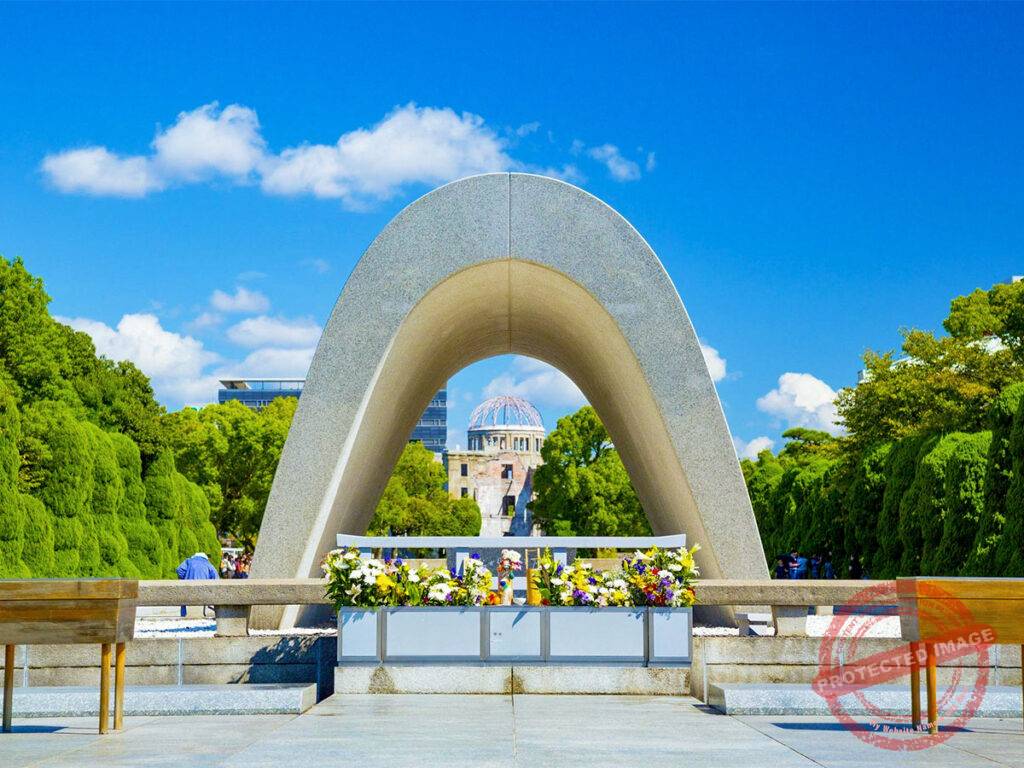
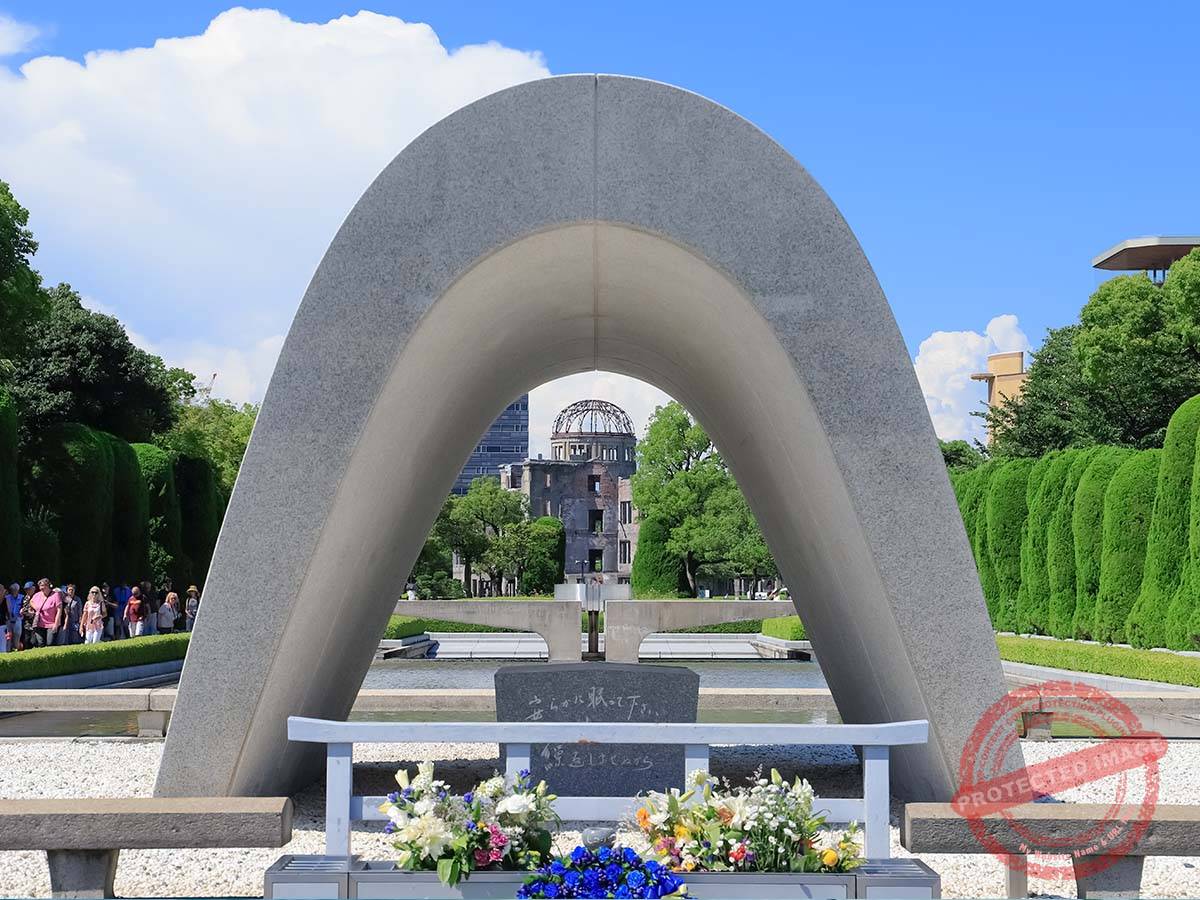
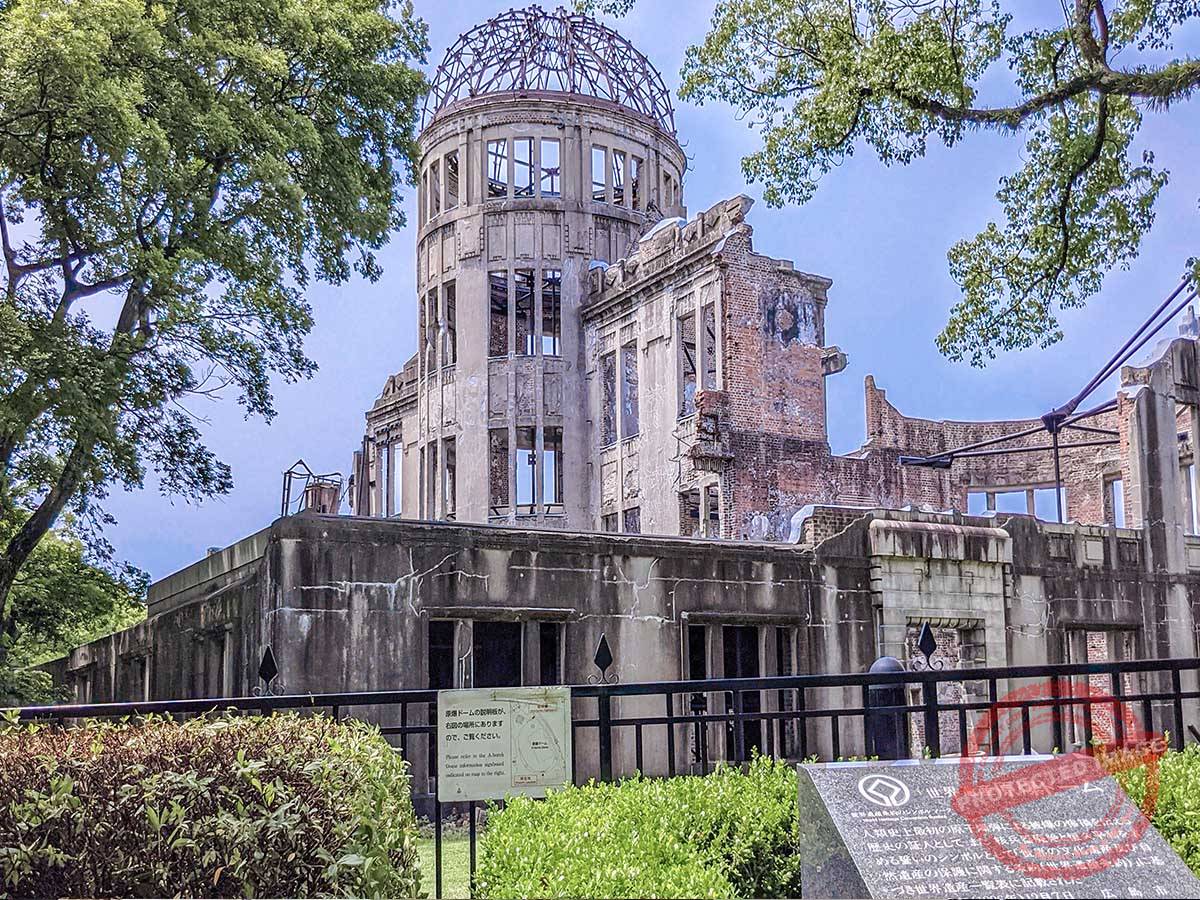
| The site is architecturally and topographically defined by the stark skeletal remains of the Hiroshima Prefectural Industrial Promotion Hall, now known as the Atomic Bomb Dome. Designed by Czech architect Jan Letzel and completed in 1915, the building’s reinforced concrete shell survived the 1945 atomic blast because the explosion occurred almost directly above it. The layout of the surrounding park, designed by the authoritative Japanese architect Kenzo Tange, is organized along a central axis that aligns the Dome, the Cenotaph for the A-bomb Victims, and the Peace Memorial Museum. This disciplined spatial arrangement creates a rhythmic and reflective transition from the ruins of the past to the vision of a nuclear-free future. The significance of the Atomic Bomb Dome lies in its status as a UNESCO World Heritage site, representing a “negative heritage” that reminds the world of the destructive power of nuclear weapons. The environment is characterized by a polished sense of solemnity and historical gravity. This atmosphere is most visually compelling during the evening when the Dome is illuminated, casting long shadows across the Motoyasu River. The presence of the Children’s Peace Monument and the Flame of Peace, which is intended to burn until all nuclear weapons are abolished, underscores the site’s continuity as a living memorial. The sensory experience is defined by the contrast between the vibrant greenery of the park and the weathered, rusted iron of the Dome’s cupola. For the luxury and heritage traveler, the Hiroshima Peace Memorial Park provides a composed and intellectually rewarding environment that captures the intersection of tragic history and architectural resilience. The atmosphere is one of monumental stillness. It offers a definitive location to witness the preservation of a singular moment in the 20th century. It remains a premiere destination for those seeking to understand the foundational principles of post-war Japanese identity and its commitment to global harmony. The site stands as a polished witness to the enduring human spirit and the importance of memory in the pursuit of peace. |