Olive Hill & Greek Windmill
Olive Hill and the Greek Windmill stand as a monumental scenic landmark on Shodoshima, serving as a vital cultural anchor that visually defines the island’s identity as the Mediterranean of Japan.

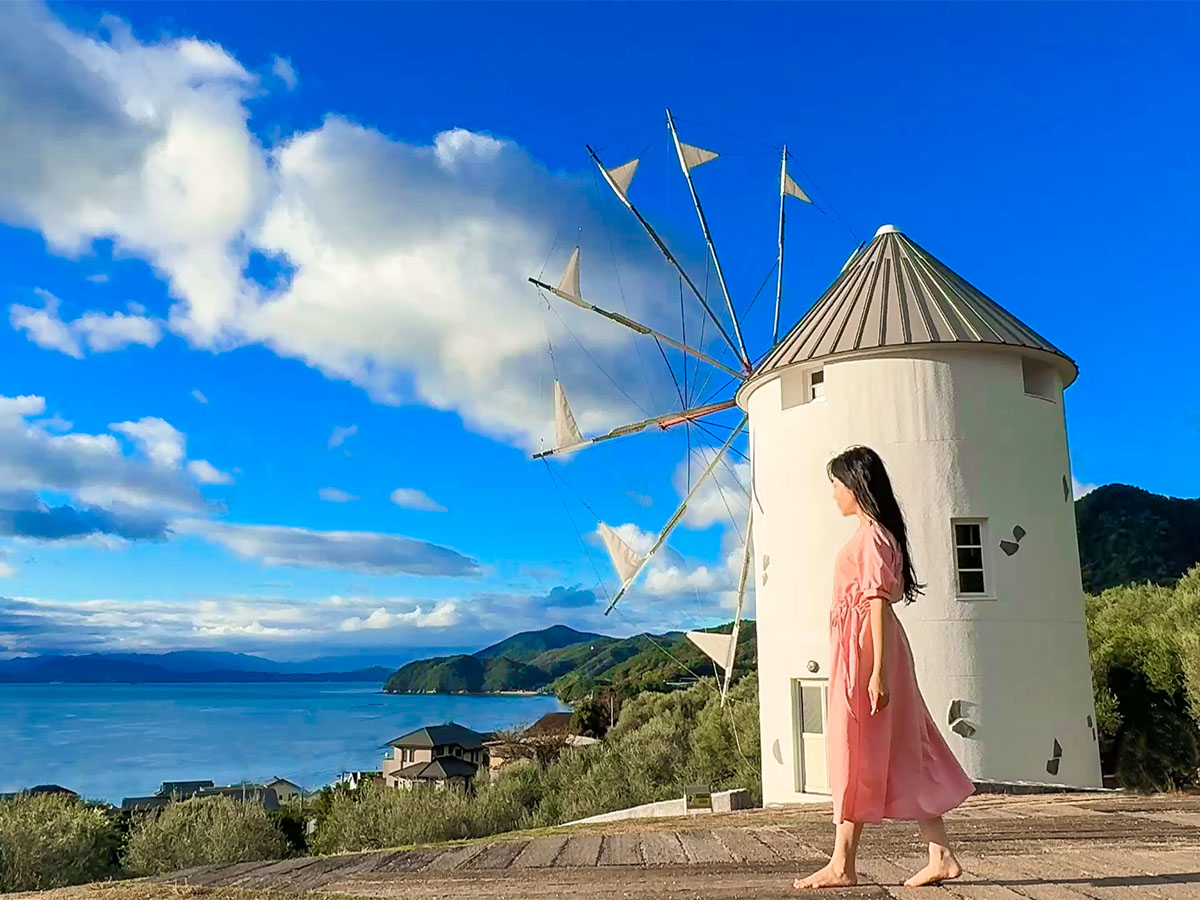
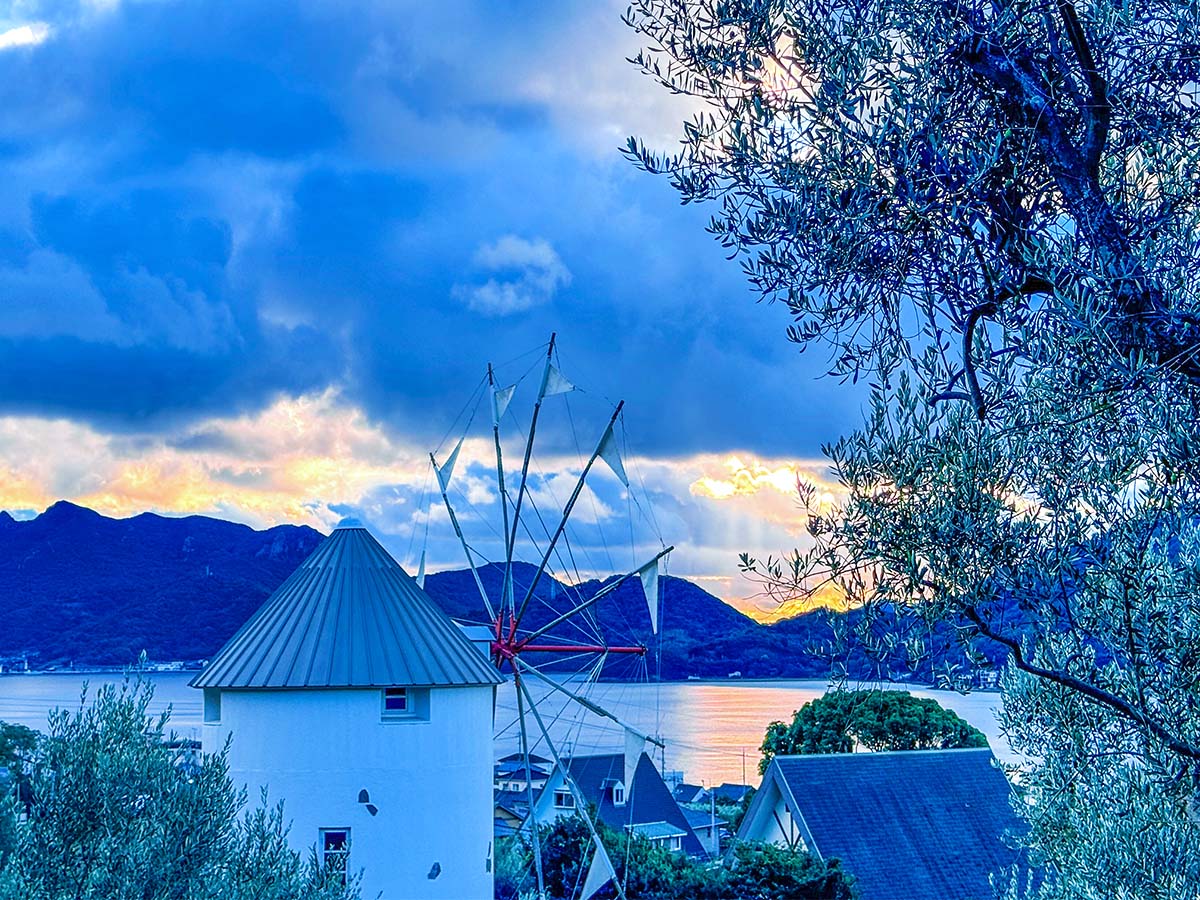
The site is architecturally and topographically defined by its elevated position overlooking the calm waters of the Seto Inland Sea. The central feature is a white-plastered windmill featuring wooden sails and a conical roof, which was constructed as a symbol of the sister-island relationship between Shodoshima and the Greek island of Milos. The layout of the surrounding hillside is characterized by terraced olive groves that slope gently toward the coastline. This creates a disciplined and harmonious landscape that mirrors the aesthetic of the Aegean Sea. The craftsmanship of the windmill reflects traditional European design, providing an authoritative contrast to the indigenous flora and the standard Japanese coastal architecture found elsewhere on the island.
The significance of Olive Hill lies in its role as a premier location for visual storytelling and cultural exchange. The environment is characterized by a polished sense of openness and tranquility. This atmosphere is most visually compelling during the early morning or at sunset when the light emphasizes the stark white of the windmill against the deep blue of the sea and the silver-green of the olive leaves. The site has gained widespread recognition as a filming location, most notably for the live-action adaptation of Kiki’s Delivery Service. This cinematic connection has transformed the hillside into a place where fantasy and reality intersect. It underscores the island’s modern status as a destination for refined tourism and creative inspiration.
For the luxury and heritage traveler, Olive Hill and the Greek Windmill provide a composed and intellectually rewarding environment that captures the intersection of international diplomacy and regional beauty. The atmosphere is one of elevated stillness. It offers a definitive location to witness the successful integration of foreign architectural motifs into the Japanese landscape. It remains a premiere destination for those seeking a sophisticated and photogenic retreat within the Kagawa prefecture. The site stands as a polished witness to the enduring bond between two distant maritime cultures and the shared heritage of the olive tree.