
Kyoto Yasaka Shrine
Yasaka Shrine serves as a monumental spiritual gateway at the intersection of the Gion district and Higashiyama, functioning as a vital cultural anchor for Kyoto’s religious and social identity.
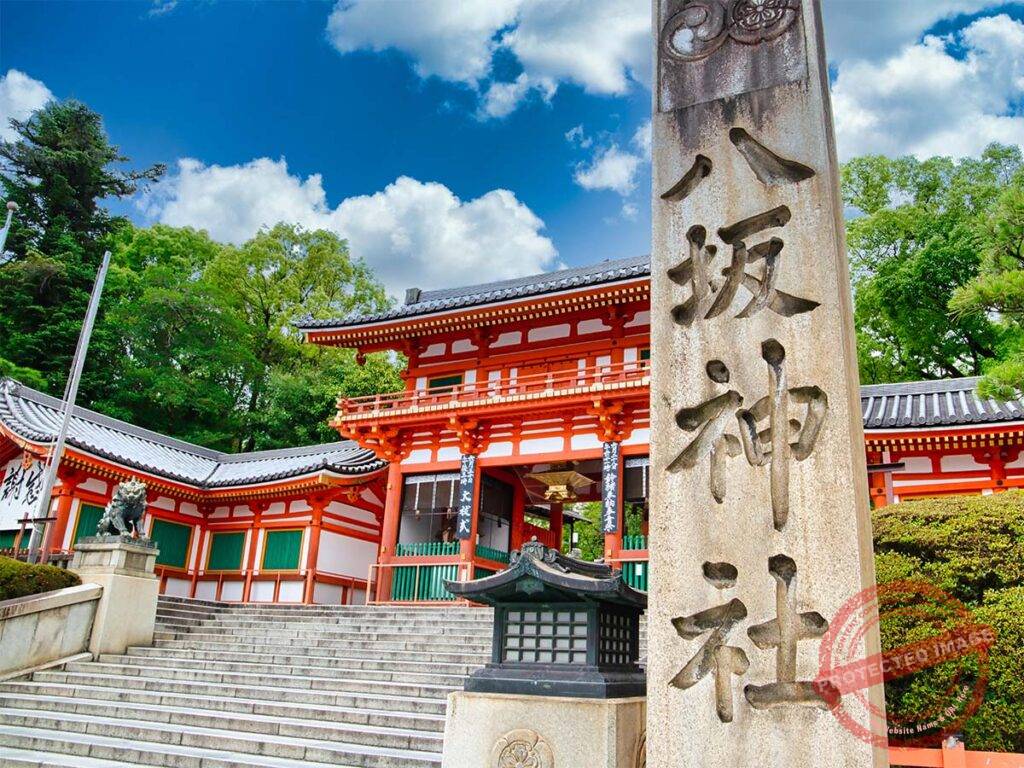
The shrine is architecturally defined by its unique “Gion-zukuri” style, a rare construction method where the main sanctuary and the hall of worship are unified under a single, expansive roof. Originally established in 656, the current main hall dates to 1654 and represents the authoritative craftsmanship of the early Edo period. The layout is characterized by the vermilion Nishi-romon gate, which faces Shijo Street and acts as a definitive landmark for the city’s traditional merchant quarters. The complex is further distinguished by a central dance stage adorned with hundreds of paper lanterns. Each lantern bears the name of a local business or donor. This creates a disciplined and luminous display of communal patronage.
The significance of Yasaka Shrine lies in its status as the host of the Gion Matsuri, one of Japan’s most celebrated and ancient festivals. Since the 9th century, the shrine has been central to rituals intended to ward off pestilence and misfortune. The environment is characterized by a polished sense of continuity and seasonal vitality. This atmosphere is most visually compelling during the evening hours when the lanterns are illuminated, casting a warm glow over the gravel paths and weathered wood. This provides a striking contrast to the vibrant nightlife of the adjacent Gion district. The presence of the Utsukushi Gozen-sha, a sub-shrine dedicated to beauty and grace, highlights the site’s multi-layered role in the daily life of Kyoto’s residents and artisans.
For the luxury and heritage traveler, Yasaka Shrine provides a composed and intellectually rewarding environment that captures the intersection of ancient plague-warding traditions and refined urban life. The atmosphere is one of disciplined elegance. It offers a definitive location to witness the preservation of Heian-period aesthetics within a contemporary city. It remains a premiere destination for those seeking to understand the deep spiritual roots that sustain Kyoto’s festival culture. The site stands as a polished witness to the enduring human desire for health, harmony, and prosperity.