
Tsurugaoka Hachimangu Shrine
| Tsurugaoka Hachimangu stands as a monumental landmark of the Kamakura period, serving as the definitive spiritual and political anchor for the city’s samurai heritage. |
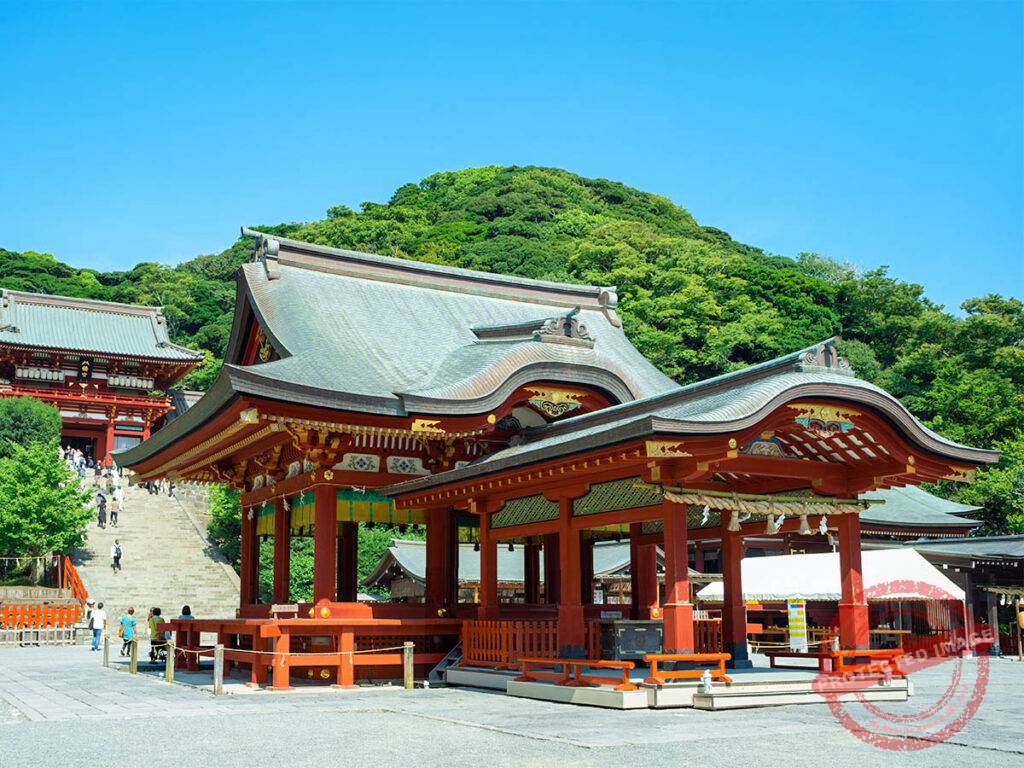
| The shrine is architecturally and topographically defined by its elevated position at the terminus of Wakamiya Oji, the city’s primary ceremonial axis. Established in its current location in 1180 by Minamoto no Yoritomo, the founder of the Kamakura Shogunate, the complex was designed to project the authoritative presence of the warrior class. The layout follows the “Ishi-no-ma-zukuri” style, where the main oratory and the inner sanctum are connected by a stone-floored room. This reflects the disciplined aesthetic of the 12th century. The structures are characterized by their vibrant vermilion lacquer and the massive stone staircase that leads to the Hongu, or Senior Shrine. The precinct’s design integrates a series of ponds and bridges that symbolize the Minamoto and Taira clans, creating a landscape that functions as a physical record of feudal history. The significance of Tsurugaoka Hachimangu lies in its status as a vital cultural anchor for the identity of the Kamakura region. It serves as the primary sanctuary for the tutelary deity of the samurai. The environment is characterized by a polished sense of dignity and seasonal transition. This atmosphere is most visually compelling in early April during the Kamakura Matsuri or in autumn when the gingko trees frame the sanctuary in vibrant gold. The presence of the Shirahata Shrine within the grounds, dedicated to the spirits of the Minamoto leaders, underscores the site’s continuity with the dawn of Japan’s medieval era. The rhythmic movement of visitors along the central cherry-blossom-lined path highlights the shrine’s enduring role as the heart of the city’s social and religious life. For the luxury and heritage traveler, Tsurugaoka Hachimangu provides a composed and intellectually rewarding environment that captures the intersection of military ambition and spiritual tradition. The atmosphere is one of monumental stillness. It offers a definitive location to witness the preservation of medieval aesthetics and the ritual life of the former shogunal capital. It remains a premiere destination for those seeking to understand the foundational values of the bushi, or warrior class. The site stands as a polished witness to the enduring legacy of the Minamoto clan and the architectural resilience of the nation’s historic centers. |