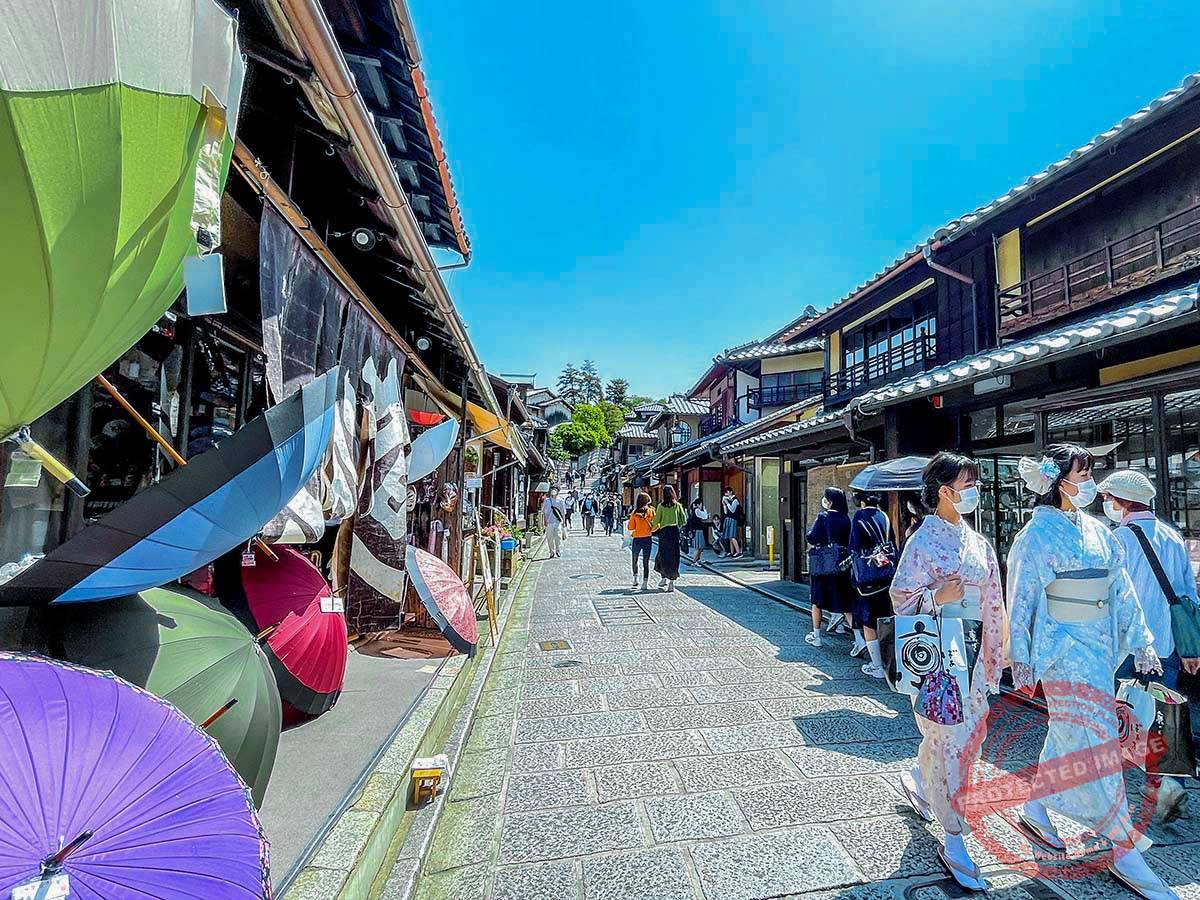
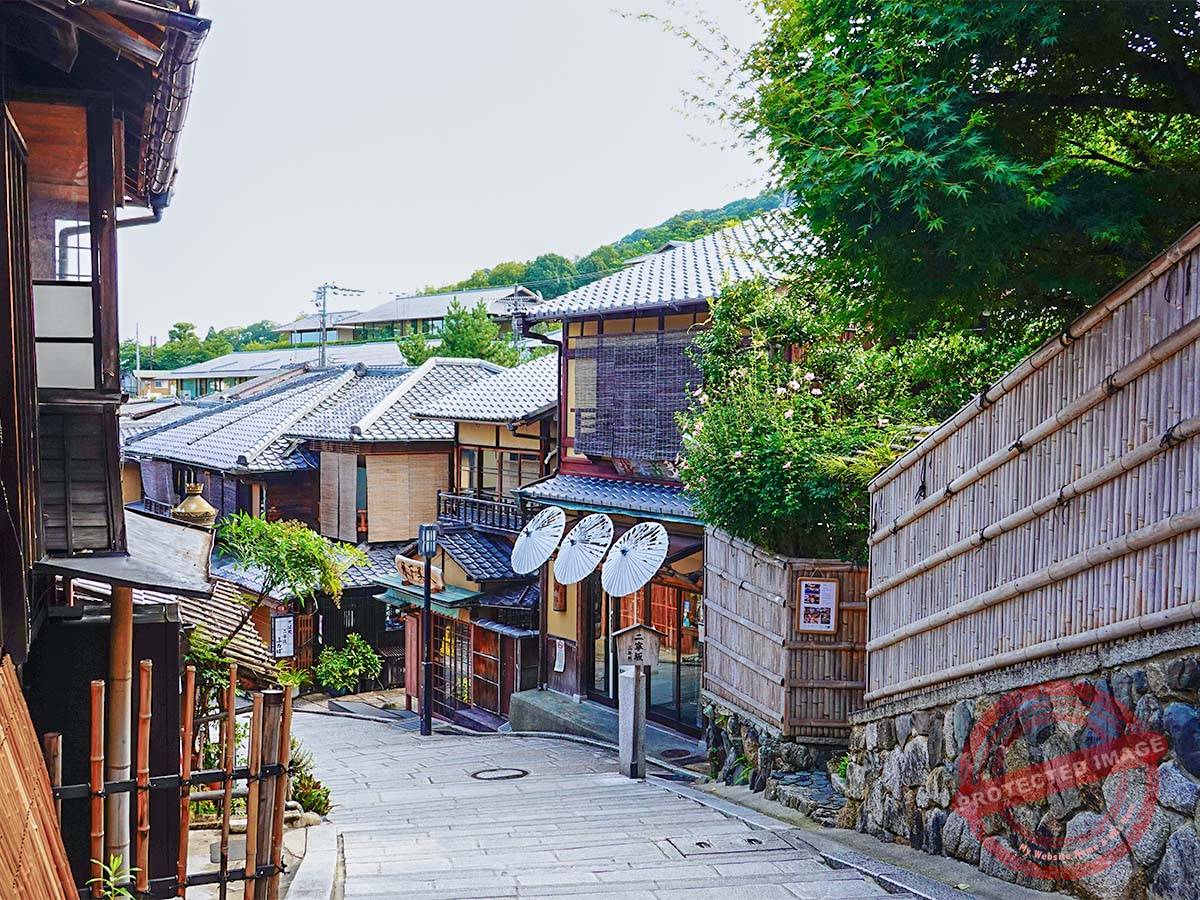
Ninenzaka, Sannenzaka
Ninenzaka and Sannenzaka serve as the definitive architectural transition to the sacred heights of Higashiyama, preserving the quintessential atmosphere of Kyoto’s merchant heritage.
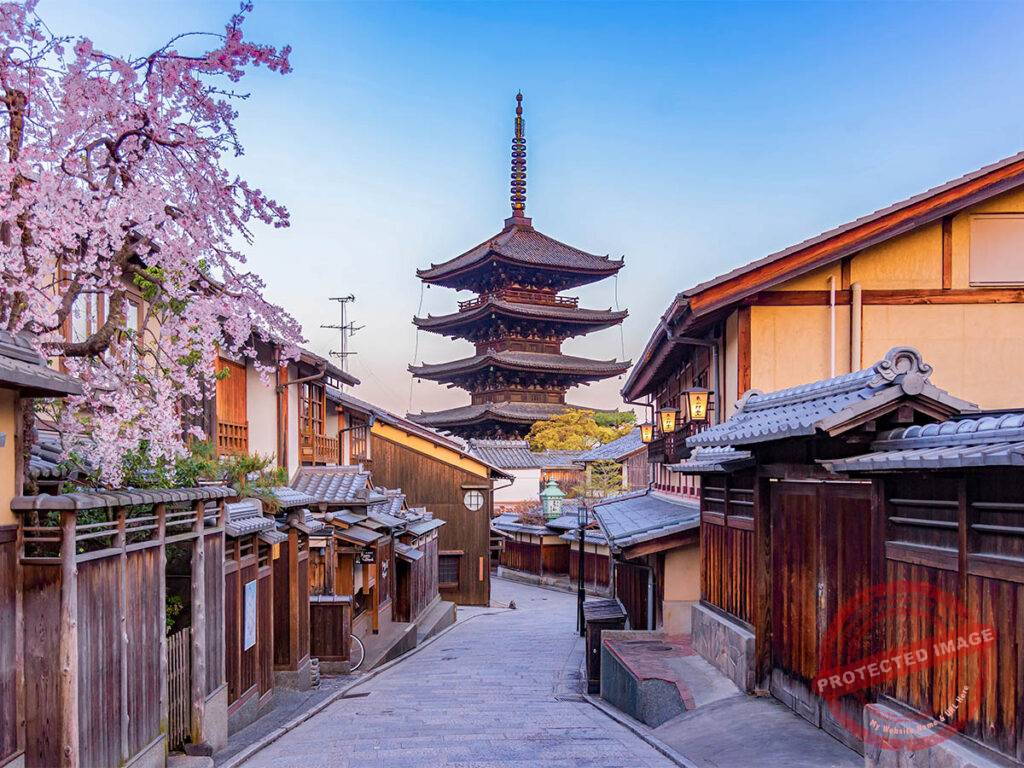
These historic pedestrian slopes are topographically defined by their stone-paved paths and steep gradients. They have functioned as a primary approach to Kiyomizudera since the early Heian period. The streetscape is characterized by “machiya” townhouses that exhibit the refined wooden aesthetics of the late Edo and Taisho eras. The layout is a disciplined arrangement of two-story structures featuring dark timber lattices and traditional tiled roofs. Each building is constructed to follow the natural curvature of the mountainside. This creates a rhythmic and enclosed environment that isolates the traveler from the modern city. The names Ninenzaka and Sannenzaka refer to the “two-year” and “three-year” slopes. These terms are deeply embedded in local folklore regarding the journey of pilgrims toward the temple.
The significance of these slopes lies in their status as a vital cultural anchor for the preservation of Kyoto’s urban history. They are designated as a National Important Preservation District for Groups of Traditional Buildings. The area remains a center for artisanal commerce, where heritage shops offer Kiyomizu-yaki pottery and traditional incense. The environment is characterized by a polished sense of continuity. The absence of modern signage and the presence of weeping willows and stone lanterns define the sensory experience. This atmosphere is most visually compelling during the early morning hours before the arrival of the daily crowds. At this time, the long shadows of the eaves emphasize the geometric precision of the flagstone paths and the silent dignity of the wooden facades.
For the luxury and heritage traveler, Ninenzaka and Sannenzaka provide a composed and intellectually rewarding environment that captures the intersection of commercial vitality and spiritual destination. The atmosphere is one of disciplined elegance. It offers a definitive location to witness the architectural harmony of a city that has meticulously curated its identity over centuries. It remains a premiere destination for those seeking to experience the authentic texture of old Kyoto. The site stands as a polished witness to the enduring appeal of the traditional Japanese streetscape.