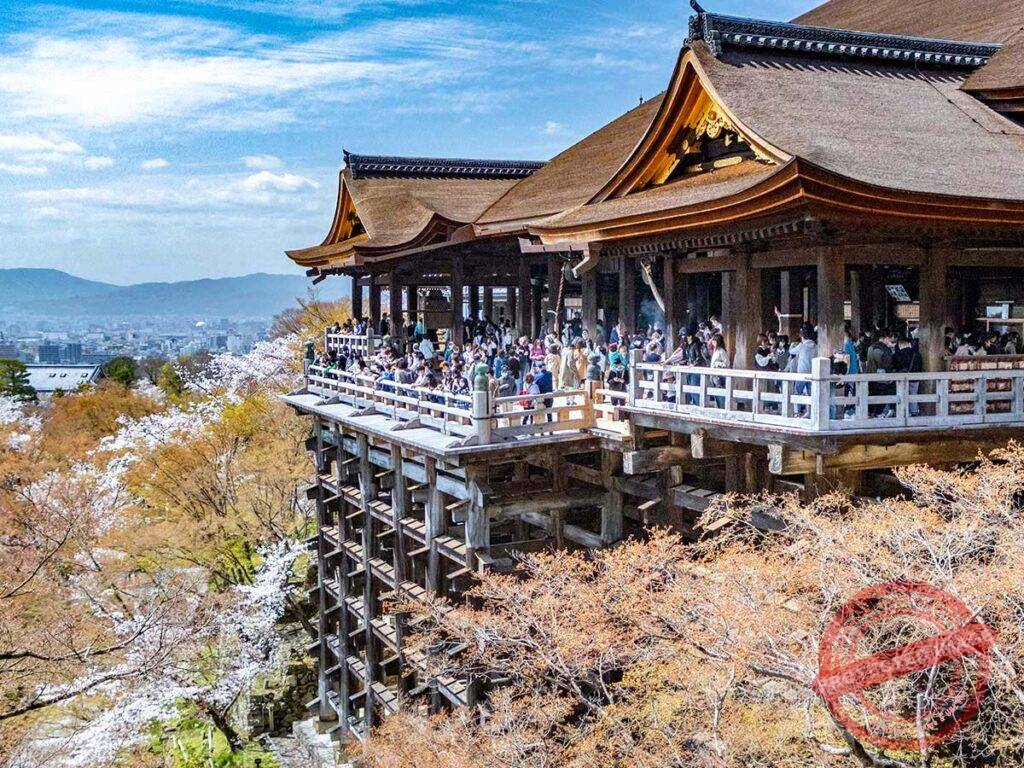
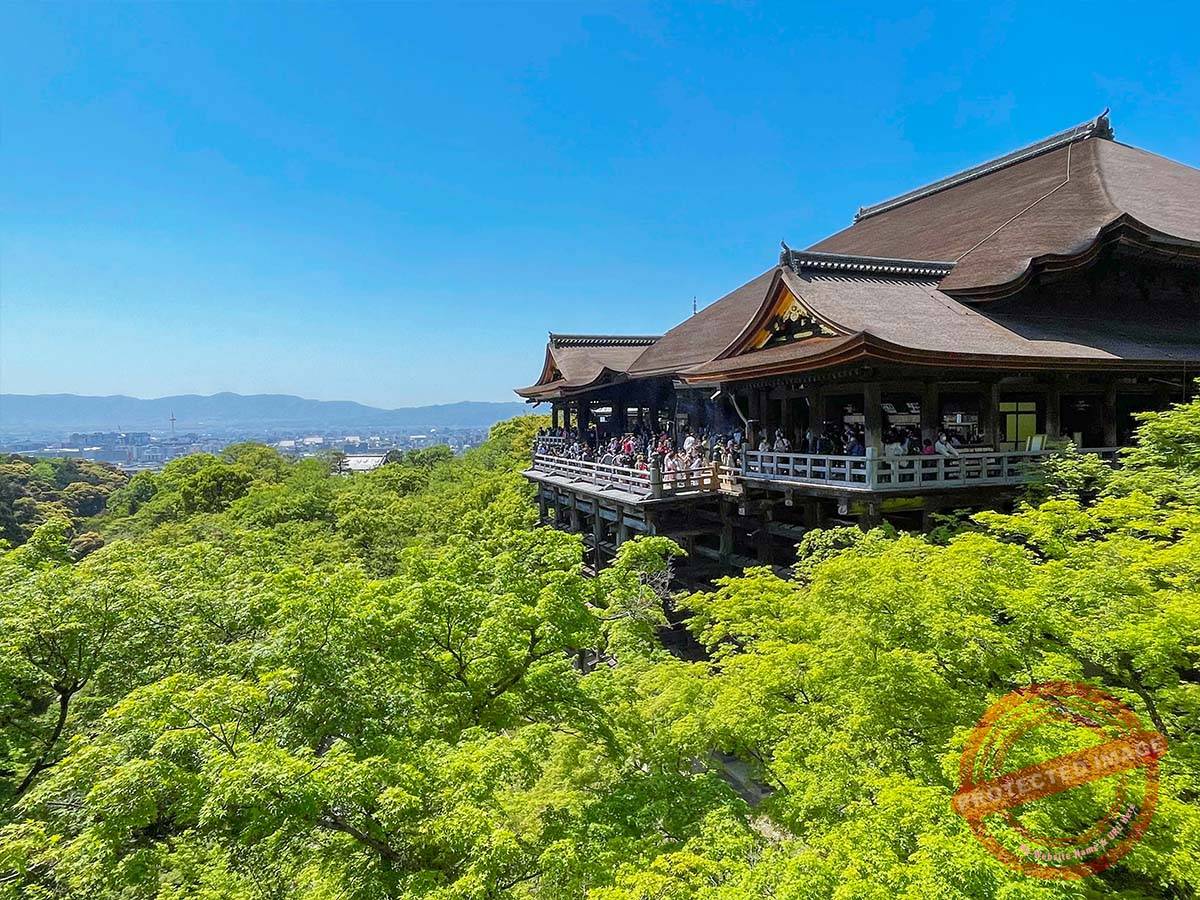
The temple was founded in 778 during the early Heian period and is architecturally defined by its massive wooden stage, which extends from the Main Hall. This structure is a masterpiece of traditional joinery, constructed using 139 giant zelkova pillars without the use of a single metal nail. The layout utilizes a sophisticated interlocking system known as “kake-zukuri” or overhanging construction. This allows the terrace to cling to the steep mountainside. This design was intended to accommodate the vast numbers of pilgrims who traveled to pay homage to the temple’s primary deity, the Eleven-headed and Thousand-armed Kannon. The precinct is further characterized by the Otowa Waterfall. Three distinct streams of water have been channeled there for centuries to represent longevity, success, and love.
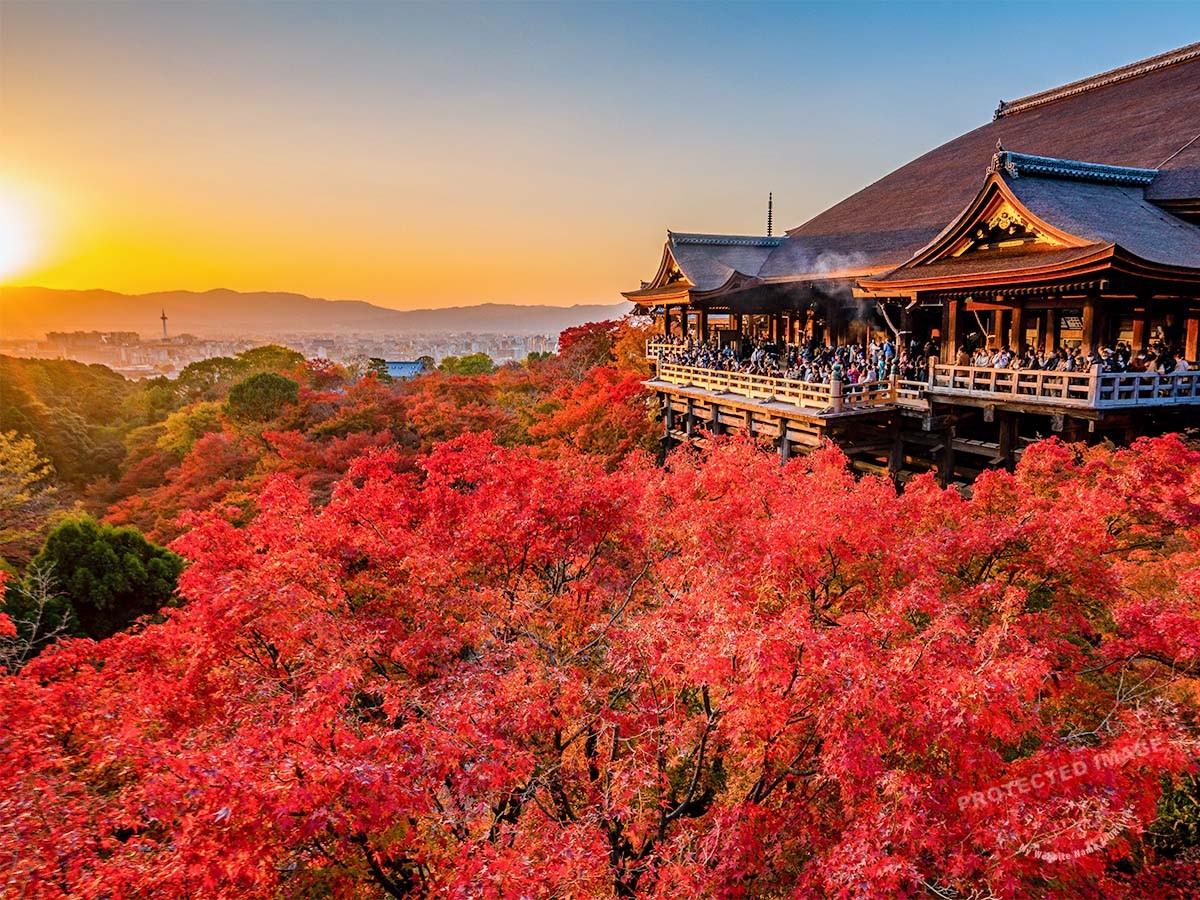
The significance of Kiyomizudera lies in its status as a vital cultural anchor for the city of Kyoto and its inclusion as a UNESCO World Heritage site. It has remained a site of continuous worship for over 1,200 years, surviving numerous fires and reconstructions. The current buildings largely date to 1633. They were rebuilt under the patronage of the third Tokugawa Shogun, Iemitsu. The environment is characterized by a polished sense of grandeur and historical continuity. This is most visually compelling during the spring cherry blossom season and the autumn foliage peak. At these times, the wooden stage appears to float above a sea of vibrant colors.
For the luxury and heritage traveler, Kiyomizudera provides a composed and intellectually stimulating environment that captures the intersection of medieval engineering and religious fervor. The atmosphere is one of elevated stillness. The panoramic views of the Kyoto basin underscore the temple’s strategic and spiritual importance. It remains a definitive destination for those seeking to understand the architectural resilience of Japan’s ancient wooden structures. The site stands as a polished witness to the enduring human desire to create beauty in challenging natural landscapes. |