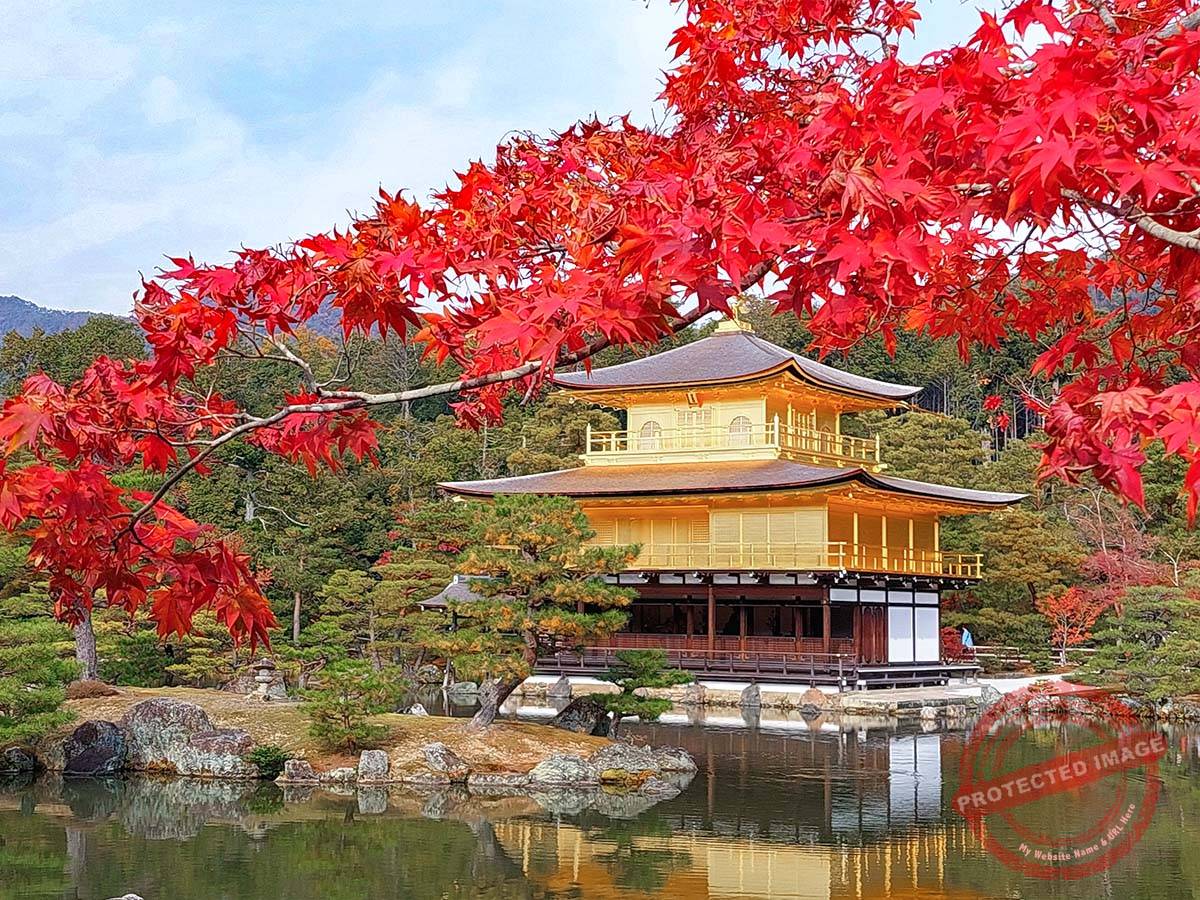
Kinkakuji Temple
Kinkakuji Temple stands as a definitive icon of Zen Buddhist architecture, where the brilliant gold leaf of its Shariden Hall reflects the refined cultural aspirations of the Muromachi period.
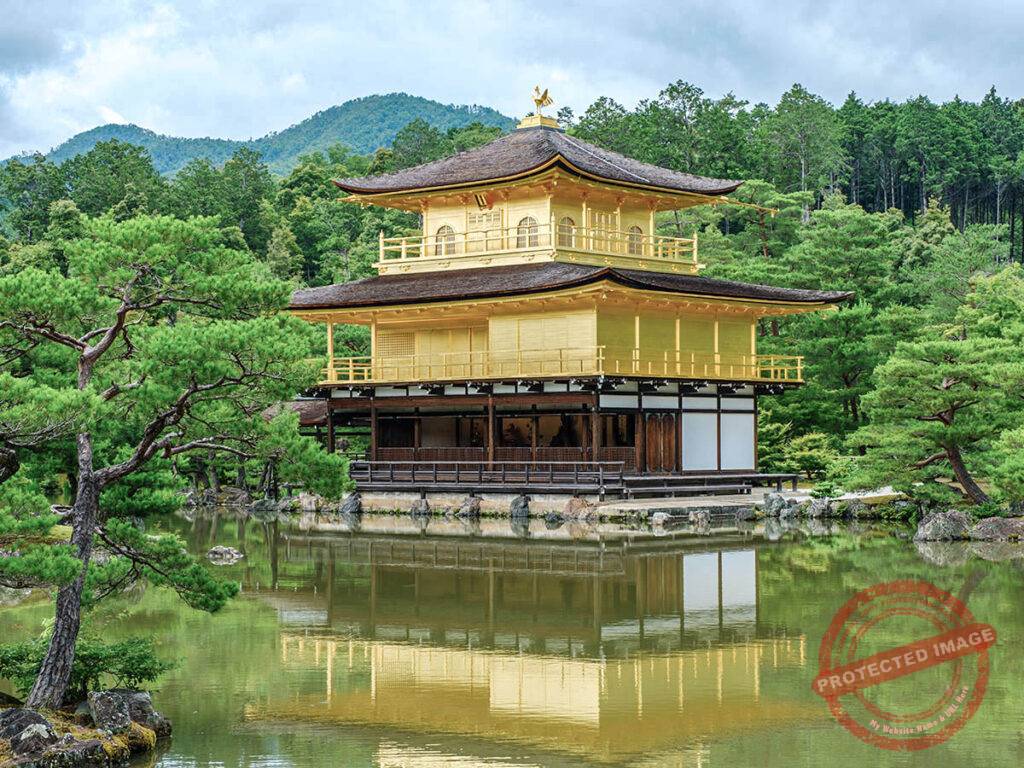
The temple, officially known as Rokuonji, is architecturally defined by its three-story pavilion that harmonizes three distinct styles of construction. The ground floor reflects the “shinden-zukuri” style of Heian-era palaces, while the second floor utilizes the “buke-zukuri” style associated with samurai residences. The uppermost floor is built in the Zen altar style. It is entirely gilded in pure gold leaf both inside and out. This structure was originally completed in 1397 as a retirement villa for Shogun Ashikaga Yoshimitsu. It was later converted into a Zen temple following his death. The layout is centered on the Kyoko-chi or “Mirror Pond”, which serves as an authoritative focal point by providing a perfect reflection of the pavilion amidst carefully placed rocks and pine trees.
The significance of Kinkakuji lies in its status as a vital cultural anchor for the understanding of Kitayama Culture. This was a period characterized by the fusion of courtly elegance and Zen simplicity. Although the current structure was reconstructed in 1955 following an arson incident, it was rebuilt with meticulous attention to historical accuracy and traditional craftsmanship. The environment is characterized by a polished sense of opulence and spiritual balance. This is most visually compelling during a clear winter morning after a snowfall or during the peak of autumn foliage. The contrast between the brilliant gold and the natural surroundings reinforces the pavilion’s role as a symbol of the “Pure Land” on earth.
For the luxury and heritage traveler, Kinkakuji provides a composed and intellectually stimulating environment that captures the height of medieval Japanese patronage. The atmosphere is one of monumental dignity. The rhythmic alignment of the garden elements underscores the sophisticated aesthetic of the Muromachi elite. It remains a premiere destination for those seeking to observe the intersection of religious devotion and imperial grandeur. The site stands as a polished witness to Kyoto’s ability to preserve its most luminous historical treasures through centuries of transformation.