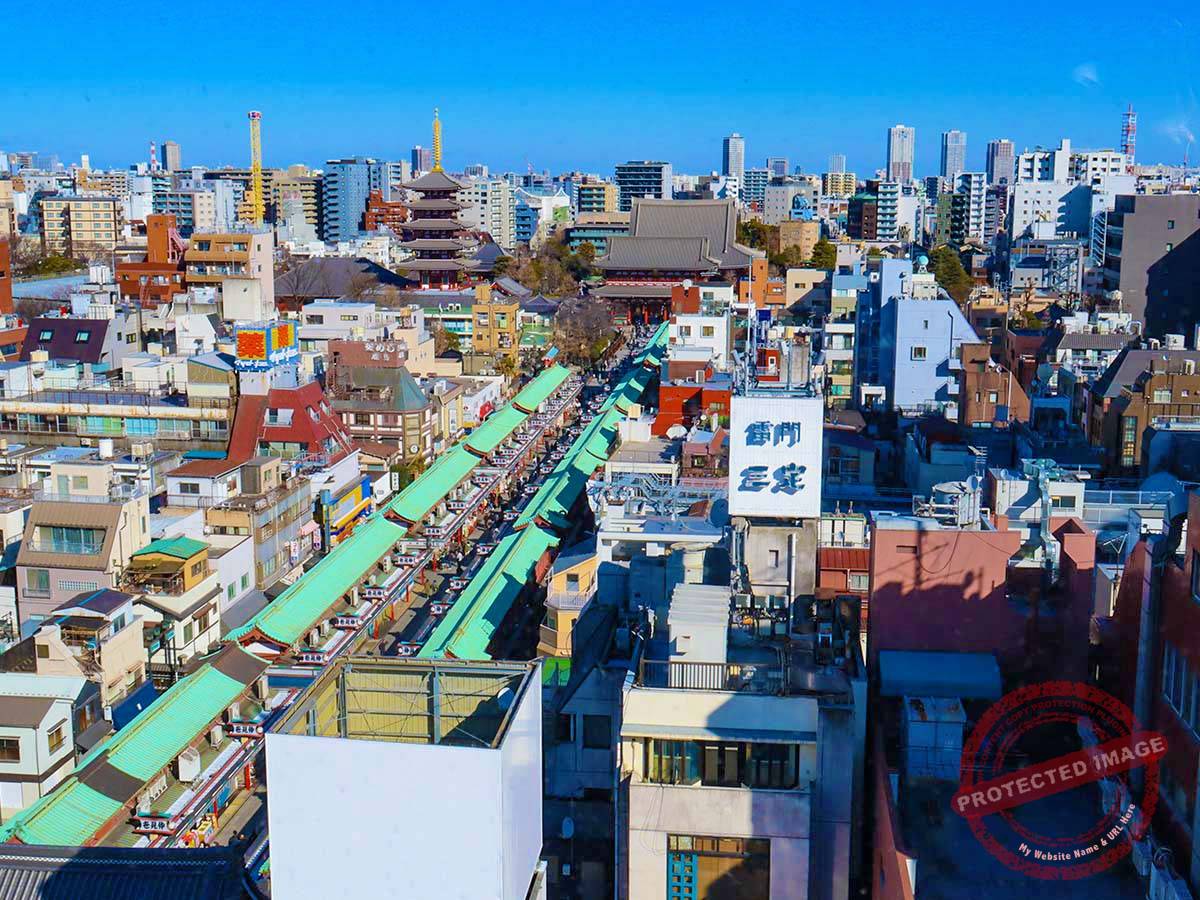
Asakusa (Sensoji Temple and Nakamise Shopping Street)
Experience the enduring spirit of Asakusa, the historic heart of Tokyo defined by the majestic Sensoji Temple and its vibrant traditional marketplace.
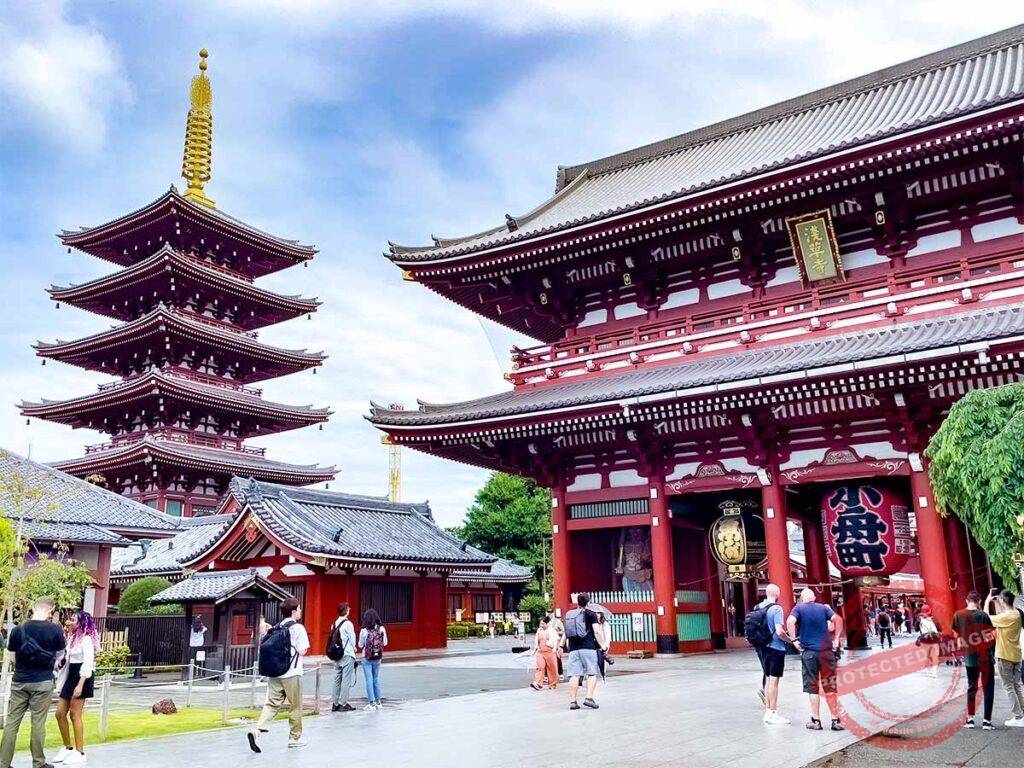
Asakusa serves as the premier gateway to Tokyo’s Edo-period heritage. It is centered on Sensoji, the city’s oldest Buddhist temple, founded in 628 following the discovery of a golden statue of Kannon, the goddess of mercy. The architectural journey begins at the Kaminarimon, or “Thunder Gate”, which features a massive red lantern and protective statues of the deities of wind and thunder. Beyond this entrance lies Nakamise-dori, a disciplined 250-meter shopping avenue that has functioned as a lively approach to the temple for centuries. The street is lined with specialized stalls offering traditional crafts and regional snacks. This commercial vibrancy transitions into the spiritual precinct of the Hozomon Gate and the towering five-storied pagoda.
The significance of Sensoji lies in its status as a site of continuous pilgrimage and cultural resilience. The Main Hall, reconstructed in 1958 following the destructions of World War II, remains a vital cultural anchor for the city. Its construction utilizes traditional Japanese carpentry and vermilion-lacquered timber to preserve a sense of historical continuity. The interior is a space of refined dignity, where the scent of incense and the sound of chanting create a serene atmosphere that contrasts with the urban energy outside. This environment is most visually compelling during the early morning or at dusk, when the illuminated structures emphasize the temple’s grand scale and architectural detail.
For the luxury and heritage traveler, Asakusa provides an authoritative perspective on the evolution of Tokyo from a small fishing village to a sophisticated global capital. The district offers a composed environment to observe the intersection of ancient religious ritual and communal trade. It remains a definitive destination for those seeking to engage with the authentic character of Old Tokyo. The site stands as a testament to the enduring role of faith and tradition in shaping the social fabric of a modern metropolis.