Observe the powerful primordial energy of Owakudani, a dramatic volcanic valley that serves as a testament to the enduring geothermal activity of the Hakone region.
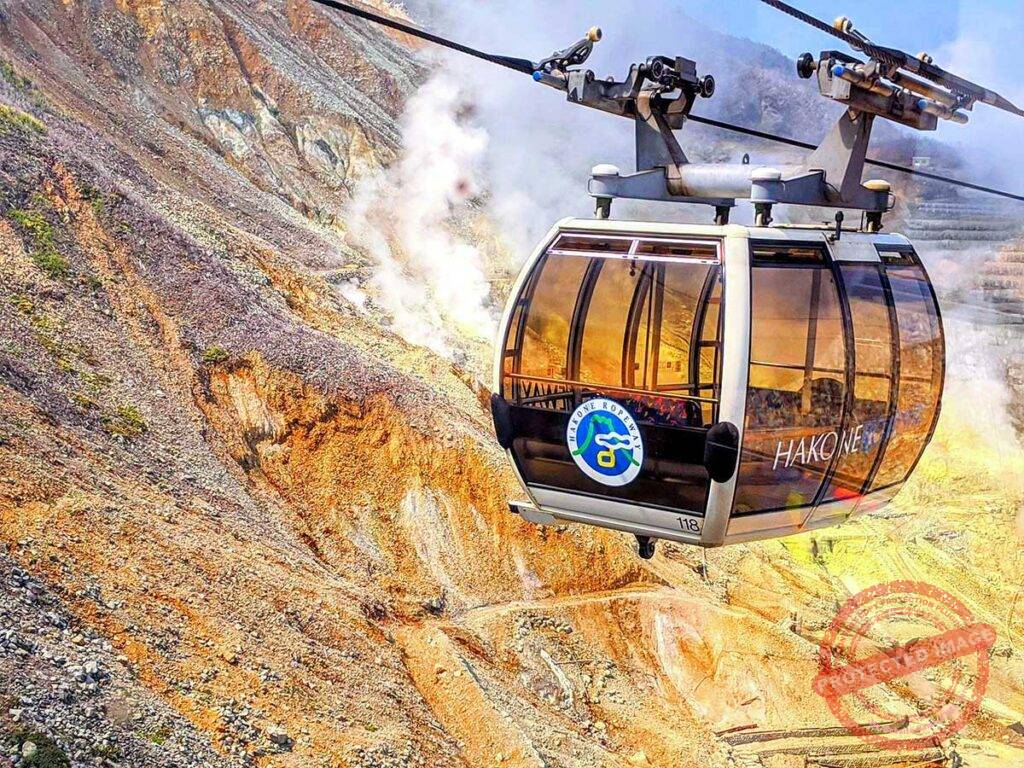
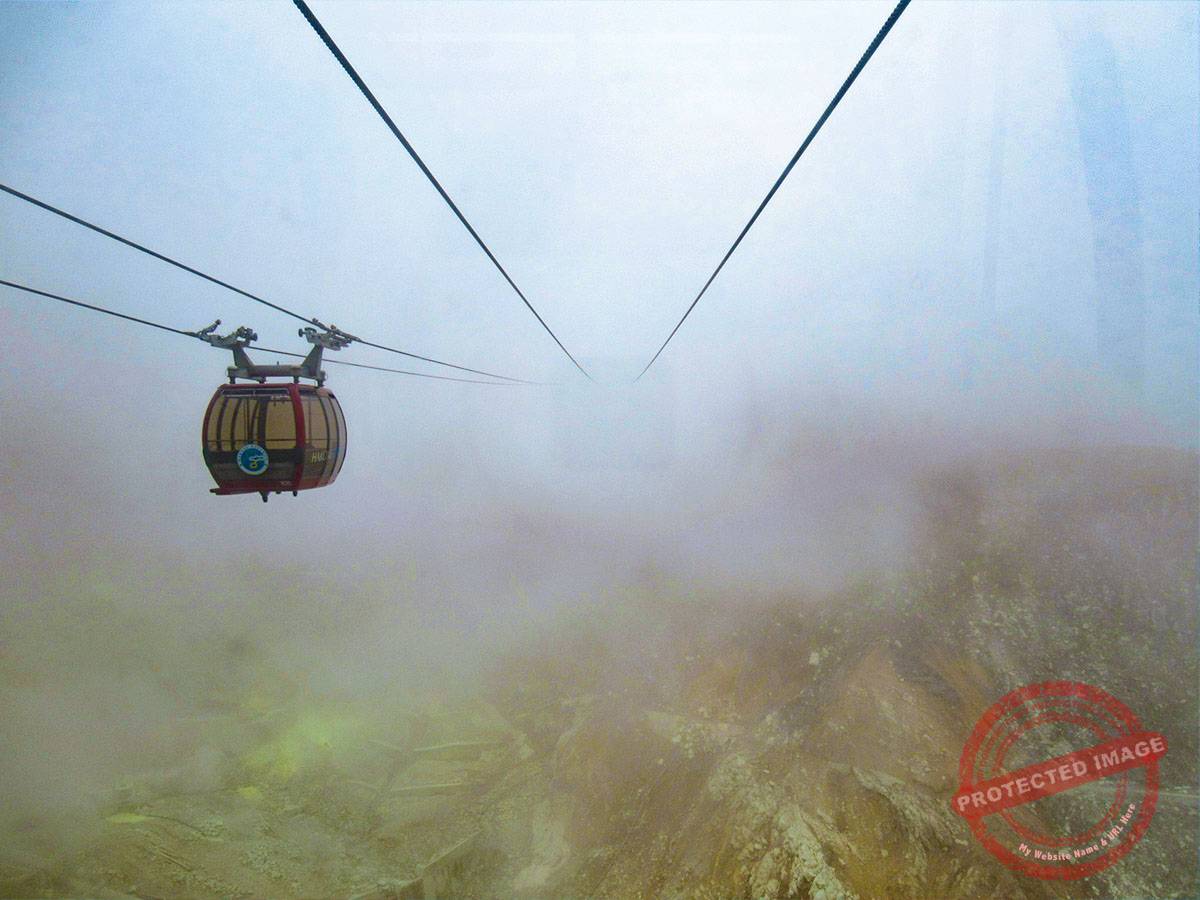
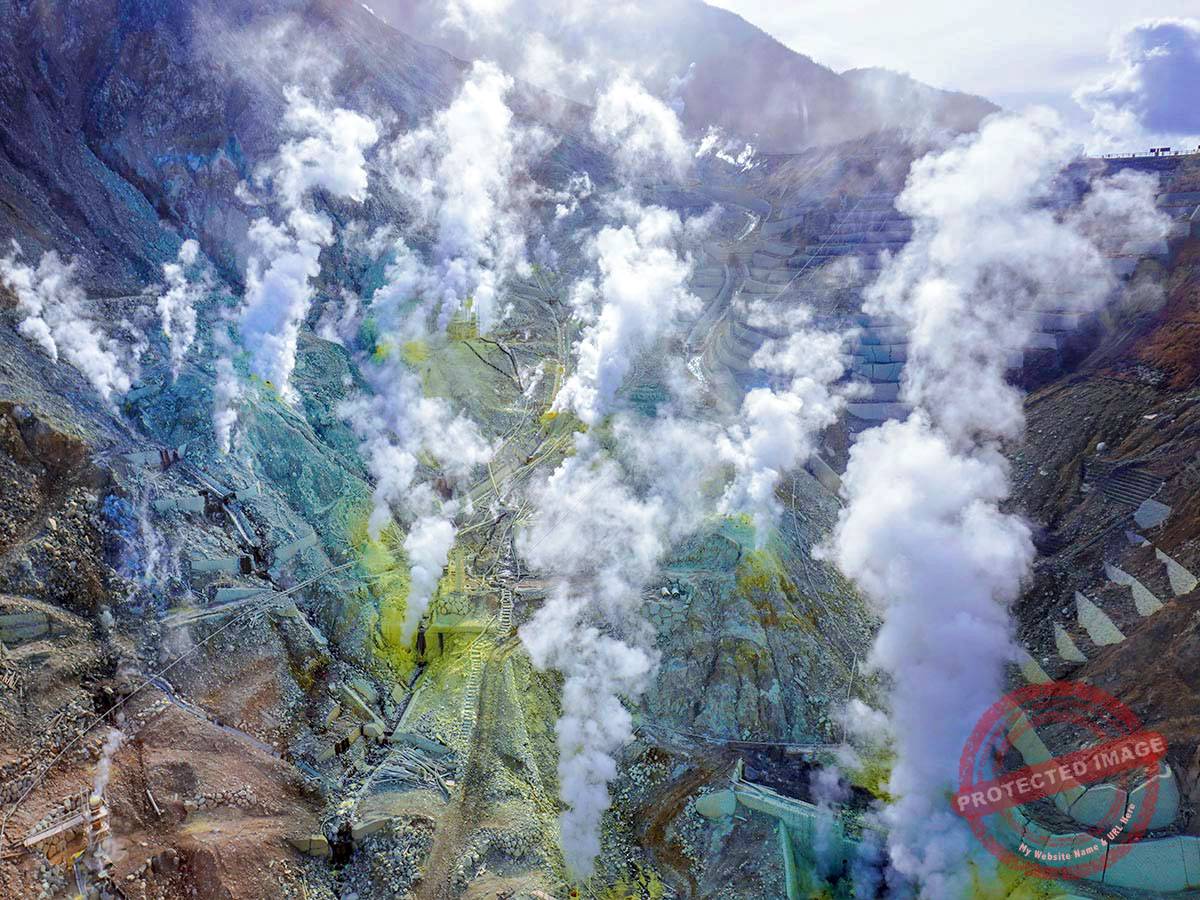
The valley is architecturally and geologically defined by its location within the crater of Mount Hakone. This was formed nearly 3,000 years ago during the volcano’s final major eruption. The landscape is a stark and disciplined display of active fumaroles, where sulfurous steam rises from the mineral-rich earth against a backdrop of charred, white-stained rocks. The layout of the area is centered around the Hakone Ropeway station. This provides an authoritative aerial perspective of the “Great Boiling Valley” as visitors pass directly over the steaming vents. This vertical approach allows for a safe yet visceral encounter with the volcanic force that continues to shape the topography of the Izu-Hakone-Izu National Park.
The significance of Owakudani lies in its long-standing cultural identity as “Jigokudani” or the “Valley of Hell“. This was a name given by locals in ancient times who were awestruck by the hostile, bubbling terrain. Despite this forbidding reputation, the area has been transformed into a site of longevity and health in local folklore. This is most famously represented by the “Kuro-tamago”. These are chicken eggs boiled in the natural hot springs, where the sulfur in the water turns the shells a deep, matte black. According to local tradition, eating one of these eggs can add seven years to a person’s life. This intersection of geological reality and folk belief reinforces the valley’s status as a vital cultural anchor.
For the luxury and heritage traveler, Owakudani offers a composed and intellectually stimulating environment that highlights the raw, transformative power of the Japanese archipelago. The atmosphere is dominated by the rhythmic hiss of escaping steam and the distinct scent of sulfur. These elements underscore the region’s dynamic nature. It remains a definitive destination for those seeking to witness the geological foundations of Japan’s “Onsen” culture while enjoying expansive views of Mount Fuji on clear days. The site perfectly illustrates how a once-feared landscape has become a curated space for scientific observation and cultural appreciation.