
Kigatsu Church
Observe the serene architectural legacy of Kigatsu Church, a historic wooden structure situated along the quiet shoreline of Hirado Island that exemplifies the humble and persistent faith of Nagasaki’s Christian communities.
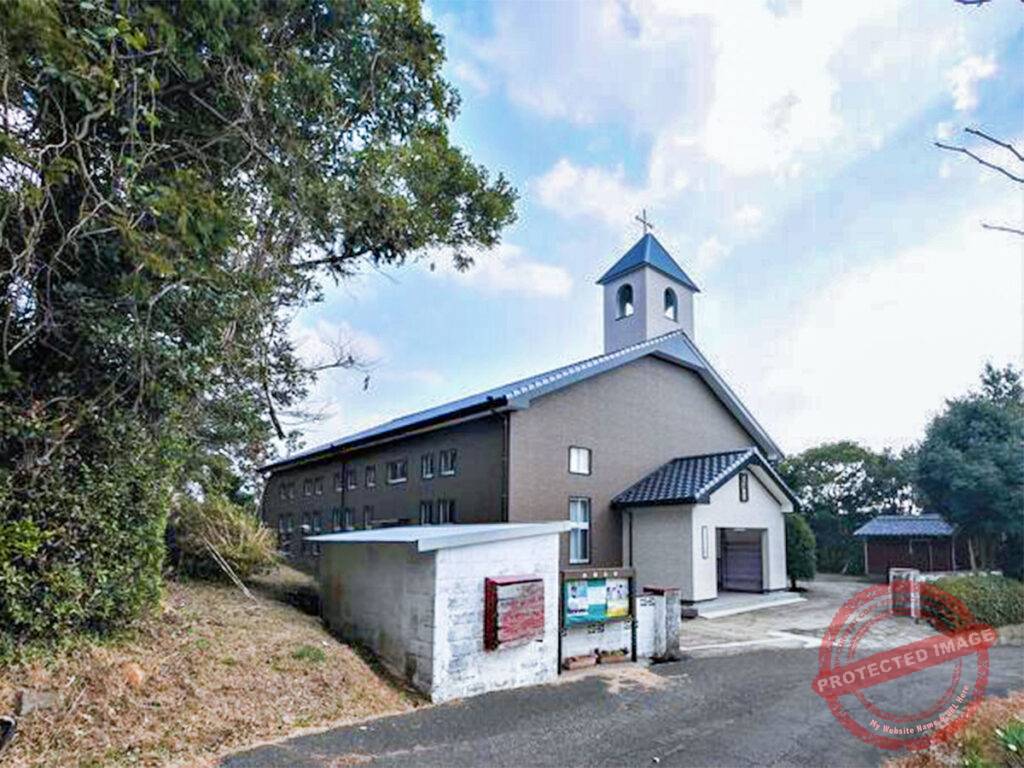
The church is architecturally defined by its modest wooden construction, a hallmark of early ecclesiastical design in rural Japan during the Meiji and Taisho eras. Completed in 1962 to replace an older structure dating back to the late 19th century, the current building maintains a disciplined and unpretentious aesthetic that harmonizes with the surrounding coastal village. The interior features a soft, diffused lighting scheme that filters through simple stained-glass windows, illuminating a vaulted ceiling and a clean, linear nave. This layout reflects the practical yet spiritual focus of local fishing communities, where the church served as both a communal sanctuary and a navigational landmark for those returning from the sea.
The significance of Kigatsu Church lies in its location within a region once inhabited by “Hidden Christians” (Kakure Kirishitan) who maintained their faith in secret for over two centuries. Unlike the grand cathedrals in more prominent urban centers, Kigatsu represents the “church of the people”, emphasizing the grassroots missionary efforts that revitalized Catholicism in the remote islands of Nagasaki. An intellectually compelling aspect of the site is its integration into the local maritime geography; the church is positioned to overlook the waters where the first missionaries arrived, grounding the global narrative of the faith in a specific, tangible landscape. The structure serves as a physical witness to the transition of the local community from a period of underground devotion to a public, architectural expression of their heritage.
For the heritage traveler, Kigatsu Church provides a composed and deeply peaceful atmosphere, free from the crowds often found at more famous landmarks. It acts as a vital cultural anchor, offering a polished perspective on how religious architecture can be both a grand statement and a quiet, intimate part of the daily life of a coastal village. It remains a definitive destination for those seeking to understand the authentic, lived experience of the Catholic faith in one of Japan’s most historically complex regions.