
Himosashi Church
Admire the architectural grandeur of Himosashi Church, a monumental structure on Hirado Island that stands as one of the largest and most significant Romanesque-style churches in Japan.
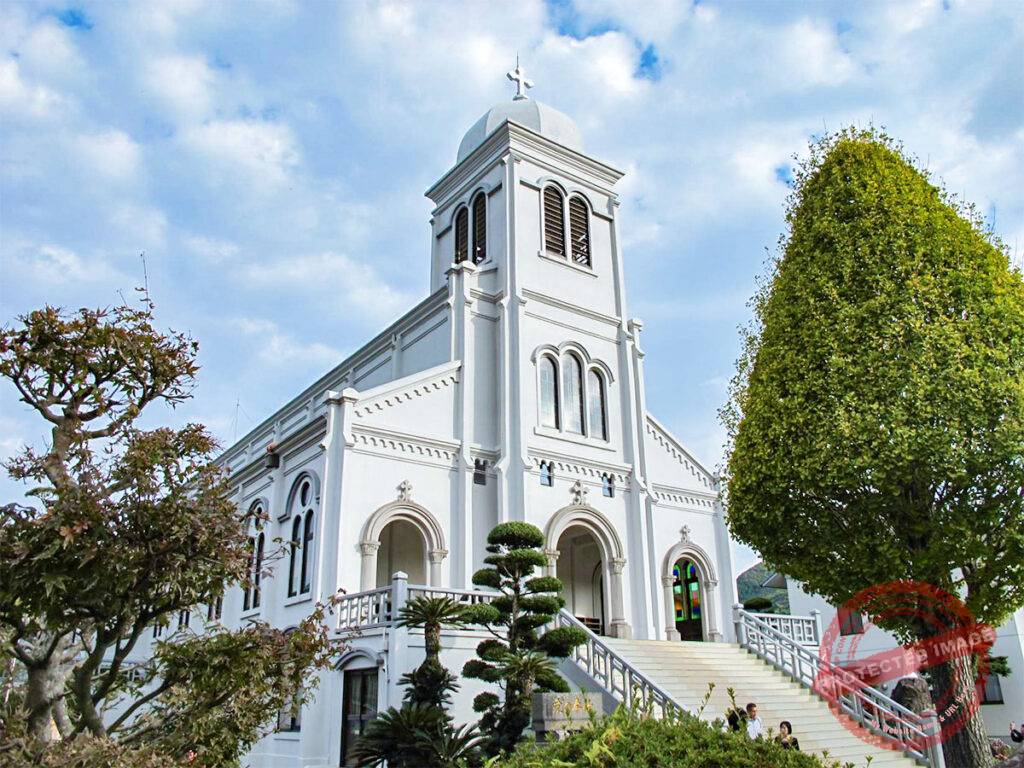
The church is architecturally defined by its expansive white facade and a massive, vaulted interior that exemplifies the sophisticated craftsmanship of Yosuke Tetsukawa, a celebrated master of church architecture. Constructed in 1929 following the reconstruction of an earlier Meiji-period building, the structure utilizes a disciplined Romanesque design characterized by rounded arches, sturdy pillars, and a rhythmic arrangement of clerestory windows. The layout features a wide central nave and side aisles, creating a sense of immense spiritual volume. Notably, the interior design incorporates subtle Japanese cultural adaptations; the stained-glass windows feature unique floral motifs, including camellias and cherry blossoms, which ground the universal Christian artistry in the local botanical heritage of Nagasaki.
The significance of Himosashi Church lies in its history as a central place of worship for the “Hidden Christian” descendants who returned to the Catholic fold after centuries of persecution. For a period following its completion, it served as the cathedral for the Diocese of Nagasaki, underscoring its authoritative standing in the region’s religious hierarchy. A fascinating intellectual detail of the site is the integration of Buddhist-inspired motifs within the altar and pillar bases, syncretic history of faith in Hirado. The church also features a detailed Grotto of Lourdes on its grounds, maintaining a traditional link to global Catholic devotions while overlooking the rural landscape of the island.
For the heritage traveler, Himosashi Church offers a composed and solemn atmosphere that reflects the resilience and cultural synthesis of Japan’s Christian history. It serves as a vital cultural anchor, representing the transition of a once-underground community into a visible and flourishing architectural presence. The site remains a definitive destination for those wishing to study the intersection of Western ecclesiastical forms and Japanese decorative sensibilities within a tranquil, historic setting.