Shukkeien Japanese Garden

Shukkeien Japanese Garden

Sightseeing
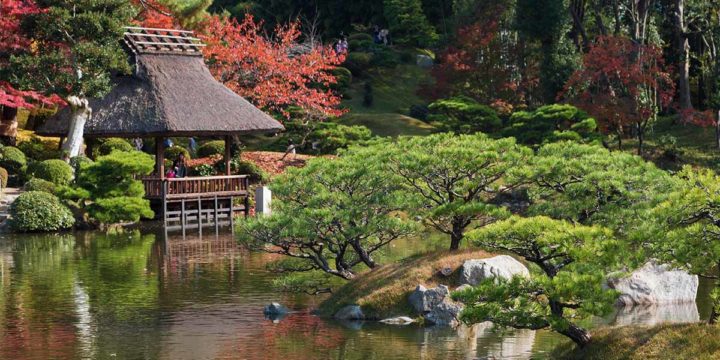
Shukkeien Garden, located in the heart of Hiroshima, is a prestigious daimyo garden commissioned in 1620 by Asano Nagaakira, the first feudal lord of the Hiroshima Domain.Shukkeien Garden offers a rare opportunity to experience the traditional Japanese philosophy of harmony between humanity and nature. Its seasonal transitions, from delicate plum blossoms in late winter to vivid autumn maples, provide a serene and contemplative setting that reflects the graceful cycle of life.
Read More
Memorial Cathedral of World Peace (Catholic Noborimachi Cathedral)

Memorial Cathedral of World Peace (Catholic Noborimachi Cathedral)

Sightseeing
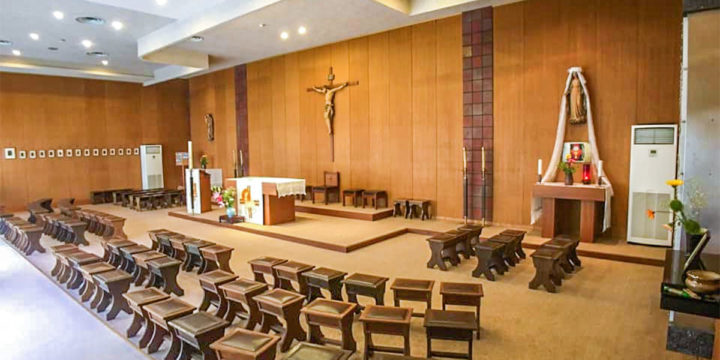
The Memorial Cathedral for World Peace in Hiroshima stands as a profound symbol of global reconciliation, architectural brilliance, and enduring Catholic faith.The Catholic Noborimachi Catheral, formally known as the Memorial Cathedral for World Peace, serves as the Cathedral (Cathedra) for the Roman Catholic Diocese of Hiroshima. Consecrated in 1954, the Cathedral was established with a singular, solemn mission: to offer prayers for the victims of the atomic bombing and to serve as a permanent plea for world peace. Its foundation is deeply rooted in the Christian virtues of hope and resurrection, rising from the ashes of war to offer a sanctuary for quiet reflection and intercession. Designed by the renowned modernist architect Togo Murano, the structure is celebrated as a masterpiece of post-war architecture. The design seamlessly blends traditional solemnity…
Read More
Matsuyama Castle

Matsuyama Castle

Sightseeing
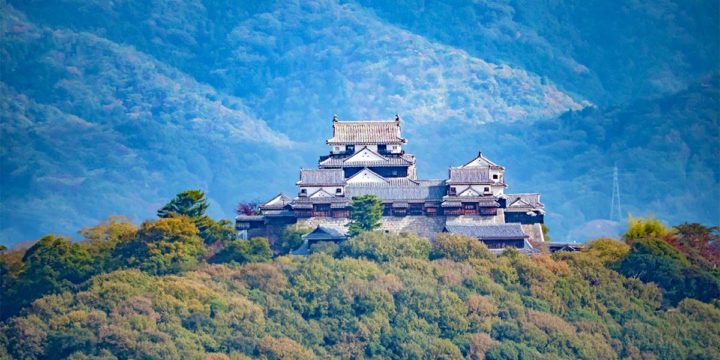
Hilltop castle in central Matsuyama with panoramic views, rare original structures, and one of Japan’s finest historic castle landscapes.Located near the heart of Matsuyama, Matsuyama Castle rises atop Mount Katsuyama at an elevation of 132 meters. It is counted among Japan’s three major multi-tiered hilltop castles, alongside Himeji and Wakayama Castles. From the main keep at the summit, sweeping 360-degree views extend across the city and out to the Seto Inland Sea. Matsuyama Castle is distinguished by its rare architectural features, including the Nohara Turret, the only surviving watchtower of its kind in Japan. It is also one of the very few castles where this unique structural form has been confirmed. The castle is designated as a National Historic Site. It has also been selected among the “Top 100 Cherry…
Read More
Dogo Onsen & Japanese Cultural Experience

Dogo Onsen & Japanese Cultural Experience

Sightseeing
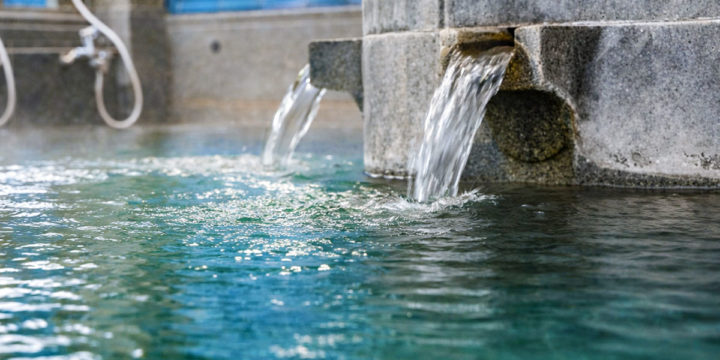
One of Japan’s oldest hot springs, Dogo Onsen blends ancient legends, refined bathing culture, and charming streetscapes in a timeless setting.Dogo Onsen Hot SpringDogo Onsen is regarded as one of Japan’s oldest hot springs, with a history said to span approximately 3,000 years, and is counted among Japan’s three oldest hot springs alongside Arima Onsen and Shirahama Onsen. Many legends of Dogo Onsen are still told today. One legend says that the deity Okuninushi no Mikoto healed Sukunahikona no Mikoto by immersing him in these restorative waters. Another well-known story tells of a white heron that cured its injured leg in the spring, revealing the healing properties of the waters to the local villagers.Dogo Onsen Honkan Public Bathhouse At the heart of the area stands the Dogo Onsen Honkan, designated…
Read More
Catholic Dogo Church (St. Thomas Aquinas Church)

Catholic Dogo Church (St. Thomas Aquinas Church)

Sightseeing
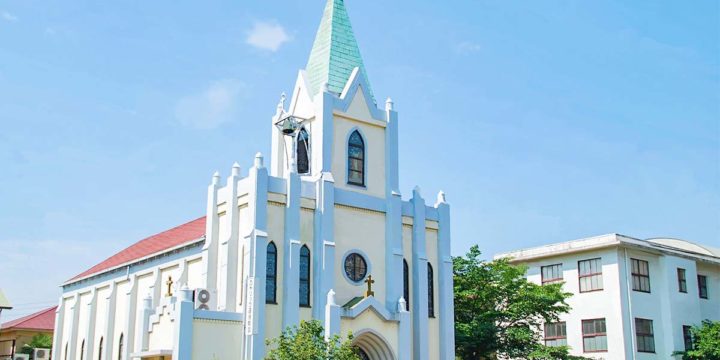
Historic echoes of early Christianity and enduring Spanish-influenced charm define Dogo Catholic Church in Matsuyama.The origins of Christianity in Dogo trace back to the late 16th century, a period when missionary activity was actively spreading across Japan. In 1586, records indicate that priests visiting the area received permission from the local feudal lord of the Kobayakawa clan to establish a church in Dogo. This early presence is further confirmed by reports from missionaries in 1643, clearly documenting that a church existed here during the height of the Kirishitan era. While historical sources affirm the existence of this early church, its exact location remains uncertain. Some accounts suggest it may have stood along a river flowing from Ishite-ji Temple, a site now associated with the renowned Shikoku 88 Temple Pilgrimage. However,…
Read More
Cruise through Oboke & Koboke Gorges

Cruise through Oboke & Koboke Gorges

Sightseeing
Dramatic gorge scenery of Oboke and Koboke experienced by boat, revealing sculpted cliffs and clear waters shaped by ancient tectonic forces.The Oboke and Koboke Gorges offer a striking landscape best appreciated from the water, where a sightseeing cruise reveals the full scale of their rugged beauty. As the boat moves along the Yoshino River, the steep cliffs and unusual rock formations rise dramatically on either side, creating an immersive and powerful visual experience. This distinctive terrain was formed through geological processes linked to the Nankai Trough, where an oceanic plate subducts beneath the continental plate. Over time, these forces shaped the mountainous landscape of Shikoku, now visible from the river’s surface as a dynamic interplay of stone and water. From the boat, sheer rock faces and uniquely contoured formations come…
Read More
Vine Bridge in Iya Valley

Vine Bridge in Iya Valley

Sightseeing
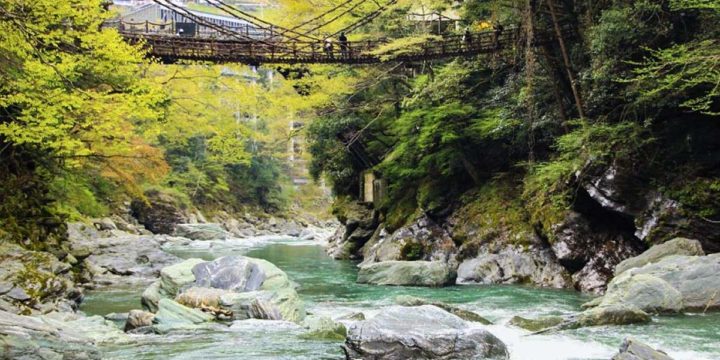
Historic vine bridge in the Iya Valley, woven from natural materials and suspended high above a mountain river.The Iya Kazurabashi Bridge stands deep within the secluded Iya Valley, a region long associated with the poignant legends of the Heike clan. Constructed from shirakuchi-kazura vines weighing approximately 6 tons, the bridge measures 45 meters in length, 2 meters in width, and rises about 14 meters above the river below. Once serving as a vital crossing in this rugged mountain gorge, it was historically the only means of transportation through the area. Today, it remains a rare example of traditional engineering, preserving both function and folklore. To maintain its integrity, the bridge is reconstructed every three years, continuing a long-standing practice that connects past and present.
Read More
Iya Valley & The Peeing Boy Statue

Iya Valley & The Peeing Boy Statue

Sightseeing
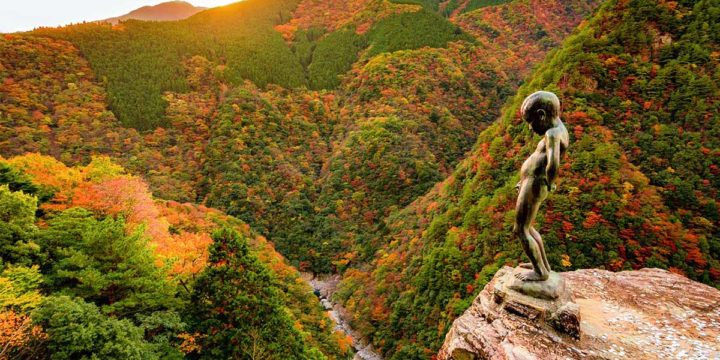
Dramatic Iya Valley landscapes with emerald waters, autumn foliage, and the iconic Peeing Boy statue perched above a sheer gorge.Iya Valley unfolds as a deeply carved V-shaped gorge, where the emerald-green waters of the Iya River wind through steep, rugged terrain. From the viewpoints above, the river appears far below, creating a sense of striking depth and scale. In fall, the entire valley transforms into a vivid tapestry of color, as autumn foliage blankets the mountains from the riverbed to the ridgelines, scenery that can be enjoyed even from passing cars and buses. Along the cliffs lining the Iya River, remnants of rock from the construction of the historic Iya Highway jut outward dramatically. Atop one of these protruding rocks stands the well-known statue of the “Peeing Boy”, inspired by…
Read More
Awa Odori Performance

Awa Odori Performance

Sightseeing
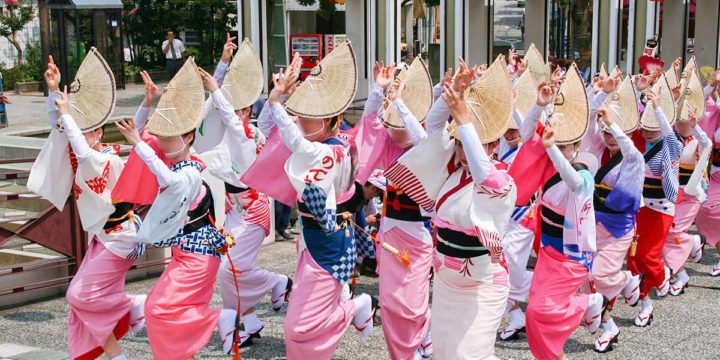
A vibrant summer dance tradition with over 400 years of history, Awa Odori brings rhythmic energy and colorful performances to Tokushima each August.Awa Odori is a traditional performing art that originated in Tokushima Prefecture more than 400 years ago and is designated as an Important Intangible Folk Cultural Property of Japan. Its most celebrated performances take place annually in Tokushima City from August 12th to 15th, where the festival reaches its fullest expression. Dancers, organized into groups known as ren, move through the streets in coordinated formations, accompanied by the lively rhythms of shamisen, taiko drums, and flutes. Their elegant yet dynamic movements, combined with striking costumes, create an atmosphere that is both festive and visually captivating. Recognized as one of Japan’s three great Bon dances, Awa Odori is famously…
Read More
Catholic Naruto Church (St. Joseph Church)

Catholic Naruto Church (St. Joseph Church)

Sightseeing
A distinctive Catholic origin in Naruto, where a community of believers preceded the founding of the church itself.Catholic Naruto Church holds a unique place in the history of Christianity in the region, shaped by an uncommon sequence in which a community of believers formed before the establishment of a formal church. This origin traces back to the late Brother Tsuda Sueho, a member of the Oblates, who arrived in Naruto as a wandering painter. Through his quiet sharing of biblical teachings, a small gathering gradually grew around him, eventually becoming a group of several dozen men. Approximately 59 years ago, this emerging community was formally recognized as Naruto Church through the guidance of Bishop Eiichi Tanaka. From these humble beginnings, the church developed into its present form, maintaining a legacy…
Read More