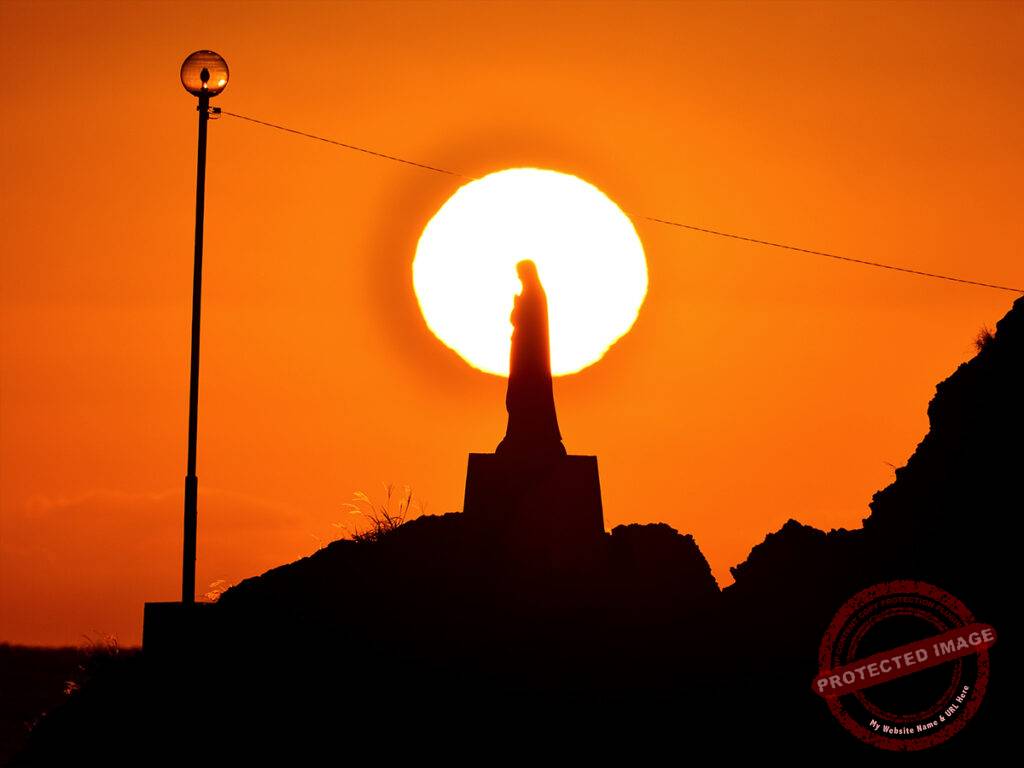
The statue stands on a secluded cape overlooking the sea near Sakitsu Village, a location of immense historical significance within the context of Japanese Catholic history. This site is closely linked to the Sakitsu Church, which is part of a UNESCO World Heritage designation recognizing the resilience of faith communities during centuries of prohibition. Erected through the collective contributions of the local community, the monument was designed to function as a spiritual beacon for the sailors and fishermen who navigate the surrounding waters. Its presence reflects a long-standing continuity of European Catholic roots adapted into a Japanese cultural framework. The statue remains a symbol of quiet endurance and the historical role of the Amakusa region as a sanctuary for religious practice.
The site is particularly celebrated for its aesthetic integration with the natural landscape, specifically during the evening hours. As the sun descends, the silhouette of the statue is framed against the vast horizon of the East China Sea, a scene formally recognized as one of the Eight Sunset Views of Amakusa. This transition of light provides a moment of reflection that highlights the tranquil atmosphere of the rugged coastline. The lack of overt ornamentation allows the historical and cultural gravity of the location to remain the primary focus. For the visitor, the site offers an authentic sense of place where the legacy of the past and the beauty of the natural environment are perfectly aligned. |