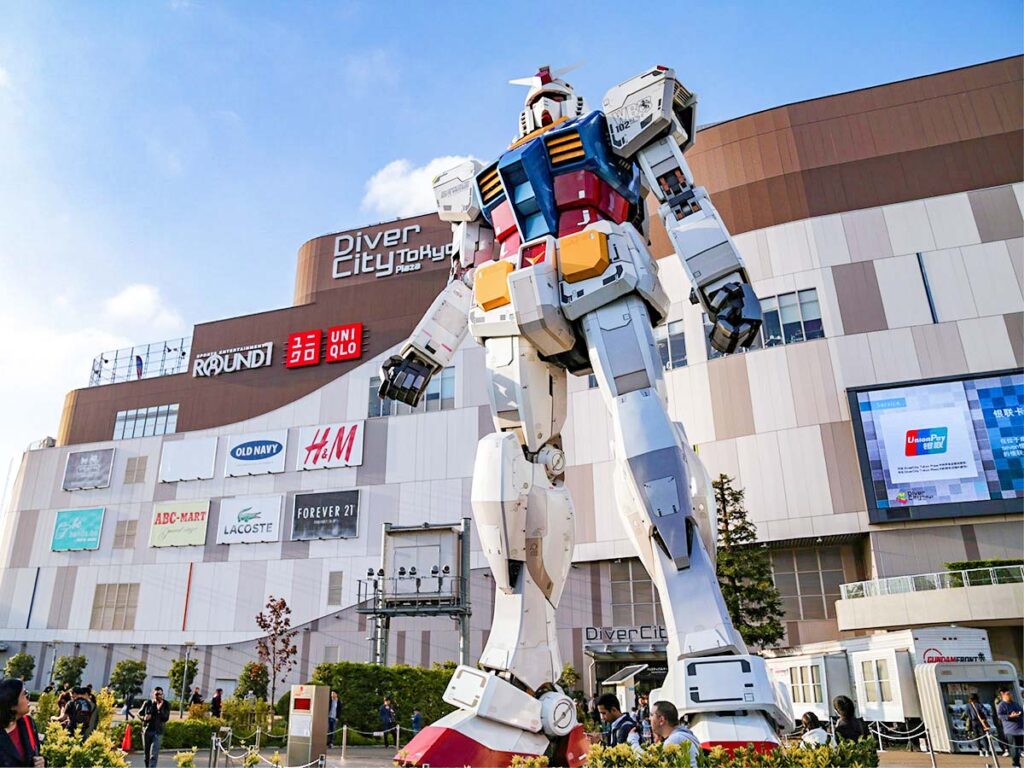
Odaiba represents a sophisticated evolution of Tokyo’s waterfront, where strategic land reclamation has created a premier coastal district defined by modern leisure and architectural ambition.
The transformation of Odaiba from a series of nineteenth-century defensive battery islands into a global hub for culture and commerce illustrates Japan’s mastery of urban planning and engineering. Spanning over 440 hectares of carefully reclaimed land, the district emerged in its current form during a period of rapid development in the late twentieth century. It serves as a vital extension of the Tokyo metropolis, characterized by expansive promenades and landmark structures that frame the city’s bay. The skyline is anchored by the futuristic Fuji TV building and significant retail centers like DiverCity Tokyo Plaza and Decks Tokyo Beach. These venues have turned the area into an essential destination for international exhibitions and large-scale cultural events.
The district is particularly notable for its unique atmosphere, blending the openness of the sea with the energy of a high-tech urban center. Visitors often find the late afternoon the most compelling time to visit, as the sun sets behind the Rainbow Bridge and the metropolitan lights begin to reflect off the water. This provides a distinctive sense of place that feels both expansive and highly curated. The area functions as a testament to the ability of the city to reinvent its natural boundaries through visionary design and refined infrastructure. By prioritizing public accessibility and aesthetic continuity, Odaiba remains a foundational element of the contemporary Tokyo experience for the discerning traveler.