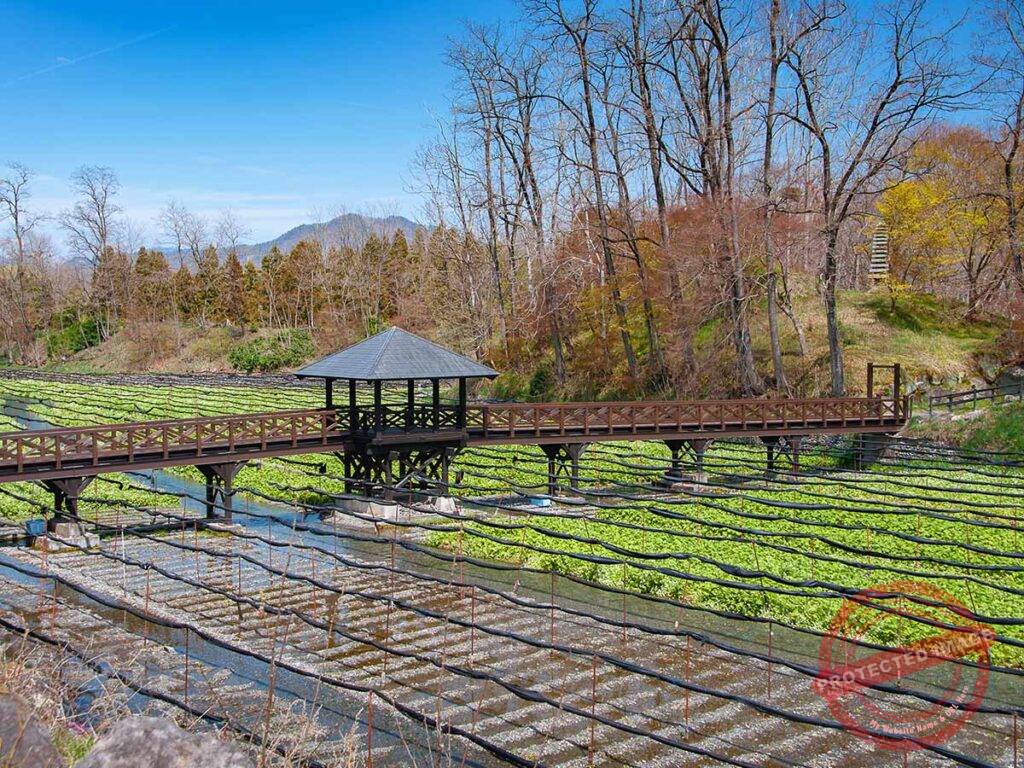
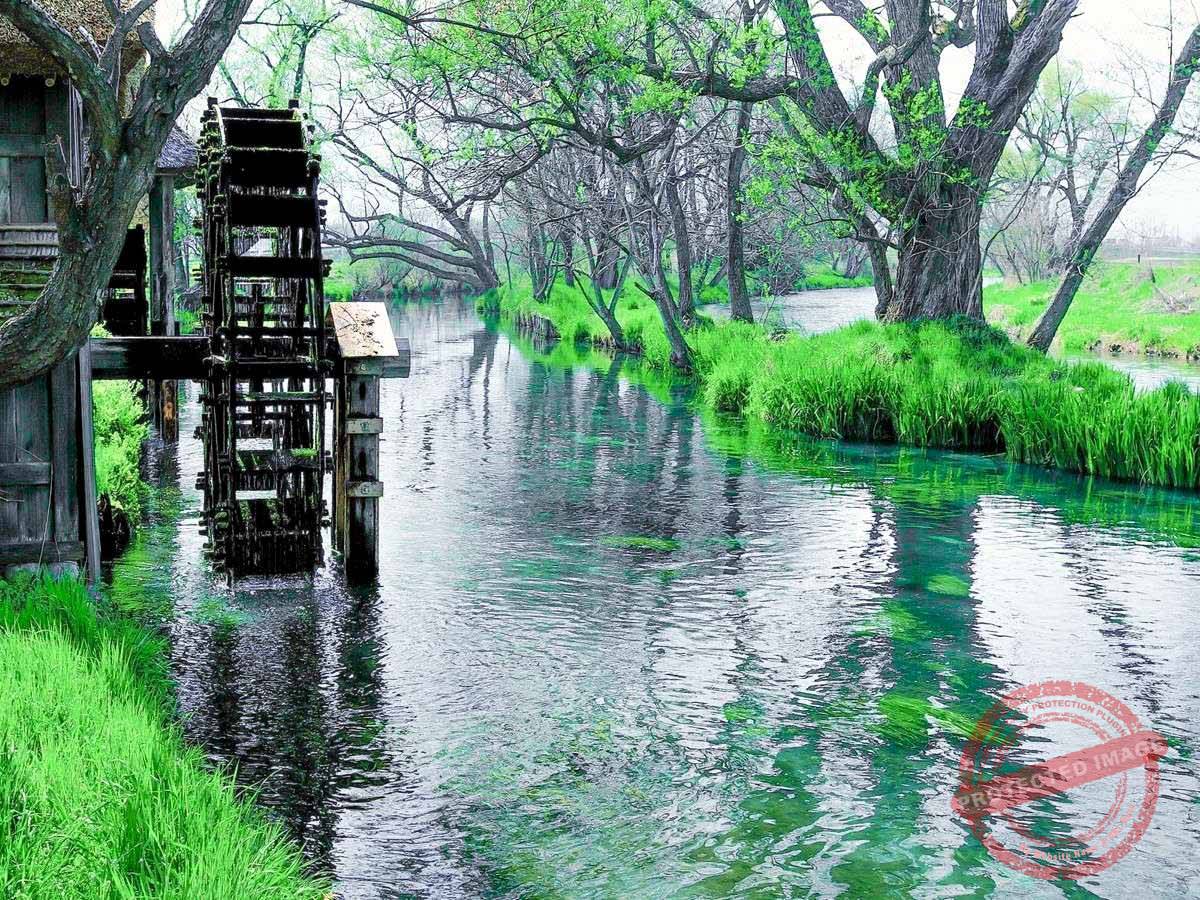
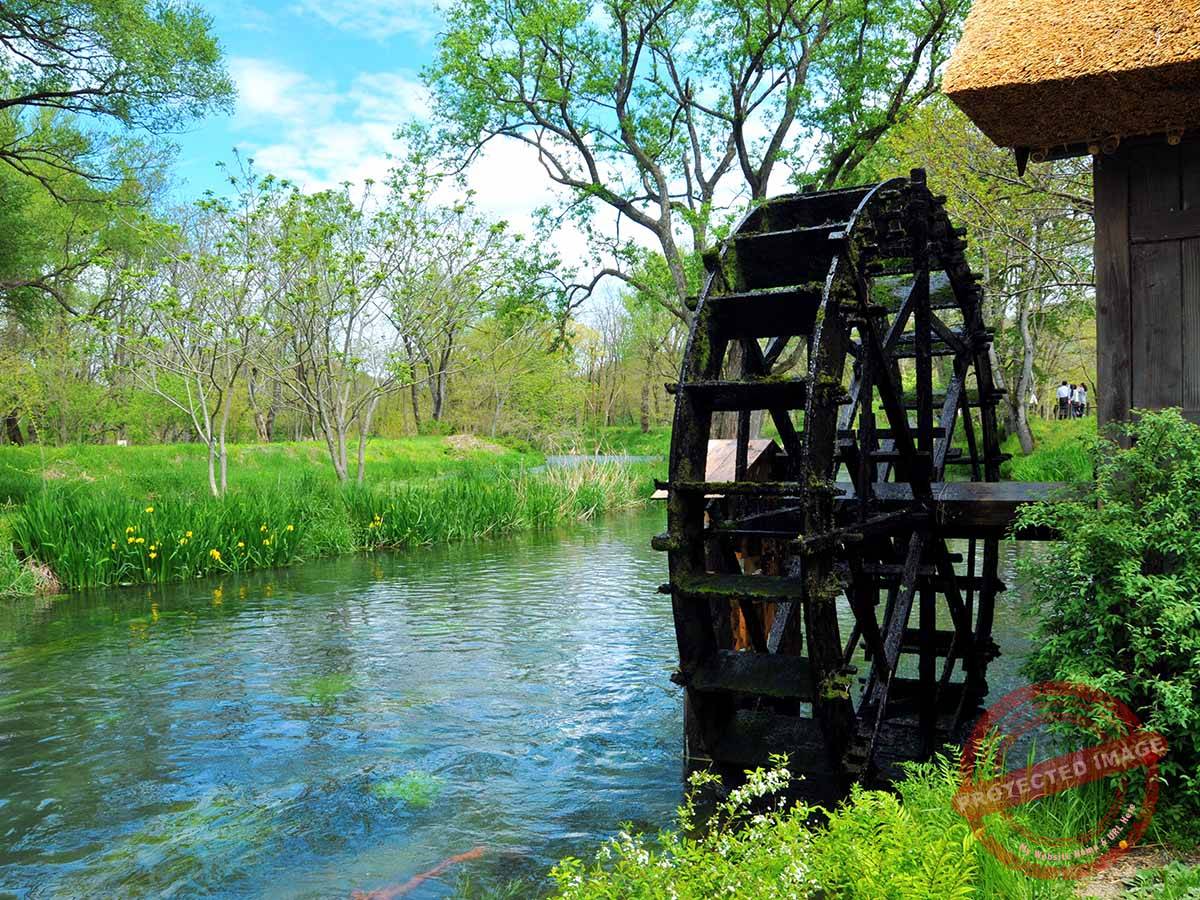
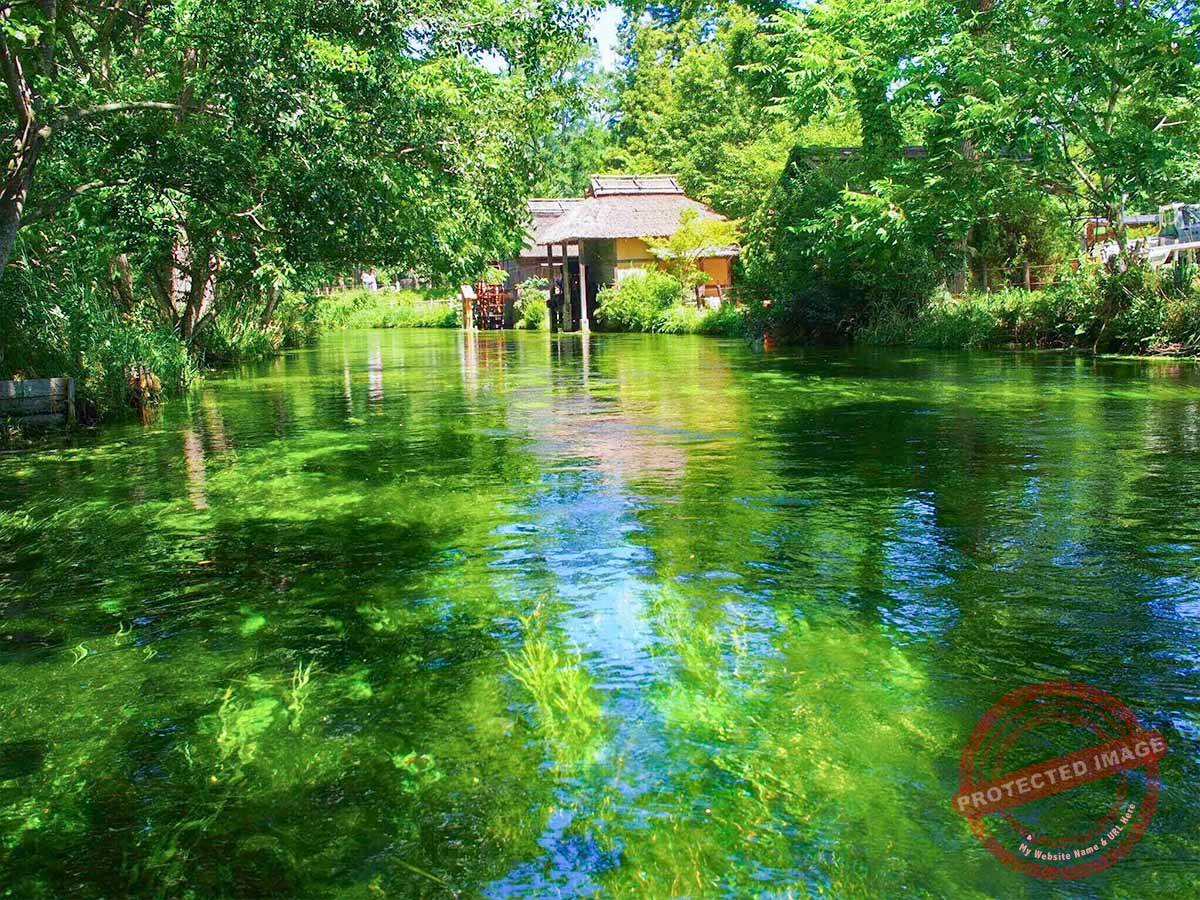
The farm is topographically defined by its location atop an abundance of pristine alpine spring water that flows from the Northern Japan Alps. This water is an authoritative element of the landscape, as wasabi requires a constant supply of clean, cold, and moving water to thrive. The layout is characterized by expansive, shaded gravel beds and a network of traditional irrigation channels that keep the plants at a consistent temperature throughout the year. The craftsmanship of the farm is further reflected in its picturesque wooden waterwheels and the scenic river that borders the fields, providing a disciplined harmony between human industry and the natural environment.
The significance of the farm lies in its historical role in developing wasabi cultivation techniques since its establishment in 1915. The environment is characterized by a polished sense of rural tranquility and agricultural heritage. This atmosphere is most visually compelling near the waterwheels, which were famously used as a filming location for Akira Kurosawa’s film Dreams. The sensory experience is defined by the crisp mountain air and the unique opportunity to sample specialized culinary creations such as wasabi-flavored ice cream, wasabi beer, and freshly grated wasabi atop traditional soba noodles.
For the luxury and heritage traveler, Daio Wasabi Farm provides a composed and intellectually rewarding environment that captures the intersection of pure natural resources and refined food culture. The atmosphere is one of disciplined serenity. The site offers a definitive location to explore walking paths that wind through the lush green fields and over the clear streams. It remains a premiere destination for those seeking to understand the delicate balance required to produce one of Japan’s most iconic flavors. The farm stands as a polished witness to the enduring importance of water purity in the nation’s gastronomic identity. |