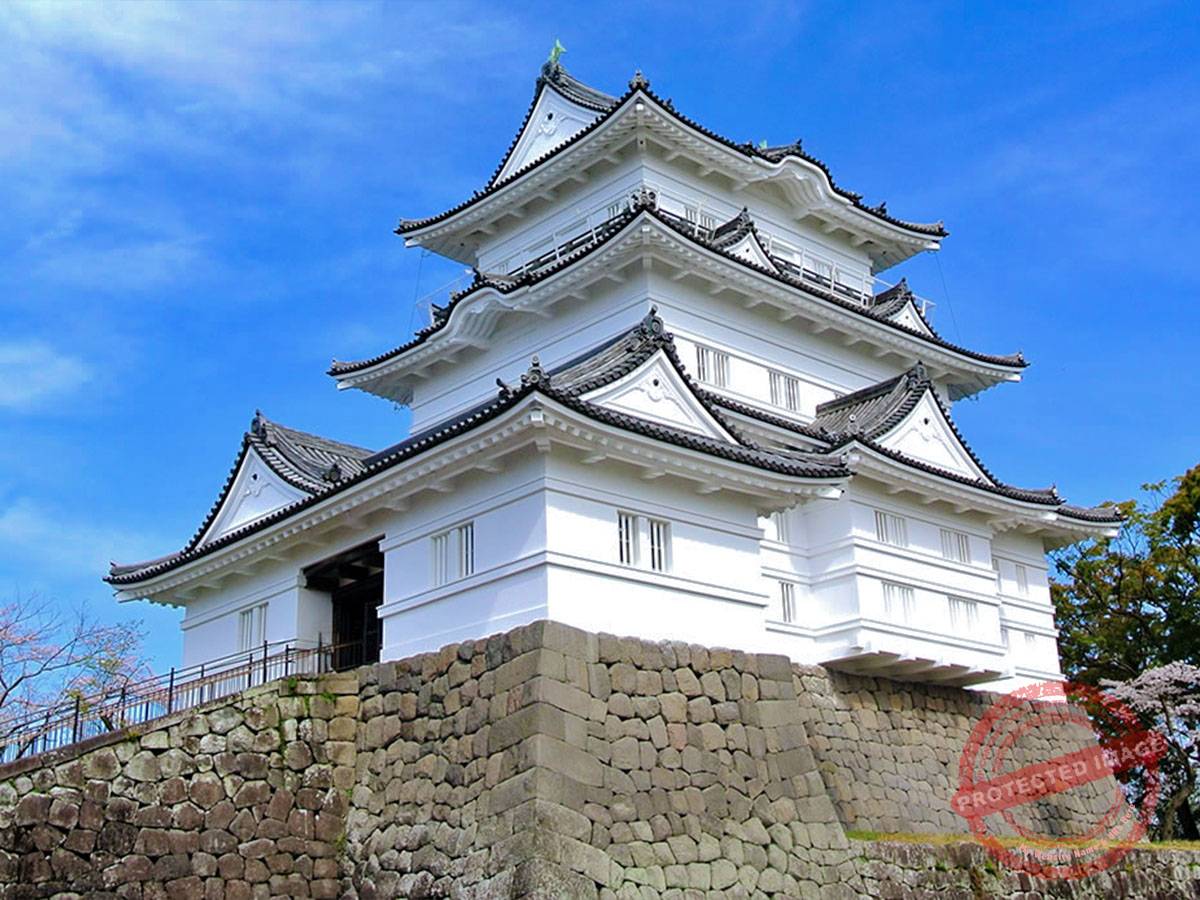
Odawara castle
| Odawara Castle stands as a formidable landmark of the Sengoku period, serving as the historical seat of the Hojo clan and a vital defensive bastion for the Kanto region. |

| The castle is architecturally defined by its strategic coastal positioning and its multi-layered system of moats and earthworks. Originally established in the mid-15th century, the site reached its defensive peak as an “impregnable” fortress that resisted several major sieges. The main keep was reconstructed in 1960 using reinforced concrete to replicate the original Edo-period aesthetic, featuring the distinctive “irimoya” gables and white plaster walls. The layout is a disciplined arrangement of massive gates, such as the Tokiwagi Gate and the Akane Gate, which utilize heavy timber and iron-reinforced joinery. These structures were meticulously restored using traditional techniques to preserve the castle’s authoritative presence as a gateway to the Tokaido road. The significance of Odawara Castle lies in its status as a vital cultural anchor for the history of Japanese unification. It was the site of the pivotal 1590 siege by Toyotomi Hideyoshi, an event that marked the end of the Sengoku era’s regional warring states. The environment is characterized by a polished sense of military heritage. The interior of the keep functions as a museum housing authentic samurai armor, weaponry, and documents relating to the Hojo and Okubo clans. This atmosphere is most visually compelling in early spring during the cherry blossom season. At this time, the reflection of the white keep and the pink flora in the surrounding moats highlights the castle’s transition from a site of conflict to one of aesthetic reflection. For the luxury and heritage traveler, Odawara Castle provides a composed and intellectually stimulating environment that captures the transition from medieval warfare to the stability of the Tokugawa Shogunate. The atmosphere is one of disciplined stillness. The panoramic views from the top of the keep offer an expansive perspective over Sagami Bay and the Hakone mountains. It remains a premiere destination for those seeking to understand the strategic geography of feudal Japan. The site stands as a polished witness to the enduring legacy of the Hojo clan and the architectural resilience of the nation’s fortified history. |