
Kamakura Hasedera Temple
Explore the profound spiritual legacy of Kamakura Hasedera, a hillside sanctuary established in 736 that stands as one of Japan’s most venerable Buddhist institutions.
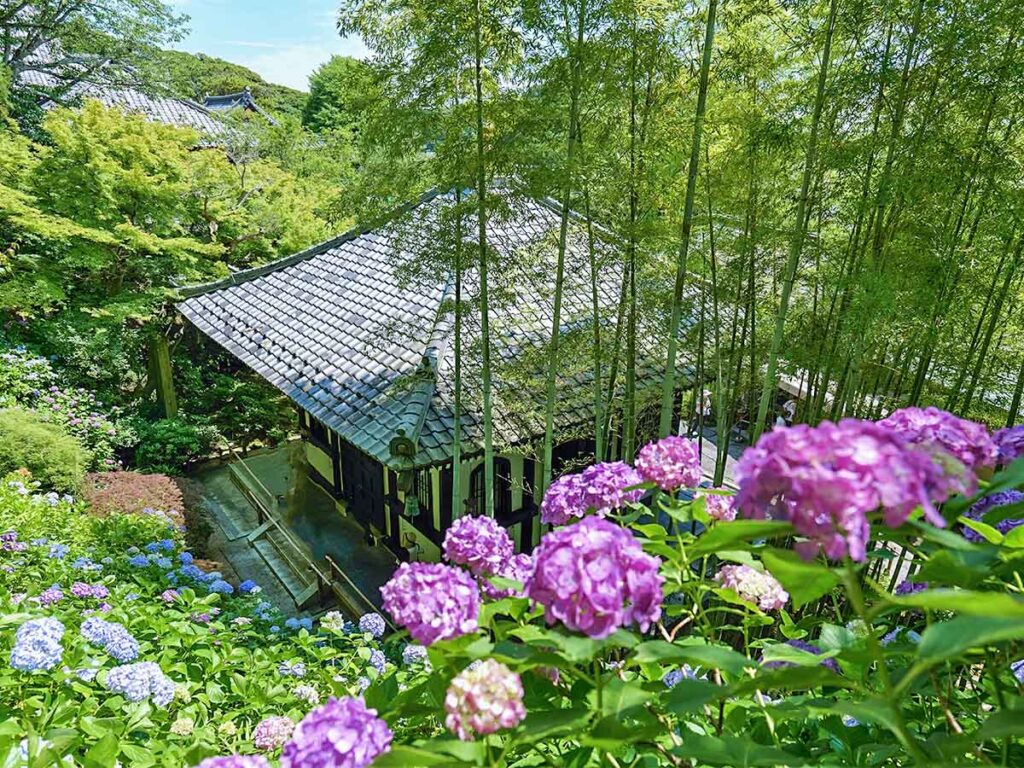
The temple is architecturally and topographically defined by its terraced layout on the slopes of Mount Kamakura. This provides an authoritative vantage point over Sagami Bay. The lower grounds feature a disciplined arrangement of ponds and stroll gardens, while the upper terrace houses the Kannon-do Hall. This structure contains the temple’s primary cultural treasure: a monumental eleven-headed statue of Kannon, the goddess of mercy. Carved from a single camphor tree and gilded in gold leaf, the statue stands over nine meters tall. It represents the pinnacle of Nara-period craftsmanship and religious devotion. The spatial organization of the complex encourages a meditative ascent, passing through rows of thousands of small Jizo statues that commemorate the souls of children.
The significance of Hasedera lies in its historical identity as the “Temple of Flowers”. This reflects a centuries-old horticultural tradition. The grounds are meticulously curated to ensure that the landscape serves as a vital cultural anchor through every season. This is most visually compelling during the early summer when over 2,500 hydrangea bushes of forty different varieties bloom across the hillside. The environment transitions to a polished palette of crimson and gold in the autumn. During this time, the temple holds evening illuminations that highlight the harmony between the wooden architecture and the changing foliage. This seasonal rhythm reinforces the temple’s role as a site of both spiritual refuge and aesthetic contemplation.
For the luxury and heritage traveler, Kamakura Hasedera provides a composed and intellectually stimulating atmosphere that captures the essence of Japan’s medieval capital. The environment is one of refined stillness. This is underscored by the rhythmic sound of temple bells and the panoramic maritime views from the observation platform. It remains a definitive destination for those seeking to understand the intersection of Buddhist iconography and the sophisticated garden design of the Kamakura period. The site stands as a polished witness to over a millennium of continuity in Japanese faith and natural appreciation.