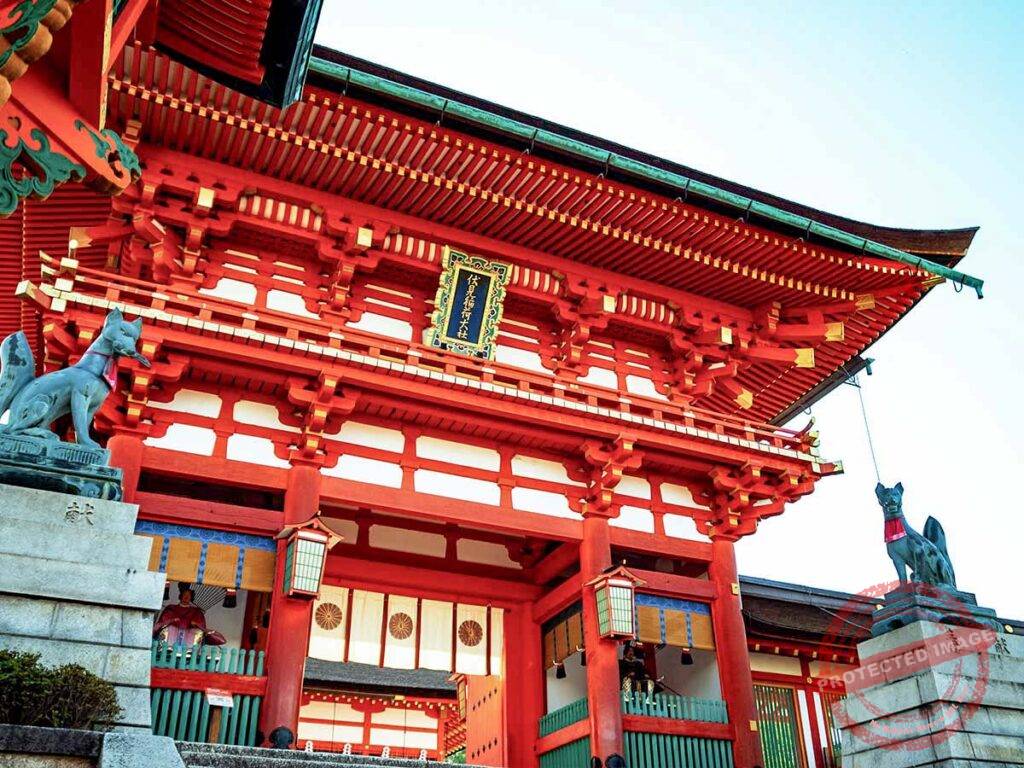
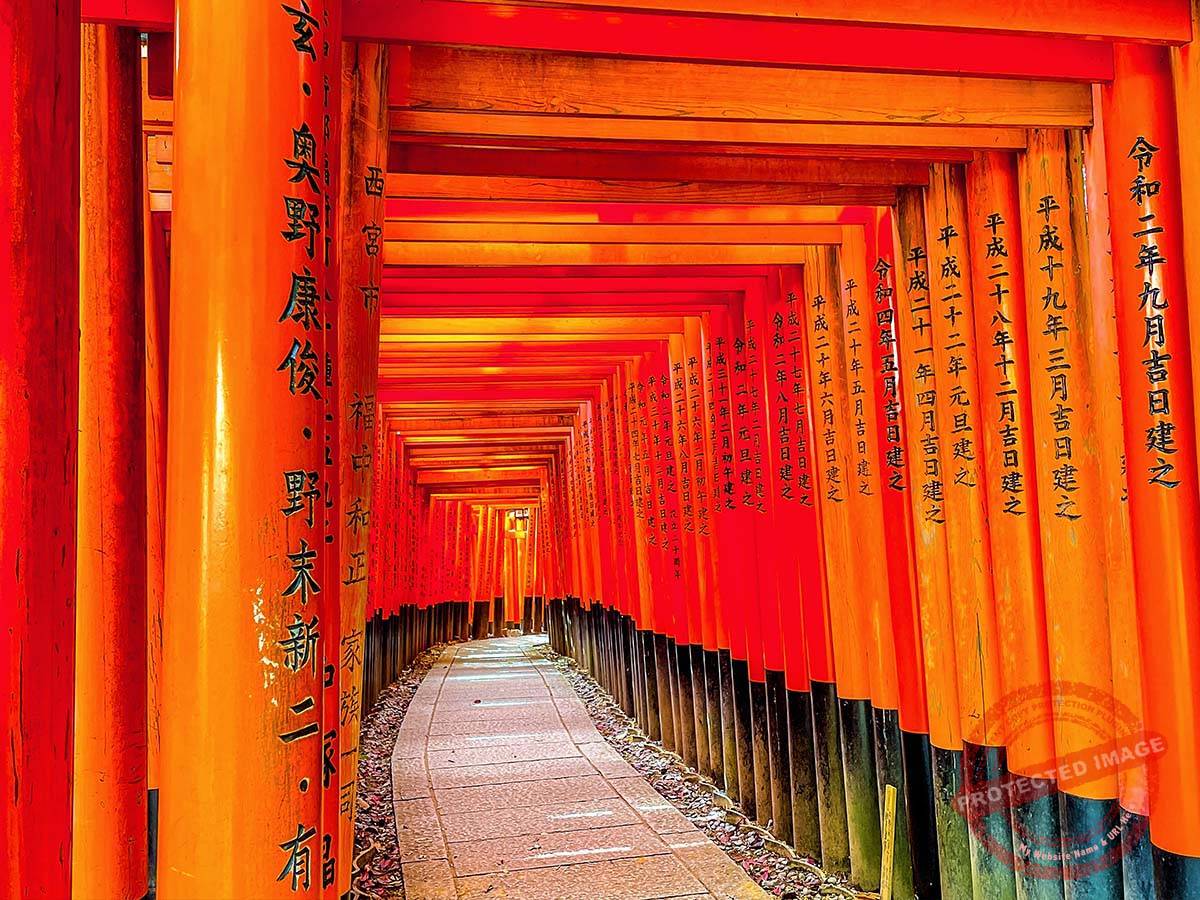
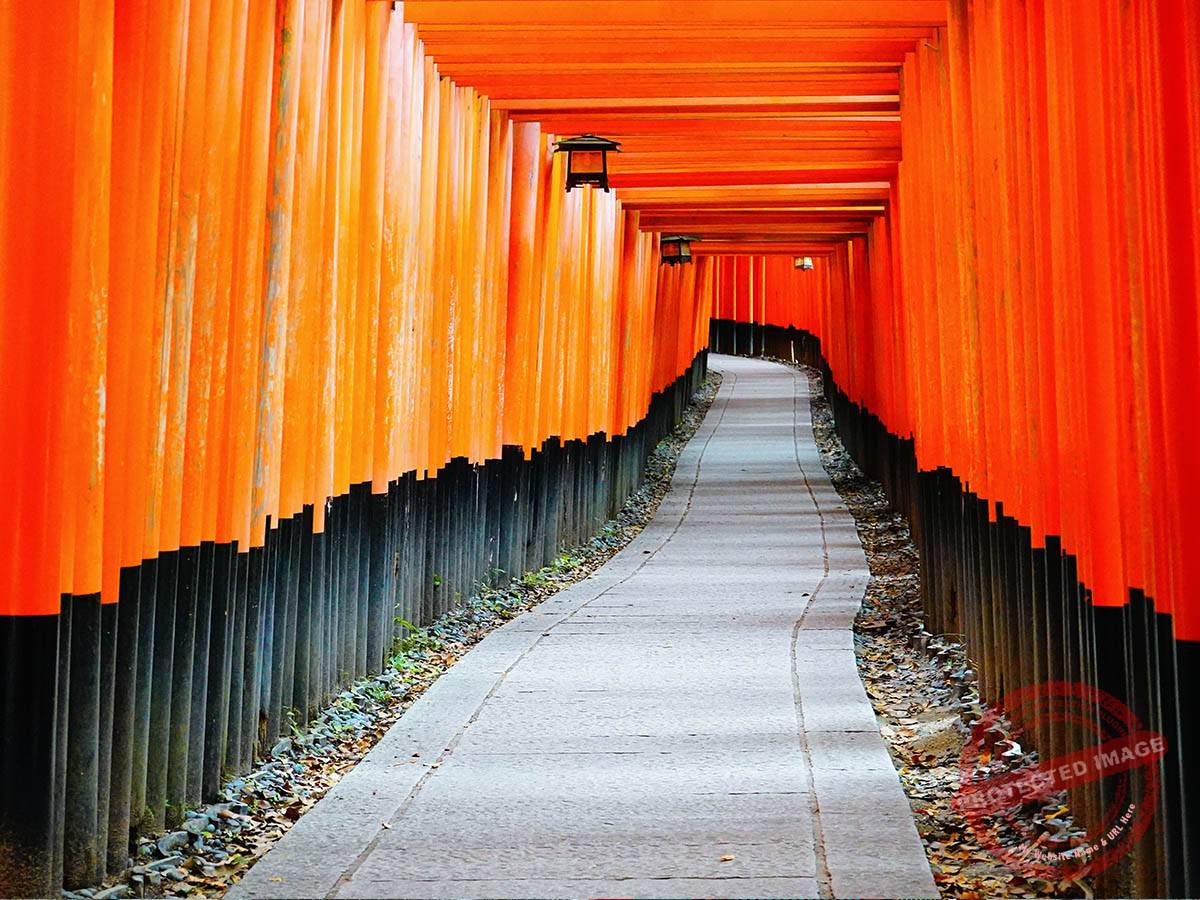
The shrine serves as the authoritative head of over 30,000 Inari shrines throughout Japan. This spiritual complex was established in 711 and is architecturally defined by its location on the slopes of the sacred Mount Inari. The layout is characterized by the “Senbon Torii”. This is a disciplined succession of thousands of vermilion-lacquered gates that form a vibrant tunnel winding up the mountainside. Each gate has been donated by a business or individual, creating a physical record of the shrine’s historical role as a protector of commerce and agriculture. The structures utilize traditional Japanese joinery and are maintained with rhythmic precision to preserve their striking color against the deep green of the surrounding forest.
The significance of Fushimi Inari lies in its status as a vital cultural anchor for the understanding of Shinto mountain worship. Stone statues of foxes, or “kitsune”, are found throughout the precinct. These are recognized as the messengers of the deity Inari. Many are depicted holding a symbolic key to the granary in their mouths. This imagery reflects the site’s agricultural roots and its evolution into a center for industrial prosperity. The environment is most visually compelling during the early morning or at dusk, when the low light emphasizes the geometric repetition of the gates. This creates a sense of profound detachment from the modern city below.
For the luxury and heritage traveler, Fushimi Inari provides a composed and intellectually stimulating environment that captures the intersection of religious ritual and communal patronage. The atmosphere is one of disciplined stillness. This is especially true on the higher reaches of the mountain trail where the crowds thin and the vertical landscape dominates. It remains a definitive destination for those seeking to witness the enduring scale of Japanese faith. The site serves as a masterclass in how repetitive architectural elements can create a space of immense dignity and spiritual continuity. |