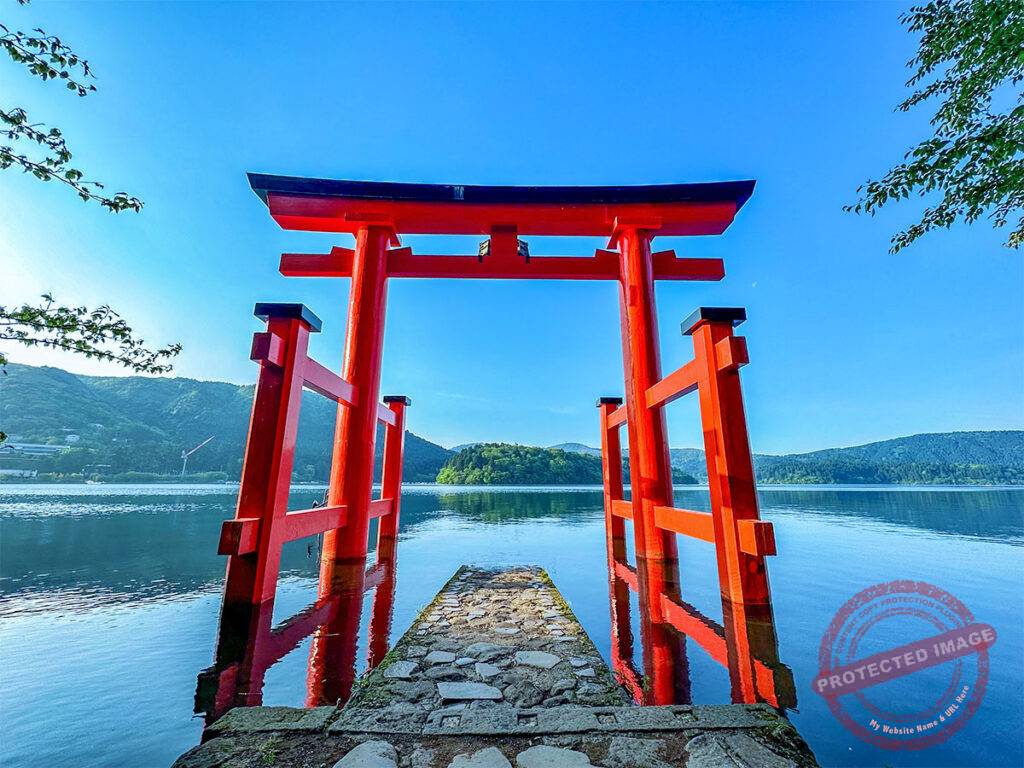
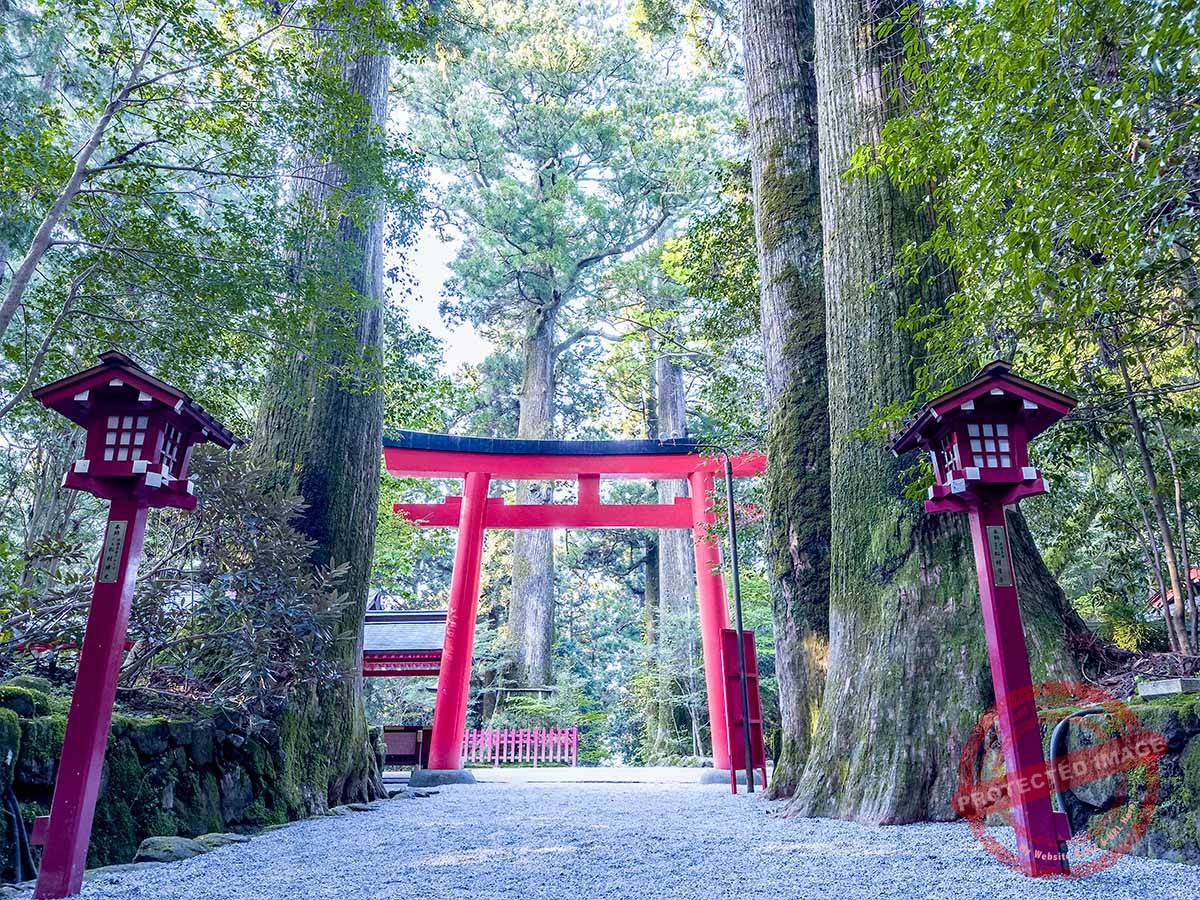
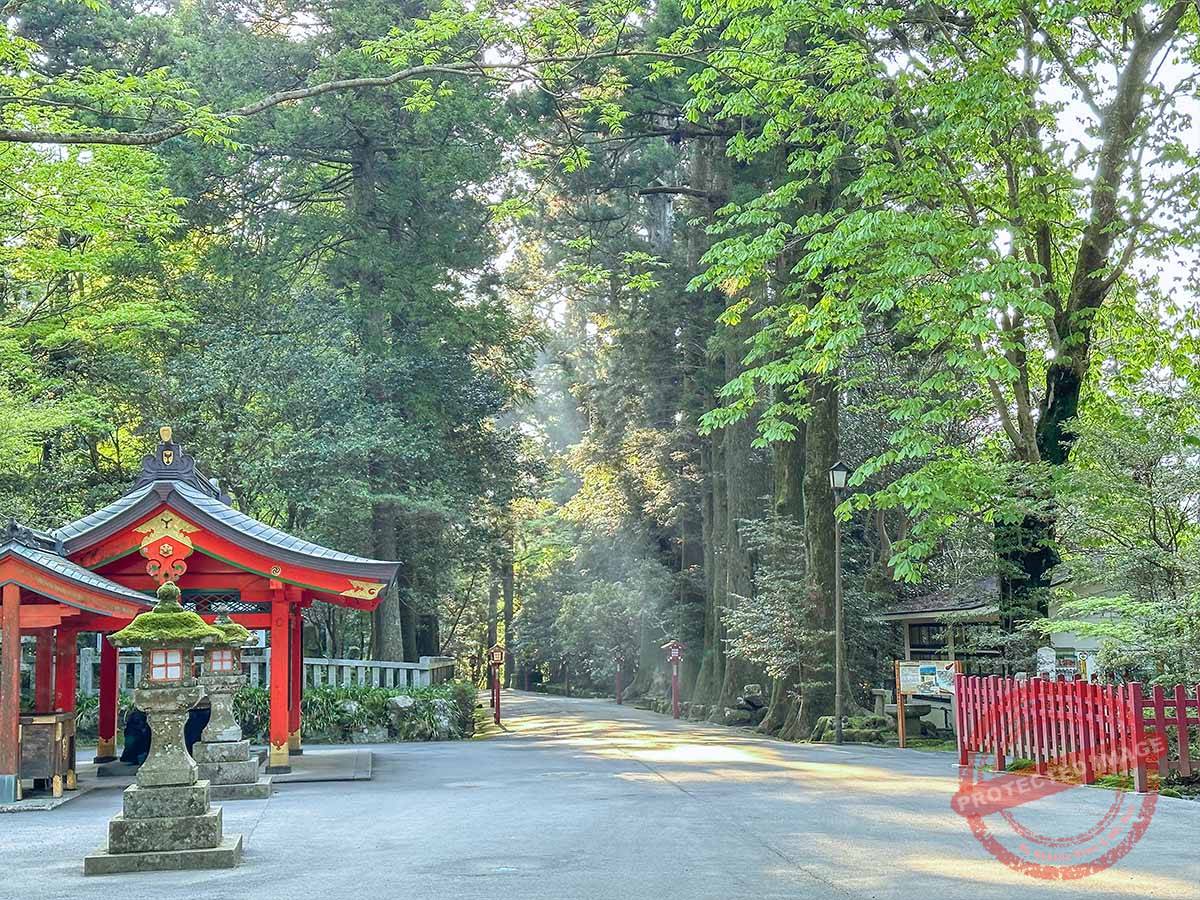
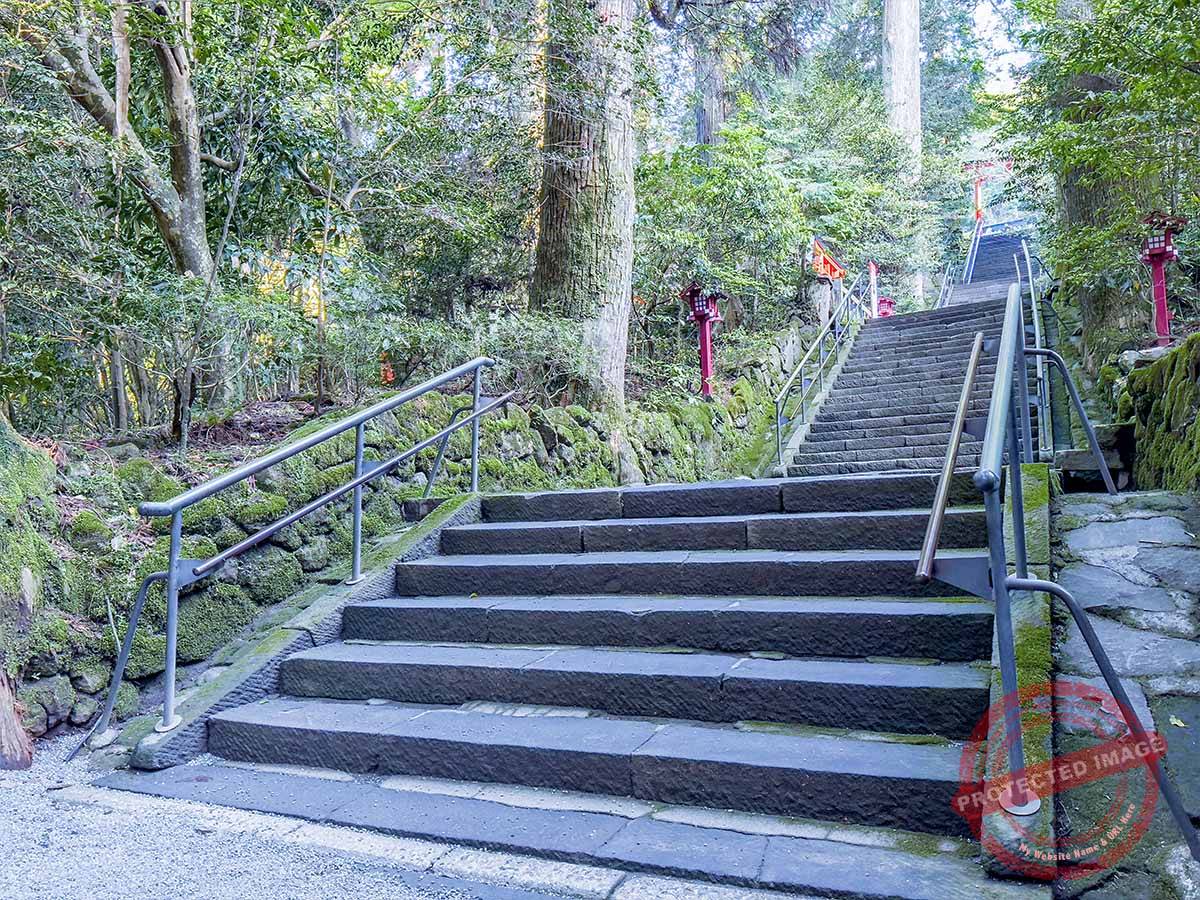
The shrine is architecturally defined by its classic “Gongen-zukuri” style, featuring lacquered vermilion structures that contrast brilliantly against the deep evergreens of Mount Hakone. Its most authoritative visual landmark is the “Heiwa no Torii” (Torii of Peace), which stands partially submerged in the waters of Lake Ashi, marking the boundary between the sacred and the profane. The layout follows a disciplined ascent from the lakeshore, with a long stone staircase lined by ancient cedars leading to the main sanctuary. This vertical orientation reflects the traditional practice of mountain worship, where the physical climb serves as a meditative transition into the realm of the deities.
The significance of Hakone Shrine lies in its historical role as a guardian of the Tokaido road, the vital artery connecting Kyoto and Edo (modern-day Tokyo). During the Edo period, travelers and shoguns alike would stop here to pray for safe passage through the treacherous Hakone mountain passes. This cultural heritage is further enriched by the presence of the Kuzuryu Shrine (Nine-Headed Dragon Shrine), located nearby on the lakeshore, which is dedicated to the legendary dragon said to reside in Lake Ashi. These narratives are celebrated through seasonal festivals that integrate both the terrestrial and aquatic elements of the landscape, reinforcing the shrine’s status as a vital cultural anchor for the region.
For the cultural traveler, Hakone Shrine offers a composed and intellectually rich environment that captures the intersection of Shinto ritual and the dramatic natural beauty of Fuji-Hakone-Izu National Park. The environment is one of refined stillness, where the rhythmic lapping of the lake water against the red gates provides a serene backdrop for contemplation. It remains a definitive destination for those seeking to experience the enduring legacy of Japan’s mountain spirituality and its role in protecting those who traverse the historic pathways of the heartland. |