Aso Shrine
| Discover the profound spiritual and historical resonance of Aso Shrine, one of Japan’s oldest and most significant Shinto sanctuaries, serving as the spiritual guardian of the Mount Aso region for over two millennia. |
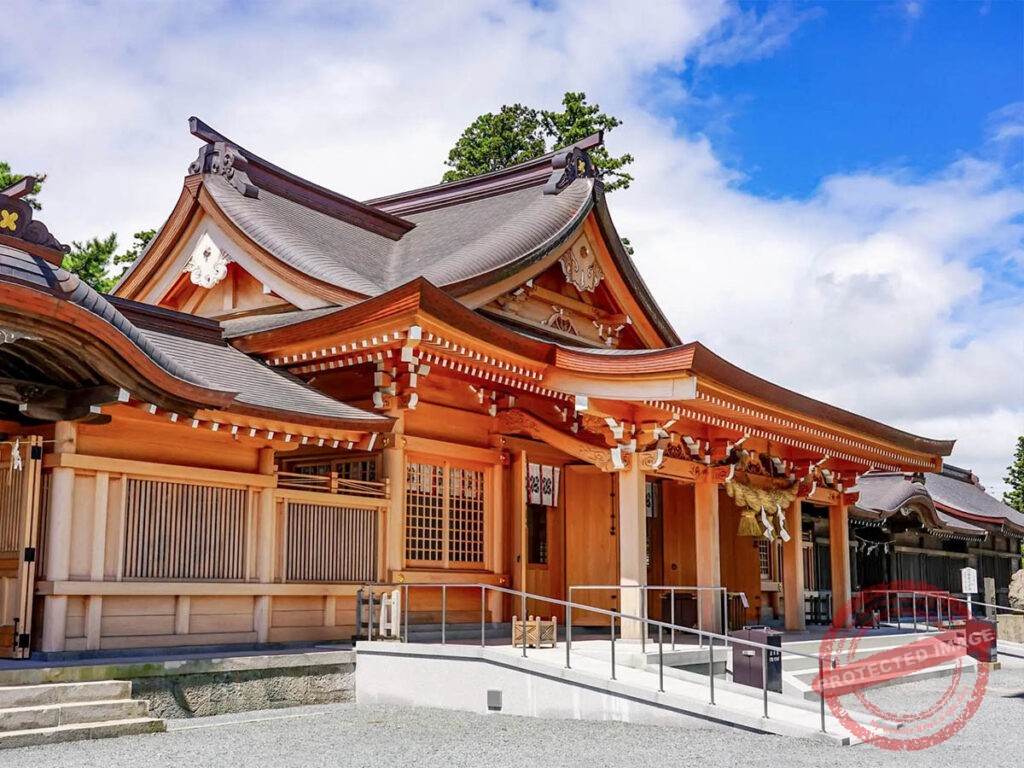
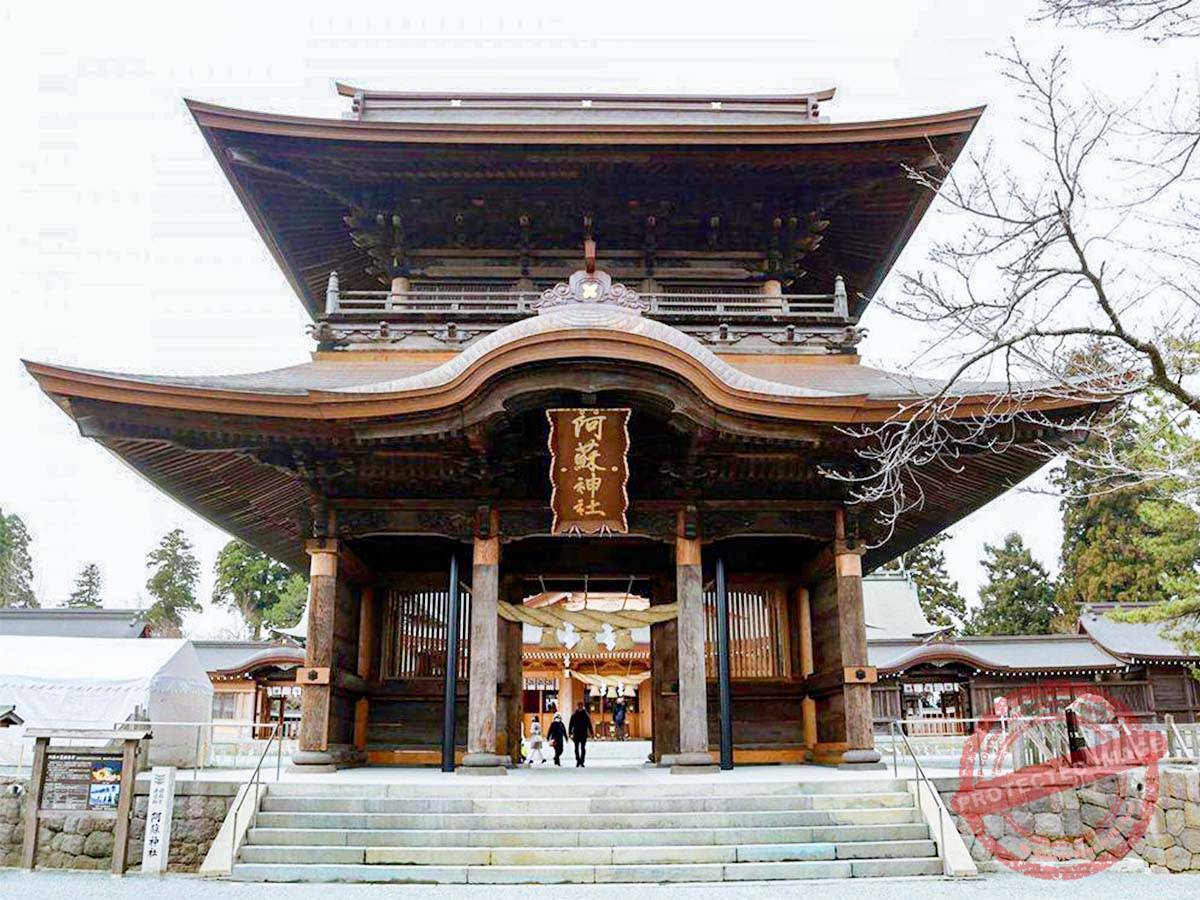
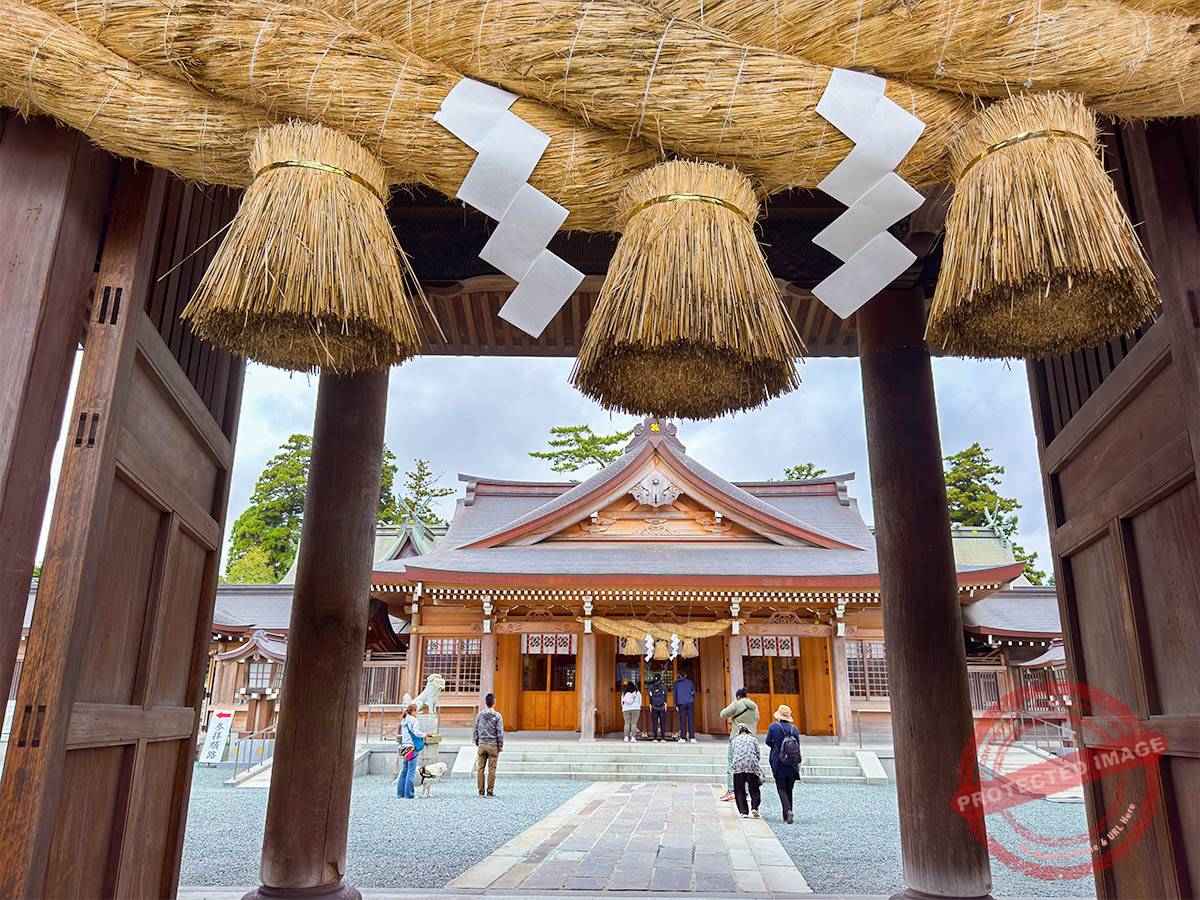
| The shrine is architecturally renowned for its grand “Hiyoshi-zukuri” style, characterized by a monumental two-story Romon gate that was historically ranked among the three largest of its kind in Japan. While the 2016 Kumamoto earthquake caused extensive damage to several structures, a disciplined and highly sophisticated restoration project has successfully revived the shrine’s physical presence. The current precinct features meticulously restored timber-framed halls and sweeping thatched roofs that utilize traditional joinery techniques, reflecting a period of immense cultural resilience. The layout is unique for its “Ichinomiya” (first shrine) status, with a long, horizontal approach (sando) that runs parallel to the shrine itself rather than leading directly to it, a design rare in Shinto spatial planning. The significance of Aso Shrine lies in its deep connection to the agricultural vitality of the Aso caldera and its role in Japanese mythology. It is dedicated to Tateiwatatsu-no-Mikoto, the grandson of Japan’s first emperor, who is credited with developing the region’s farming traditions. This heritage is preserved through “Aso no Okiyome-shiki”, a series of seasonal festivals recognized by UNESCO as Intangible Cultural Heritage. These ceremonies, particularly the “Hifuri Shinji” (fire-swinging ritual), offer an authoritative look at the enduring relationship between the local community and the volcanic landscape. The surrounding “Monzen-machi” (shrine town) is famous for its “Mizuki” (water drinking fountains), where visitors can taste the pure volcanic spring water that has been revered as sacred for generations. For the heritage traveler, Aso Shrine offers a composed and intellectually rich atmosphere where the recovery from natural disaster has become part of its modern narrative. The environment is one of refined reverence, providing a vital cultural anchor for those seeking to understand the intersection of ancient Shinto rites and the living traditions of the Aso people. It remains a definitive location for experiencing the spiritual depth and communal strength that define the Kumamoto heartland. |