
Sakura no Baba Josaien
| Immerse yourself in the historical vitality of Sakura no Baba Josaien, a meticulously designed cultural complex at the foot of Kumamoto Castle that recreates the vibrant atmosphere of a 17th-century castle town. |
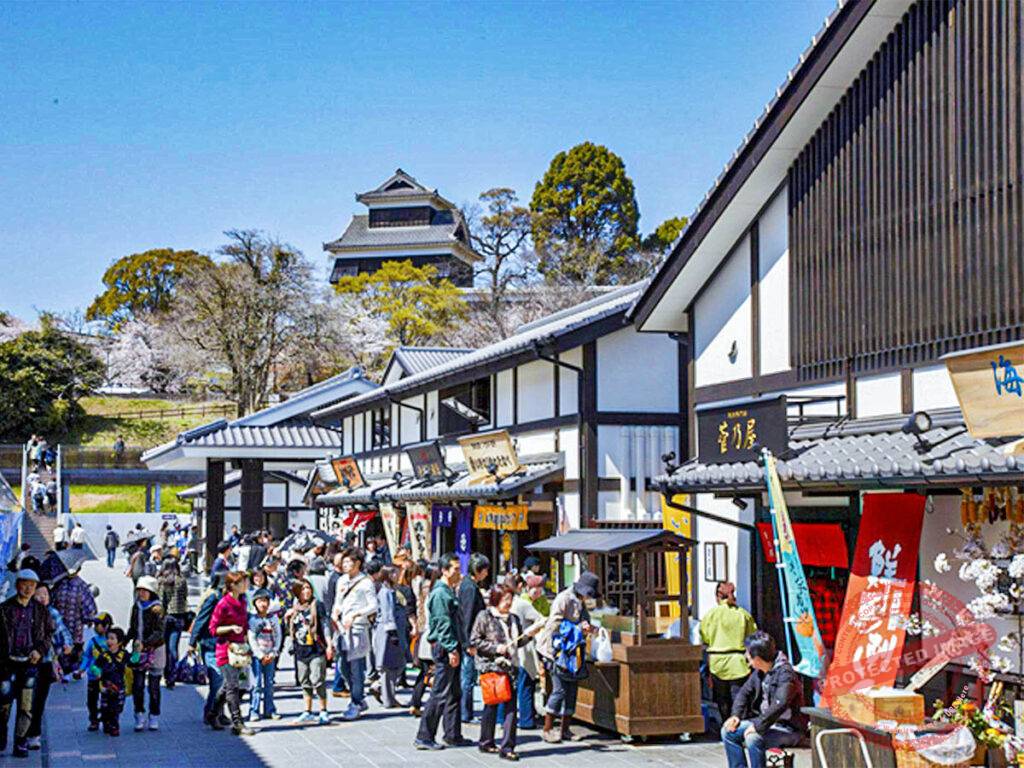
| The district is architecturally defined by the “Sakura-no-Koji”, a retail and dining area that mirrors the wooden townhouses and traditional aesthetic of the Edo period. These structures utilize dark timber frames and tiled roofs to evoke the era when the Hosokawa clan governed the Kumamoto domain. The layout is designed to serve as a ceremonial approach to the castle, guiding visitors through a rhythmic transition from the modern city into a curated historical enclave. This disciplined reconstruction provides a tactile sense of the commercial life that once thrived beneath the protection of the castle’s massive stone walls. The significance of Josaien lies in its role as a sophisticated interpretive center, most notably through the “Wakuwaku-za” History Cultural Experience Hall. This facility uses interactive technology and traditional performing arts to offer an authoritative perspective on the castle’s construction, its role in the Seinan Rebellion, and the daily lives of the samurai class. Beyond education, the complex acts as a gastronomic hub, featuring local specialties such as “Karashi Renkon” (lotus root filled with spicy mustard) and “Basashi” (horse meat sashimi), which are deeply rooted in the region’s culinary history. For the heritage traveler, Sakura no Baba Josaien provides a polished and accessible gateway to understanding Kumamoto’s identity. The atmosphere is one of lively historical celebration, where the craftsmanship of local artisans meets the grandeur of Japan’s feudal past. It remains a vital cultural anchor for the city, ensuring that the traditions and stories associated with Kumamoto Castle continue to be shared in a dynamic, contemporary setting. |