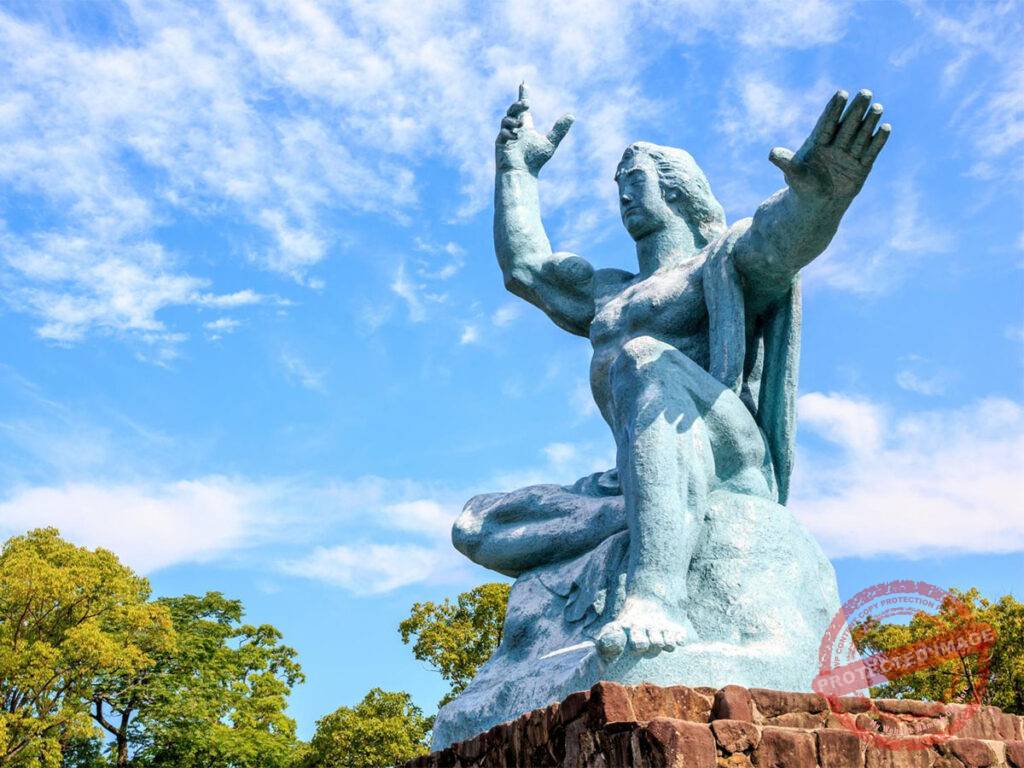
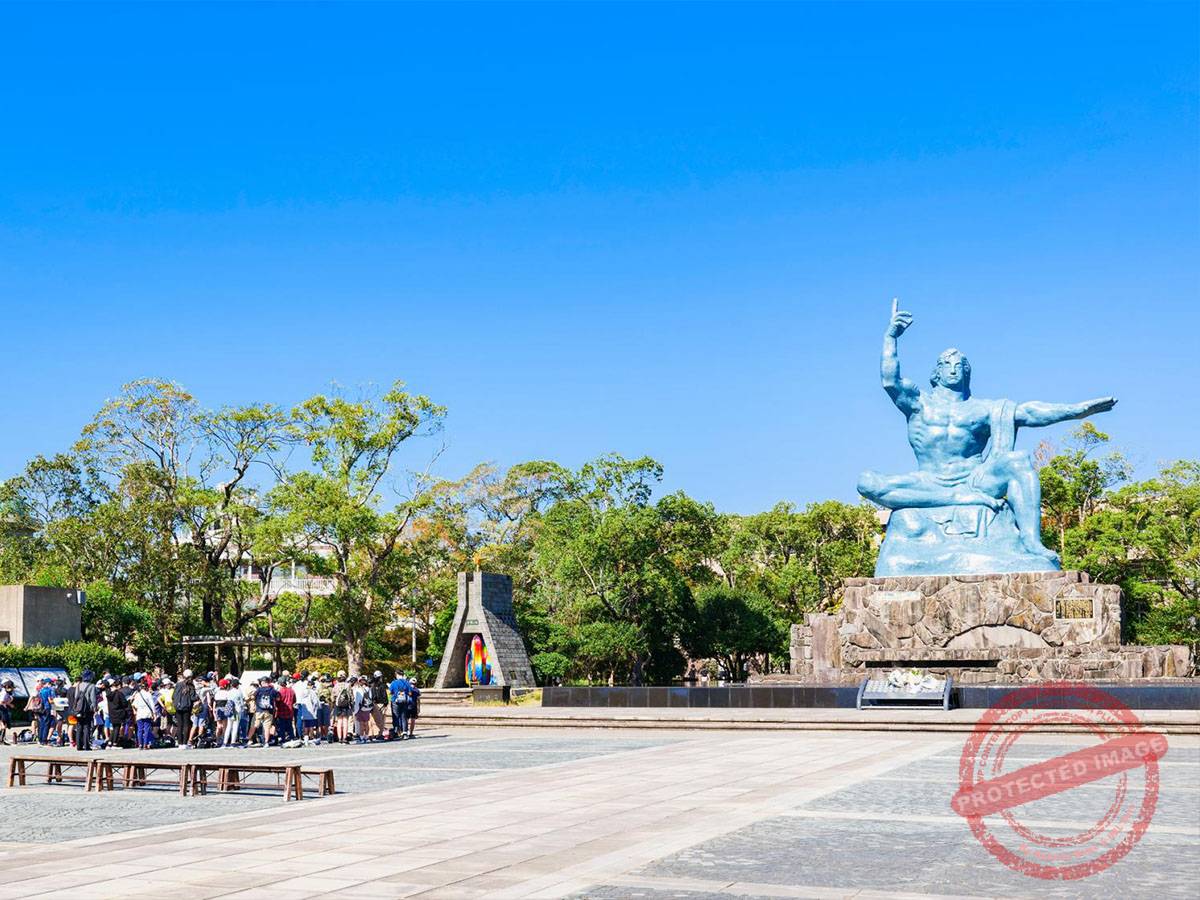
The park is architecturally structured into several distinct zones, including the Zone of Hope and the Zone of Prayer, designed to facilitate both public ceremonies and private reflection. The focal point of the park is the Peace Statue, a monumental bronze sculpture created by Seibo Kitamura. The statue’s design is rich in symbolism: the raised right hand points to the threat of nuclear weapons, the extended left hand signifies eternal peace, and the closed eyes represent a prayer for the souls of the victims. The stability of the massive stone pedestal provides an authoritative presence that anchors the northern end of the park’s central axis.
The significance of the site is further deepened by the Fountain of Peace, located near the park entrance. The fountain’s design, with its upward-spraying water like the wings of a dove, was built in memory of those who searched desperately for water in the aftermath of the explosion. The park also functions as an open-air gallery of international solidarity, featuring numerous monuments donated by various countries, each expressing a unique cultural perspective on the theme of reconciliation. This collection offers a global and intellectual look at how different nations perceive the necessity of peace.
For the heritage traveler, the Nagasaki Peace Park provides a composed and solemn atmosphere. It acts as a vital cultural anchor where the tragedy of the past is transformed into an active, forward-looking commitment to global harmony. The park remains a definitive location for visitors to participate in the “Nagasaki Commitment”, offering a space where the narrative of resilience is woven into the city’s contemporary civic identity. |