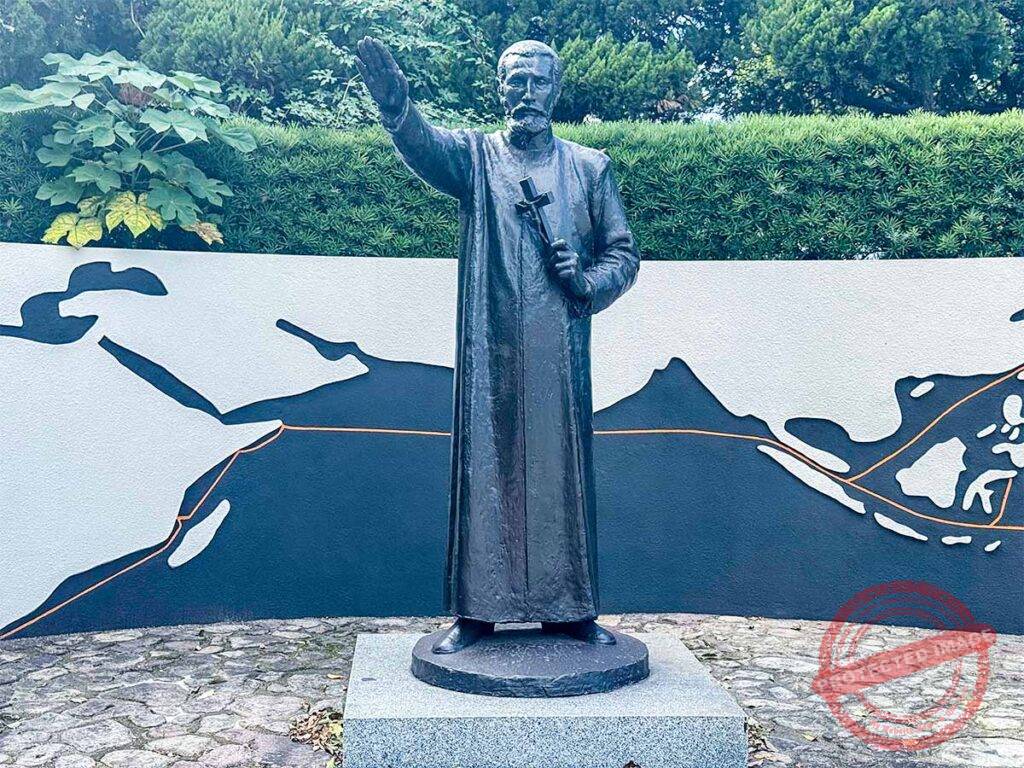
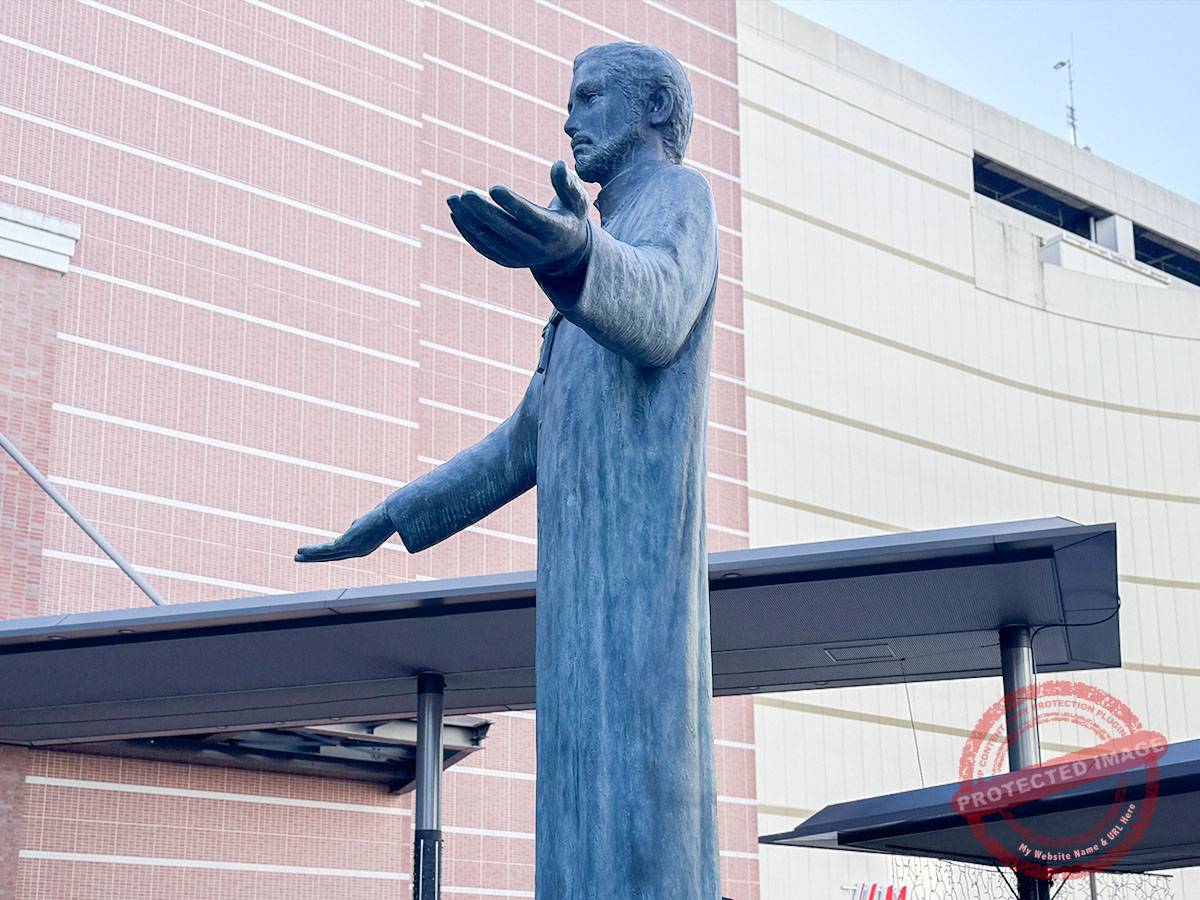
Located in Oita, a city formerly known as Funai and ruled by the influential Christian daimyo Otomo Sorin, the statue occupies a site of immense historical resonance. The monument is characterized by its refined bronze craftsmanship, depicting Xavier in a characteristic pose of teaching and outreach. The design of the statue and its surrounding plaza reflects a sophisticated commemorative style, utilizing stone and metal to create a space that feels both historic and contemporary. The attention to detail in the missionary’s robes and expression provides a humanizing and authoritative look at a figure who navigated the complexities of Sengoku-period Japan.
The significance of the memorial lies in its role as a permanent marker of the “Christian Century” in Japan. It marks a period when Funai became a flourishing center for Western medicine, music, and printing. The monument is often accompanied by interpretive plaques that detail Xavier’s interactions with local leaders and his efforts to bridge the vast linguistic and philosophical gaps between European and Japanese cultures. This makes the site a vital educational anchor for understanding the globalized history of Kyushu.
For the heritage traveler, the memorial offers a composed atmosphere for reflection on the early modern history of international relations. The open public space surrounding the statue allows for a clear view of the city’s modern development while grounding the visitor in its cosmopolitan past. It remains a polished tribute to the resilience of cultural dialogue and the enduring legacy of a man who left an indelible mark on the Japanese spiritual landscape. |