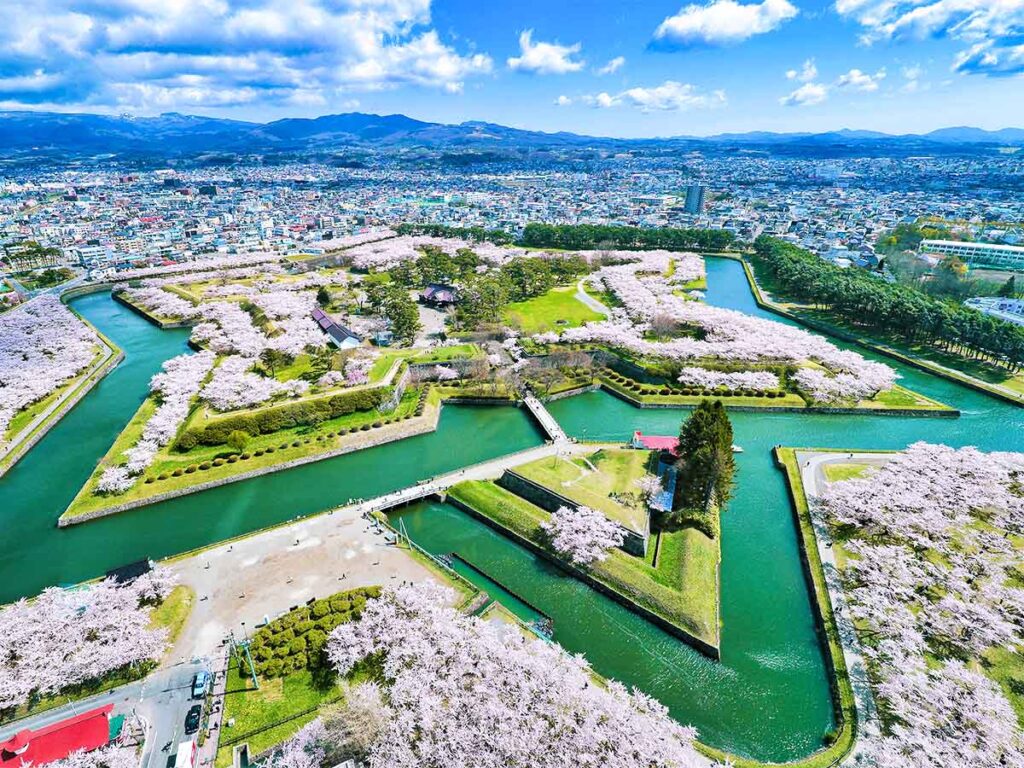
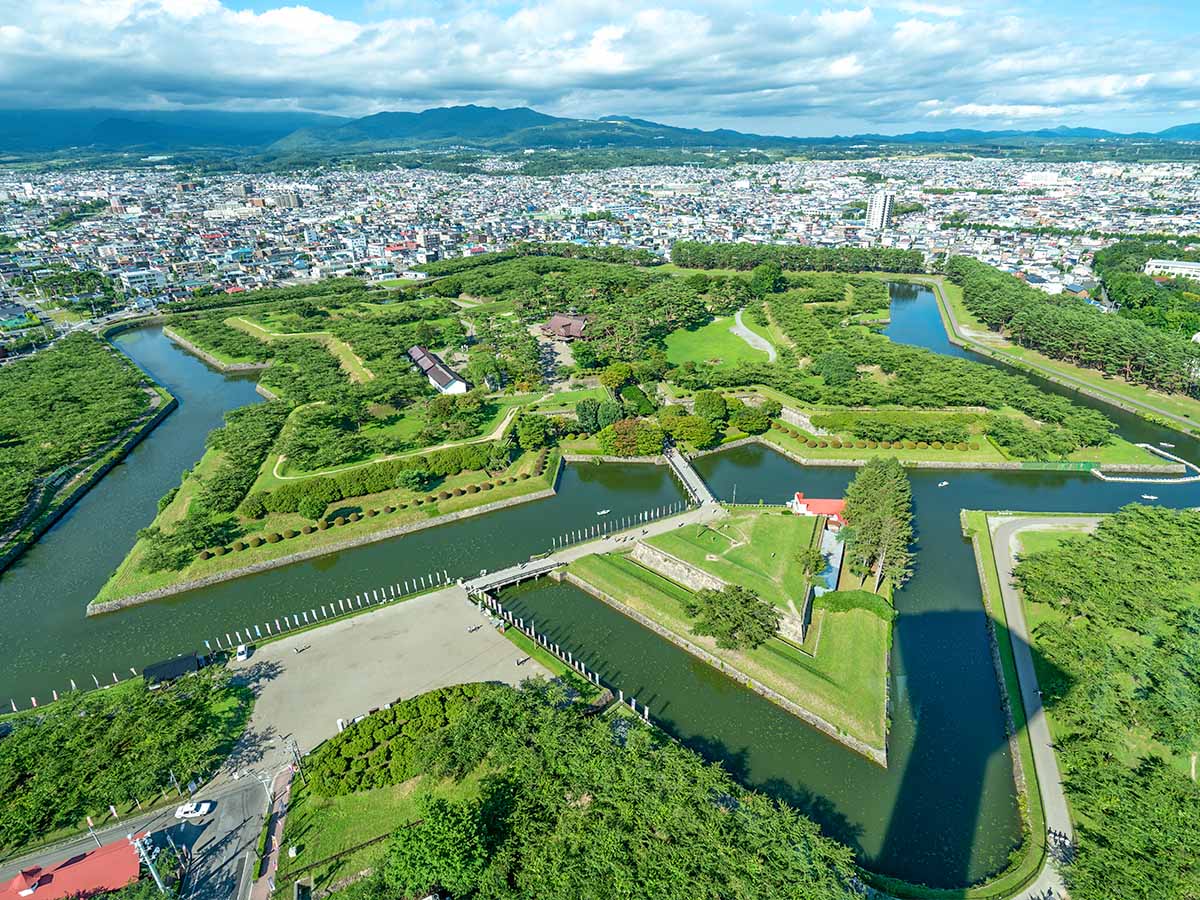
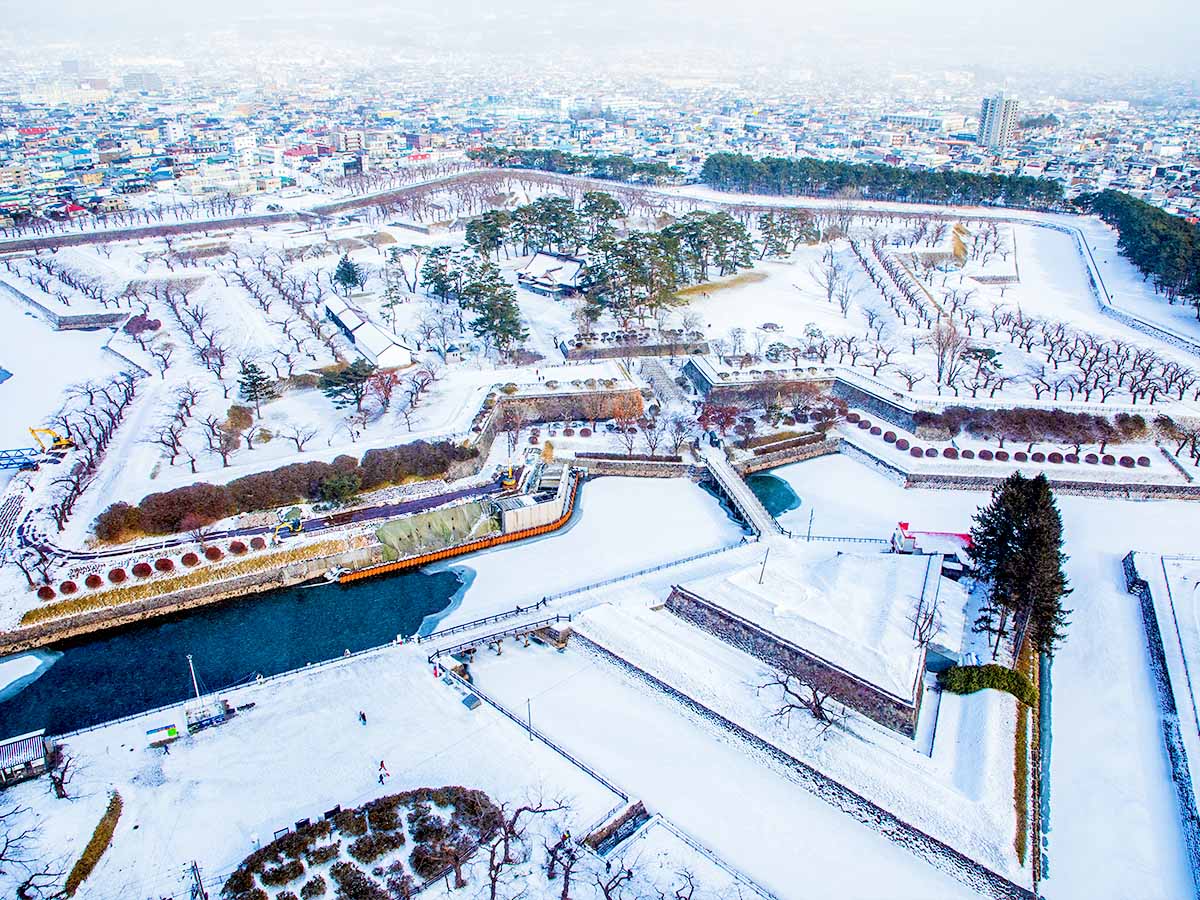
A singular example of French-style military engineering in Japan, Goryokaku Park preserves the star-shaped fortress that served as the final stage of the Boshin War.
Completed in 1864, Goryokaku was designed by the scholar Takeda Ayasaburo under the instruction of the Tokugawa Shogunate. The fortress represents a significant departure from traditional Japanese castle architecture, adopting the Western “Vauban” style characterized by its pentagonal, star-shaped layout. This design was intended to eliminate blind spots and allow for the strategic placement of cannons to defend against modern naval threats. The site is defined by its massive stone walls, hand-cut from local granite, and its expansive peripheral moats which remain a marvel of mid-19th-century engineering.
The significance of the park lies in its role as the seat of the short-lived Republic of Ezo, marking the end of Japan’s feudal era and the beginning of the Meiji Restoration. While the original magistrate’s office was demolished in 1871, a meticulous reconstruction using traditional joinery and period-accurate materials was completed in 2010. This provides an authoritative look at the site’s former administrative splendor.
The most visually arresting time to visit is during the spring, when over 1,500 cherry trees bloom along the moats, or in winter, when the star shape is illuminated against the snow. Goryokaku remains a dignified anchor of Hakodate’s identity, offering a profound sense of historical continuity and a unique perspective on Japan’s transition into a modern state.