A UNESCO World Heritage site in Nagasaki, built in 1882 by Father de Rotz as a resilient sanctuary for the coastal community of Sotome.
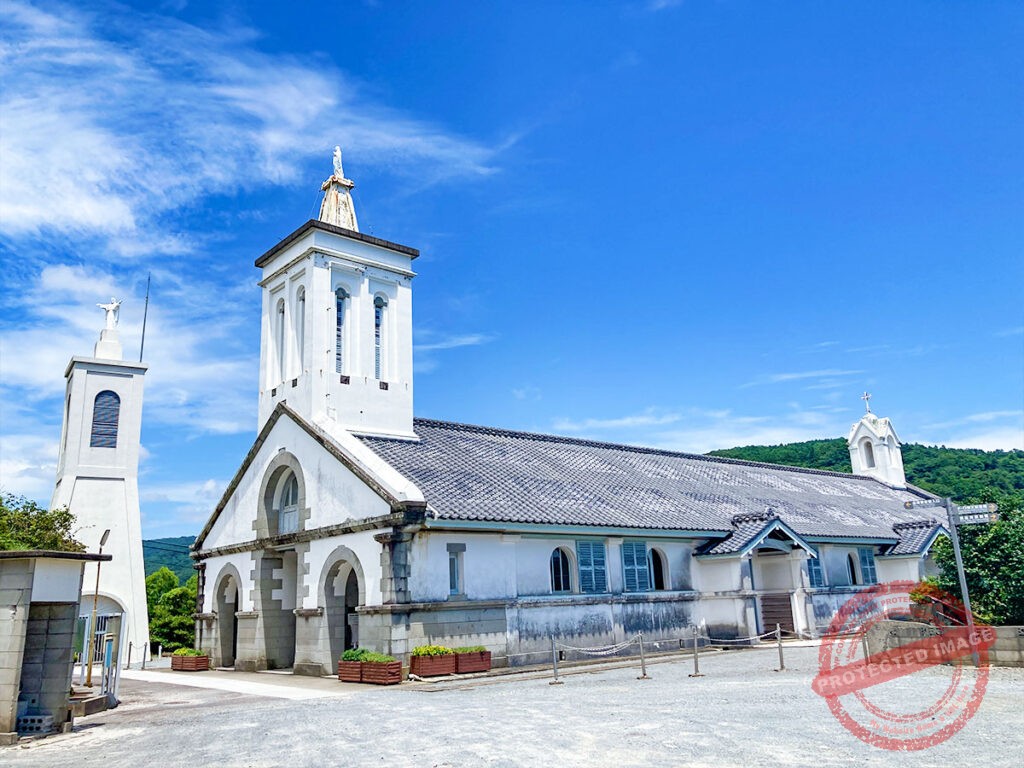
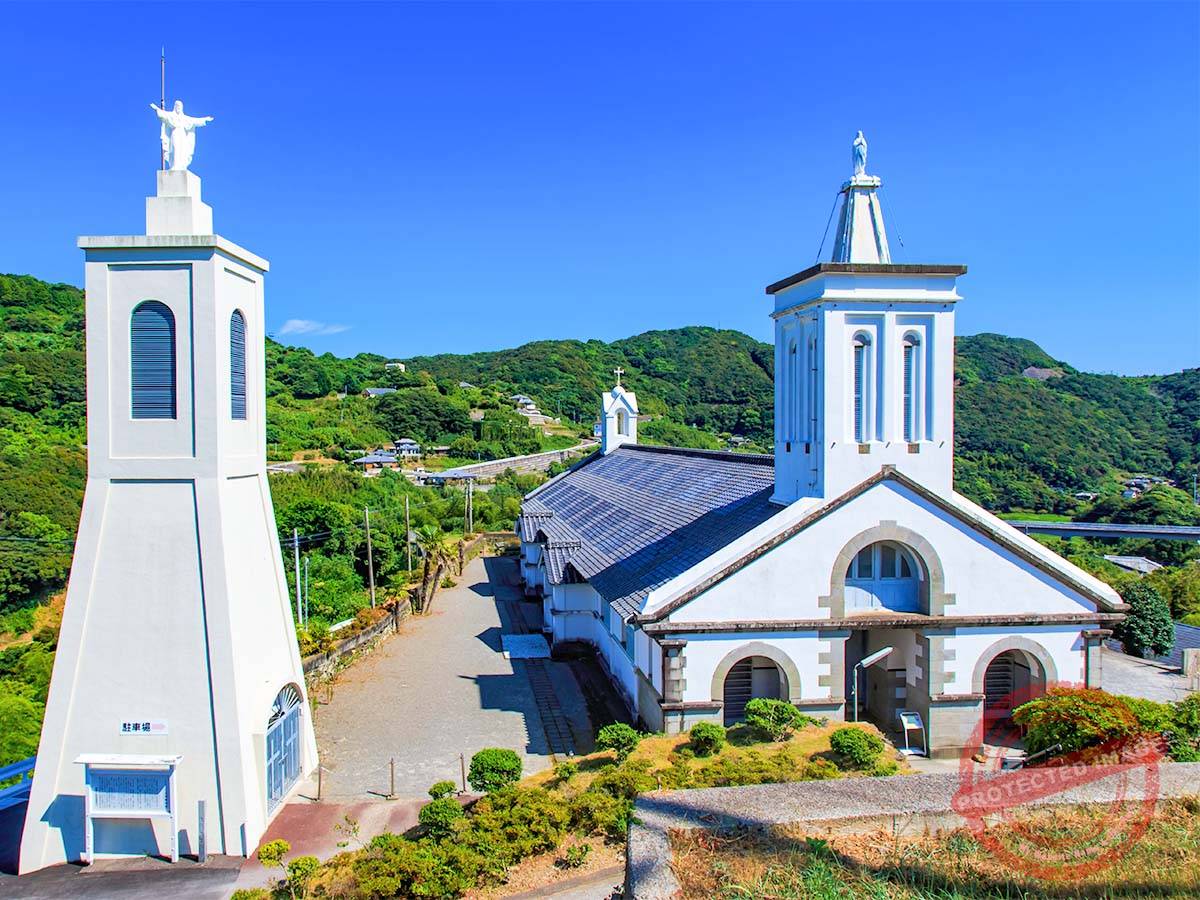
Shitsu Church stands as an enduring monument to the altruism of Father Marc Marie de Rotz, a French missionary who arrived in the Sotome district in 1879. Situated on a windswept hillside plateau overlooking the rugged Nagasaki coastline, the church was completed in 1882 using Father de Rotz’s personal funds. Its architecture is a study in practical resilience, designed to withstand the region’s frequent and powerful typhoons through a low-profile silhouette and sturdy stone construction.
The structure is characterized by its unique “De Rotz tiles”, and whitewashed brick walls that anchor the building to its dramatic natural setting. The interior features a rare, vaulted ceiling crafted from wood, a technique that reflects a sophisticated fusion of European ecclesiastical design and local Japanese craftsmanship. Beyond its architectural merits, the church served as the heart of a comprehensive social welfare program, which included a vocational center designed to provide the impoverished local community with sustainable livelihoods.
Now recognized as a component of the UNESCO World Heritage “Hidden Christian Sites in the Nagasaki Region”, the church remains a poignant symbol of the transition from secret devotion to public religious expression. Its understated aesthetic and historical weight offer visitors an authentic sense of place, reflecting a legacy of compassion and cultural continuity.