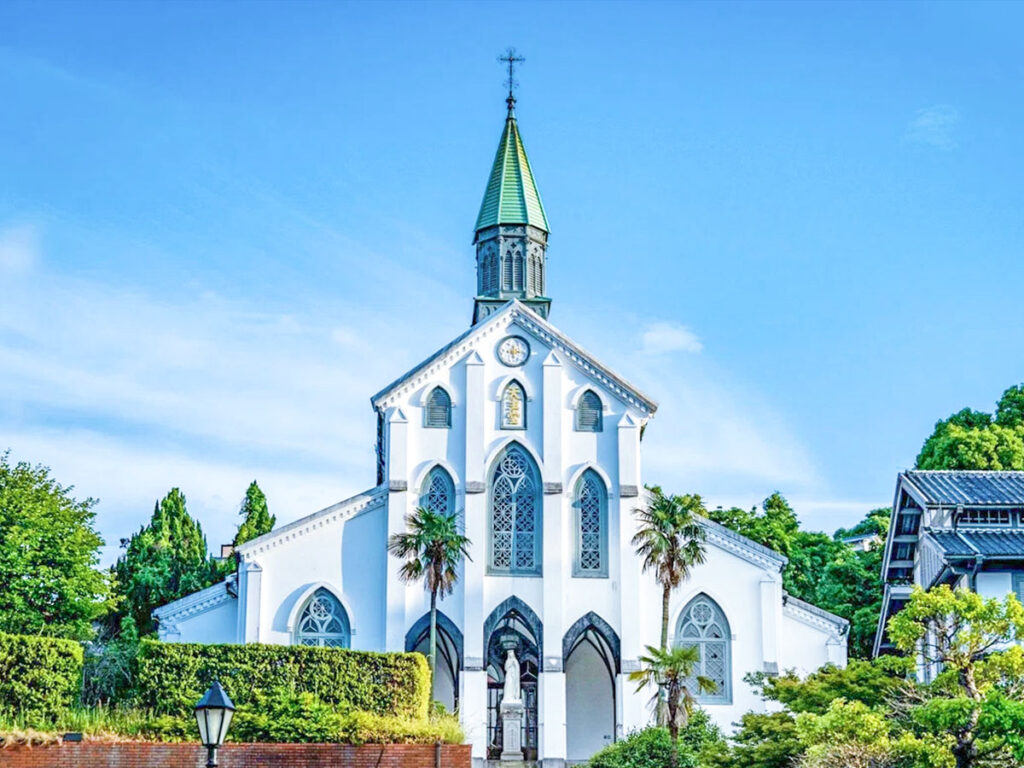
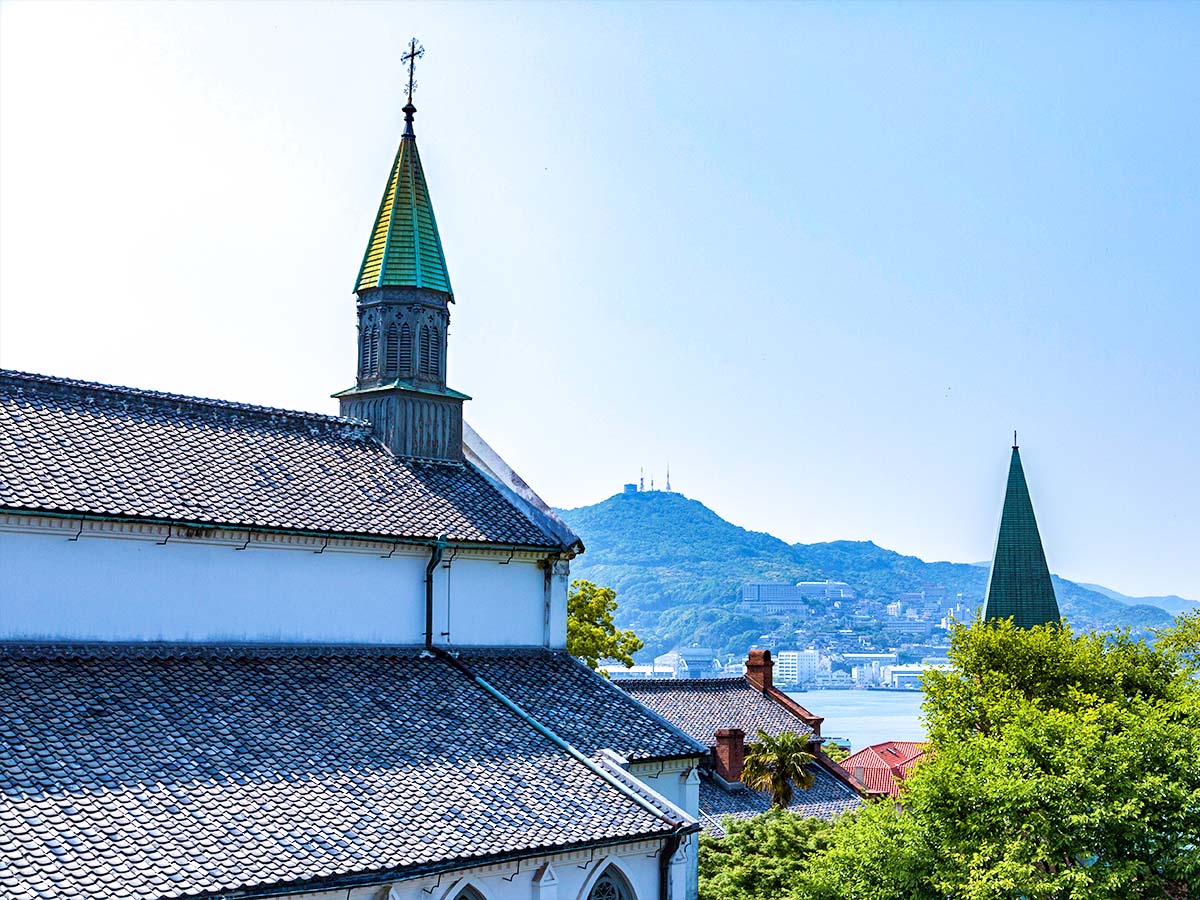
Oura Cathedral is Japan’s oldest standing church and a UNESCO World Heritage site, marking the historic 1865 “Discovery of the Hidden Christians.”
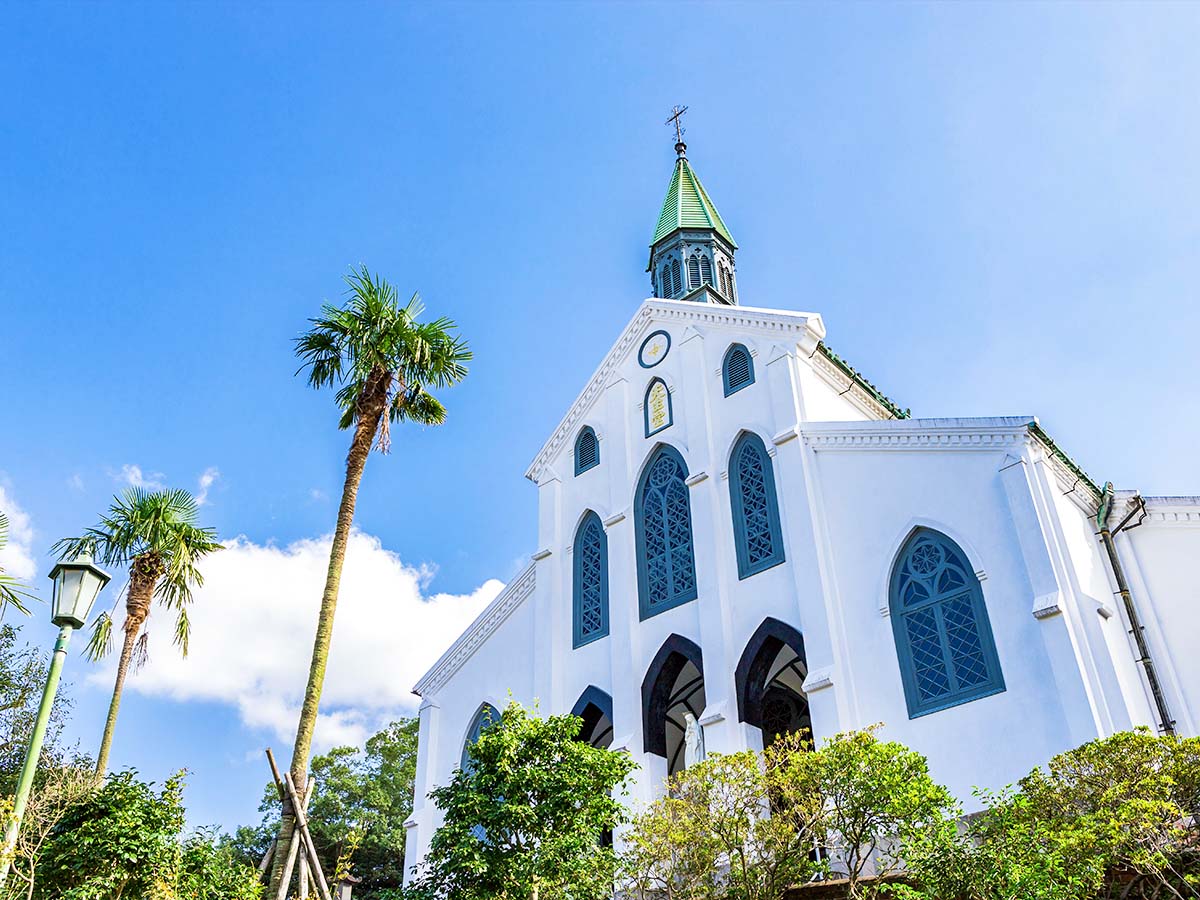
Oura Cathedral stands as a definitive landmark of Japan’s re-entry into the global community during the late Edo period. Completed in 1864, the structure was commissioned by French missionaries Fathers Furet and Petitjean to serve the foreign community in Nagasaki. The architectural execution was led by the master carpenter Hidenoshin Koyama, resulting in a refined Gothic-inspired design that harmoniously blends European ecclesiastical forms with local craftsmanship. Originally constructed with wooden walls, the edifice was later reinforced with brick during late 19th-century renovations, though the interior maintains much of its original mid-century character.
The cathedral holds a singular place in global heritage as the site of the 1865 “Discovery of the Hidden Christians”. Shortly after its consecration, a group of local practitioners approached Father Petitjean, revealing a spiritual continuity that had long been presumed lost. This profound cultural moment is reflected in the building’s orientation. Its facade faces Nishizaka Hill, the site of the execution of the 26 Martyrs of Japan to whom the church is dedicated.
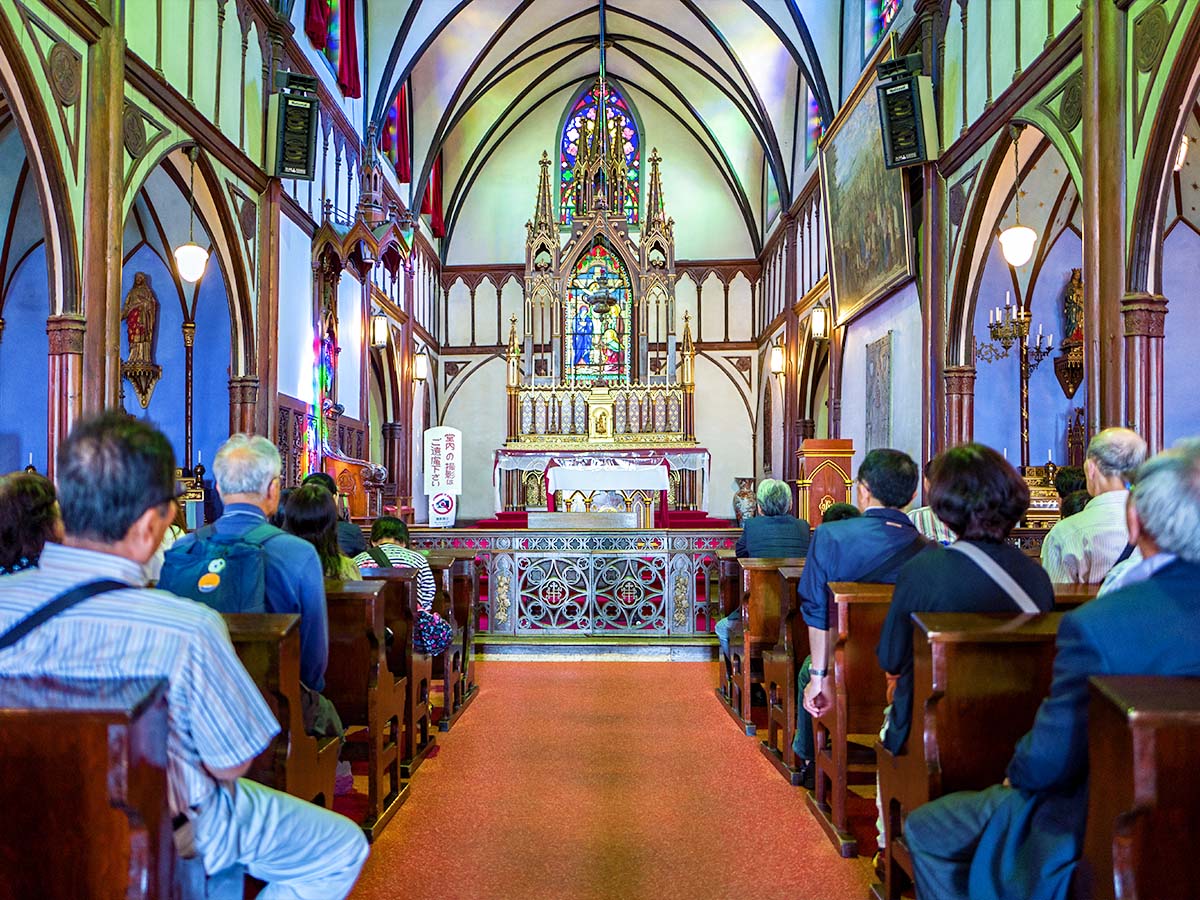
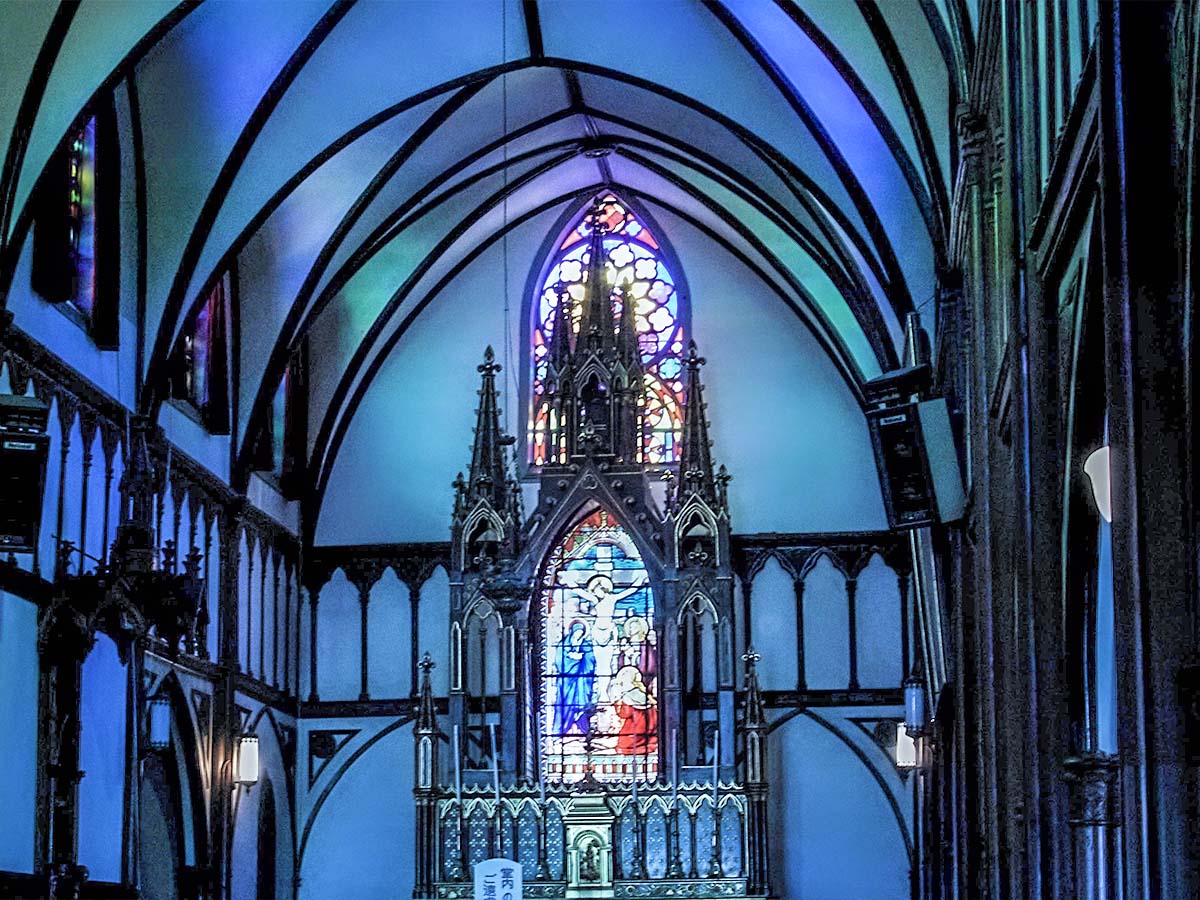
Designated as a National Treasure in 1933 and again in 1953 following meticulous post-war restorations, Oura Cathedral is now a cornerstone of the UNESCO World Heritage listing for the Nagasaki region. Inside, light filtered through century-old stained glass illuminates a space defined by its quiet dignity and historical weight. It remains an essential destination for those seeking to understand the authentic, resilient link between Japanese history and European Catholic tradition.