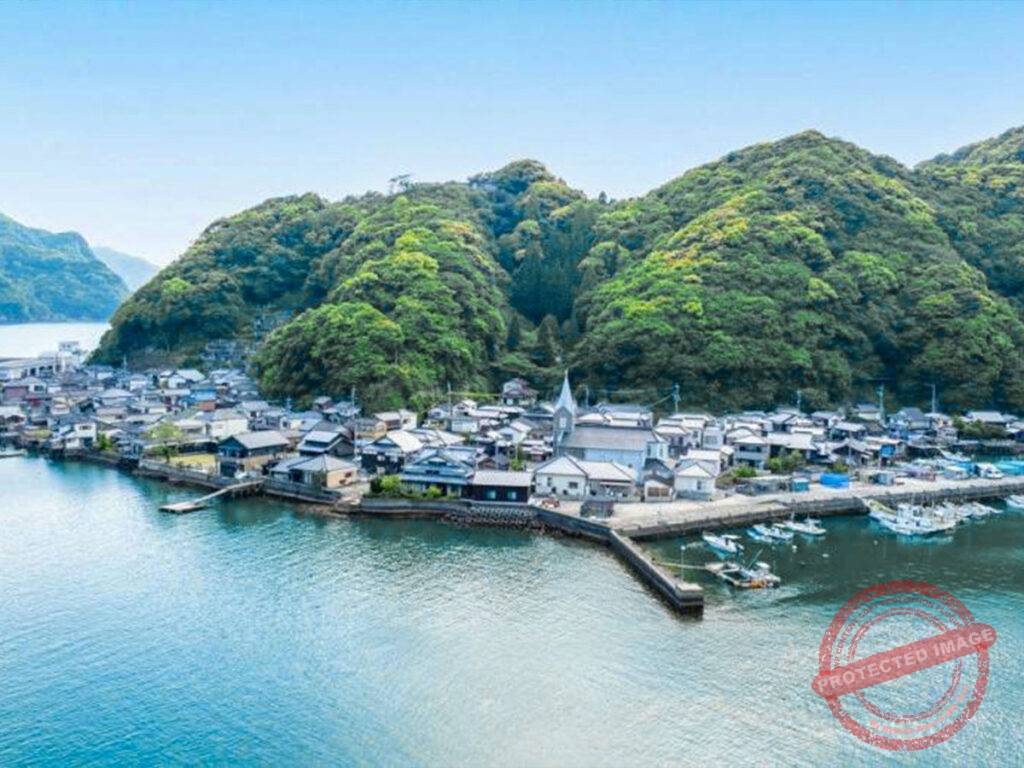
Sakitsu Village is a serene coastal settlement in southern Shimoshima that preserves a singularly evocative chapter of the “Hidden Christian” narrative. Unlike the mountainous retreats of other regions, the faith here was deeply intertwined with the sea. During the era of prohibition, the community maintained a highly organized but discreet spiritual life, adapting their devotion to the materials of their trade. In a remarkable example of cultural inculturation, practitioners venerated the iridescent patterns found inside abalone and pen shells as symbols of the Virgin Mary, finding the sacred within the tools of their daily labor.
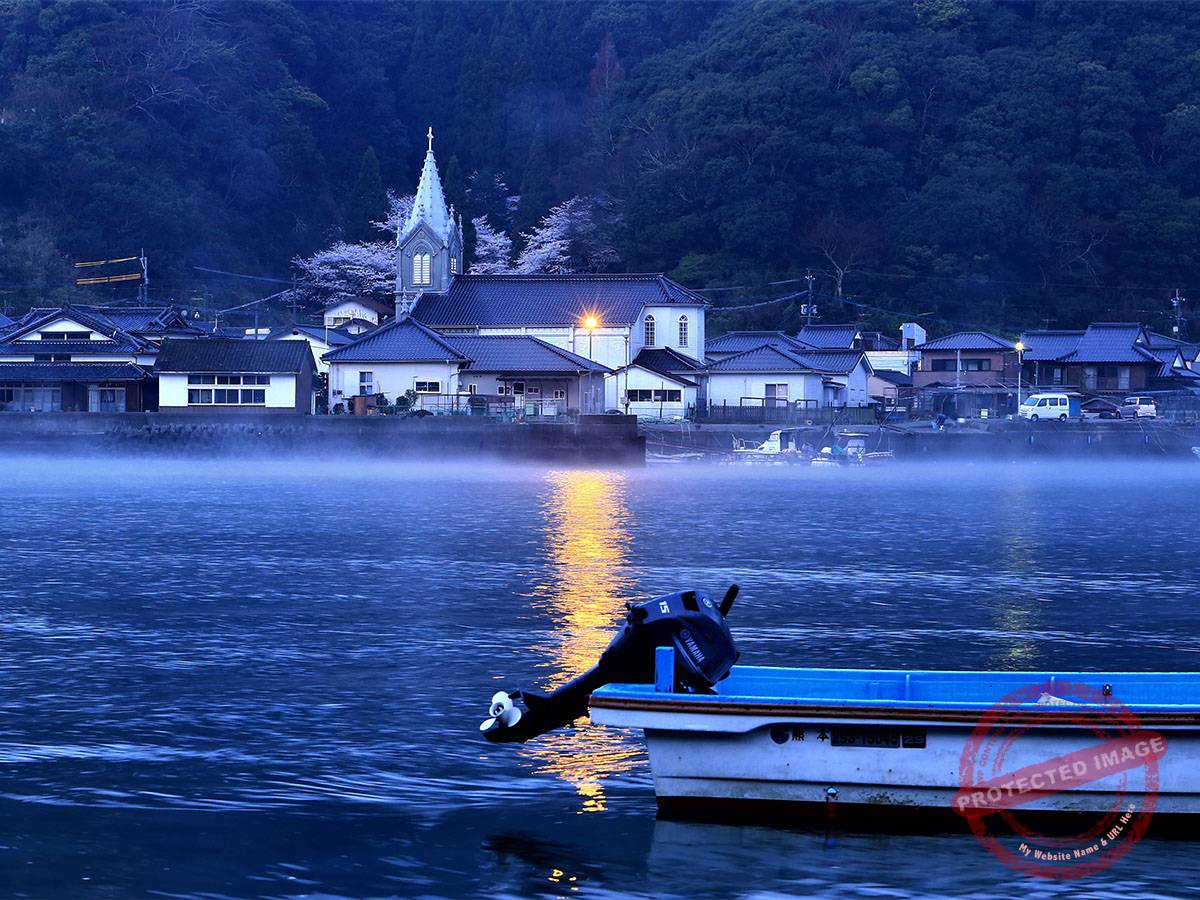
The village is architecturally defined by the Sakitsu Church, a Gothic-style structure completed in 1934 under the guidance of Father Halbout. In a symbolic act of restoration, the church was built on the very site where the fumi-e (icon-trampling) ceremonies once took place. The interior is noted for its rare use of traditional tatami mat flooring, a distinctive Japanese adaptation within a Western ecclesiastical frame.
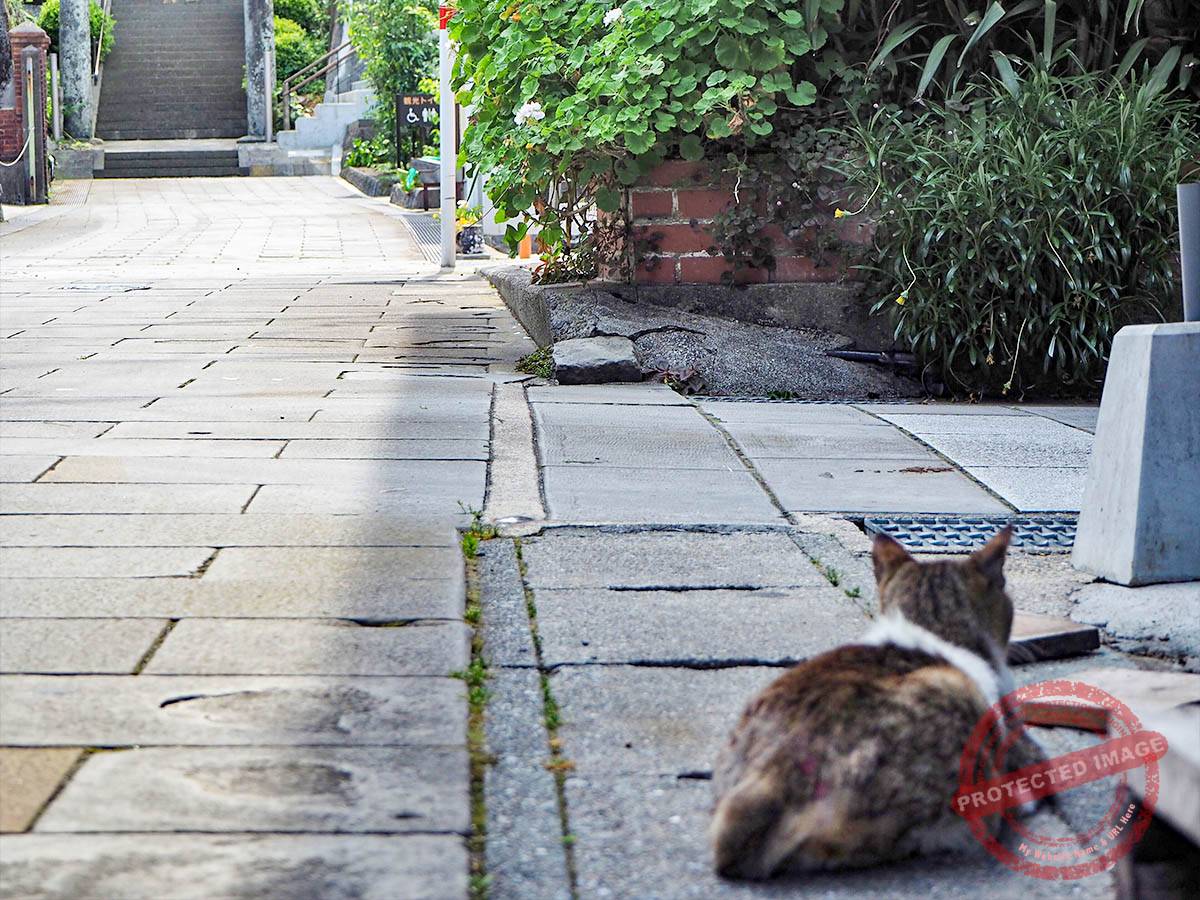
Perhaps the most culturally significant aspect of Sakitsu is the “Path of Meditation”, which physically links the church with the Sakitsu Suwa Shrine. This proximity illustrates a history of religious coexistence and the nuanced ways in which the community navigated their secret identity alongside indigenous Shinto beliefs. Today, the village remains an active fishing port, offering visitors an understated and authentic sense of place where the rhythms of the tide and the legacy of resilience continue to coexist. |