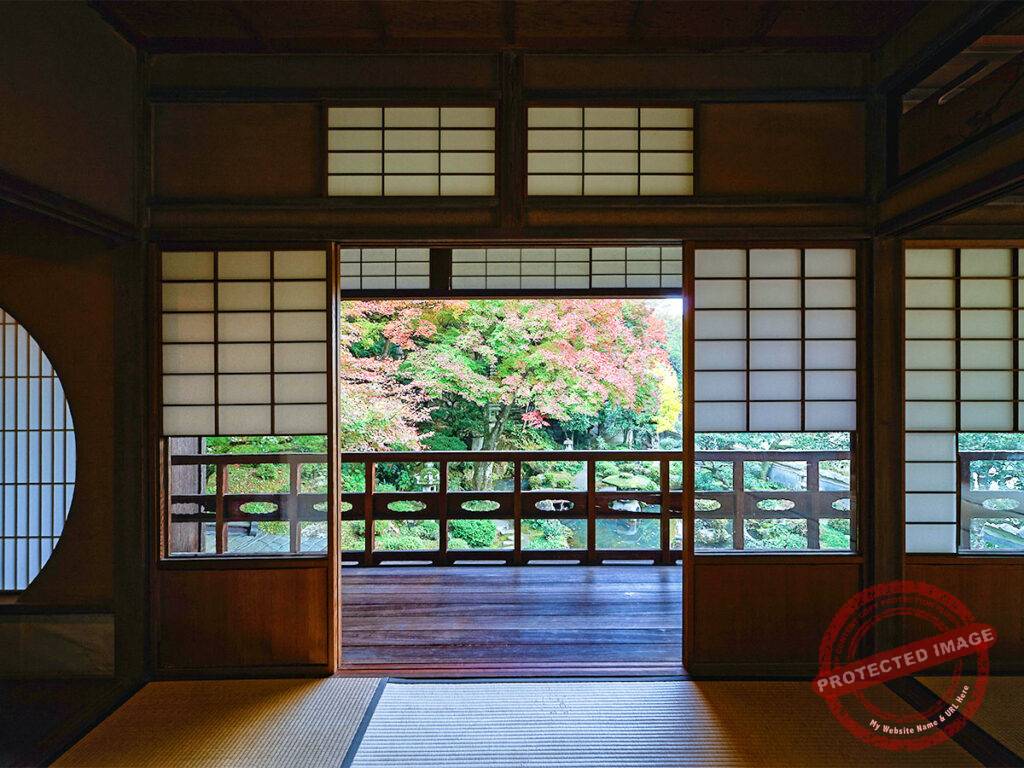
The Hori Japanese Garden is a designated National Scenic Beauty site, representing the ancestral estate of the Hori family, who managed the influential copper mines of the region for centuries. The garden was meticulously developed during the mid to late Edo period, showcasing a “chisen-kaiyu-style” (strolling pond) design that harmonizes with the dramatic mountain backdrop of the valley. The construction of the central villa and the accompanying tea houses utilizes high-quality timber and traditional joinery, reflecting the immense cultural and economic influence the family held within the Tsuwano Domain.
The garden’s significance lies in its masterful use of “shakkei”, or borrowed scenery, where the surrounding forested peaks are integrated into the visual composition of the ponds and stone arrangements. The craftsmanship of the stone paths and the placement of ornamental lanterns demonstrate a disciplined adherence to classical aesthetic principles. This sense of order is balanced by the natural character of the site, which is particularly renowned for its vibrant autumn foliage. During the peak of the season, the fiery maples create a vivid contrast against the weathered wood of the historic residence.
Visiting the Hori Garden offers an authoritative perspective on the private lives of the regional elite during Japan’s pre-modern era. The atmosphere is one of composed stillness, emphasizing a profound connection between architectural form and the natural environment. It remains a vital cultural anchor, preserving an authentic sense of place within the quiet landscapes of Shimane Prefecture. |