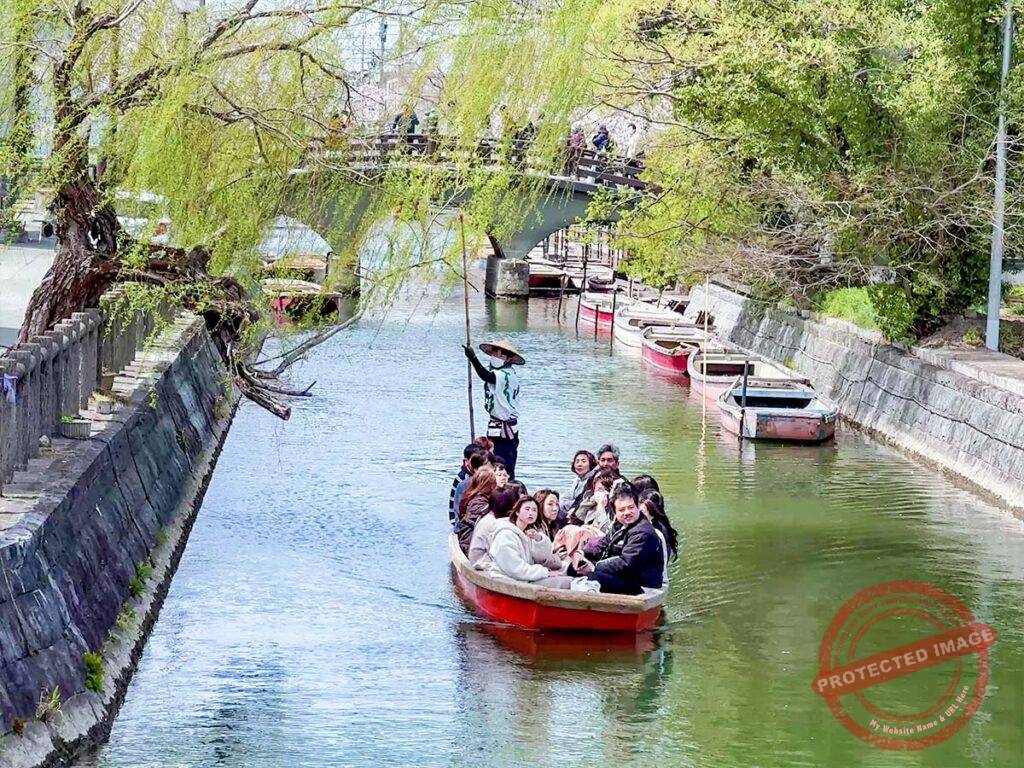
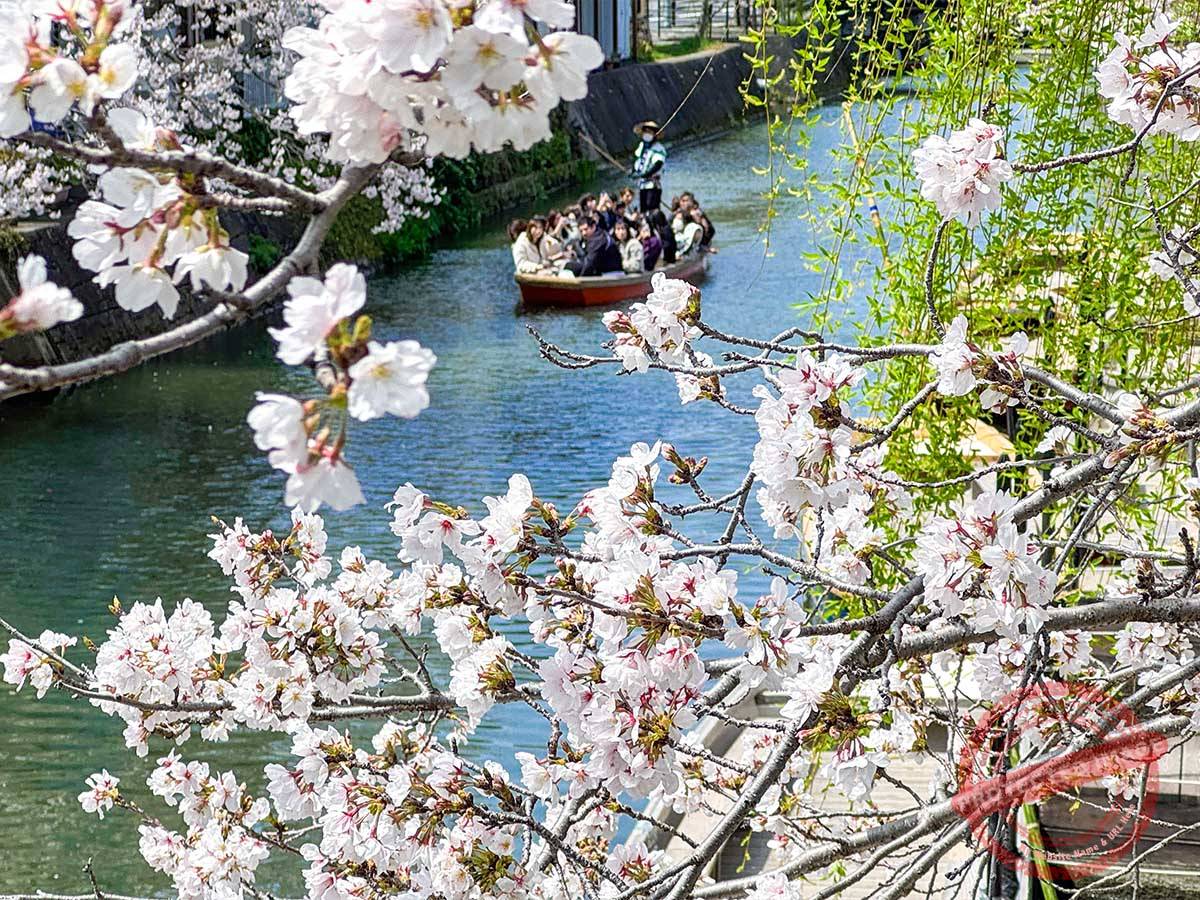
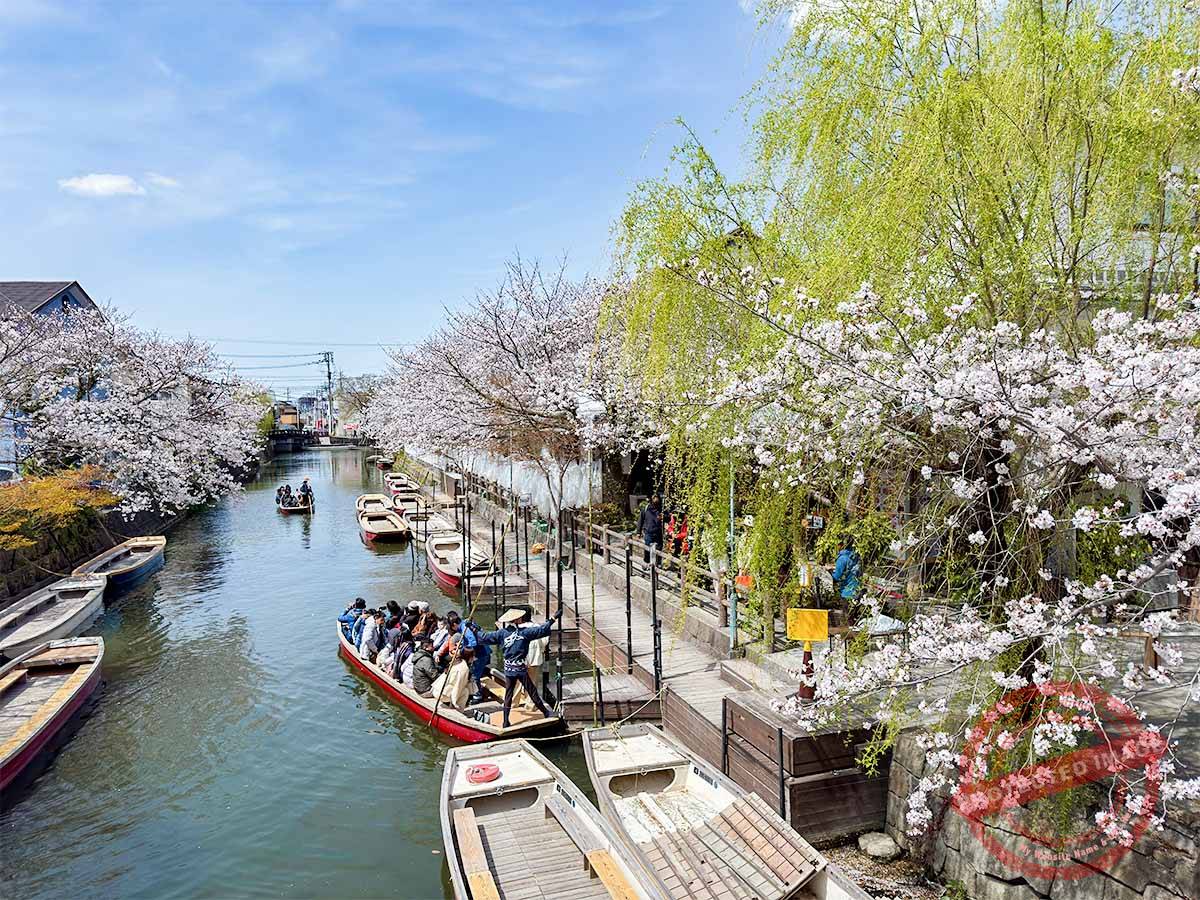
The waterways are architecturally and historically defined by their origin as a sophisticated moat system for Yanagawa Castle, established during the Edo period. These canals, spanning over 470 kilometers, were engineered with a disciplined approach to water management, serving for irrigation, flood control, and defense. The boat journey is conducted on flat-bottomed “donko-bune”, which are expertly navigated by boatmen using a single bamboo pole. This rhythmic and manual mode of transport allows for a quiet transition through low stone bridges and past “namako-kabe” (diamond-patterned) storehouses, reflecting the structural elegance of a preserved samurai district.
The significance of the boat ride lies in its role as a living museum of Yanagawa’s poetic and cultural heritage. The willow-lined banks and seasonal flora provide a curated natural backdrop that has long inspired Japanese literature and art, most notably the works of the poet Kitahara Hakushu. Along the route, visitors encounter the “Ohana” estate, the former residence of the Tachibana clan, which features a sophisticated Western-style mansion and a Japanese stroll garden. This blend of international and traditional aesthetics highlights the city’s role as a cultural anchor in the region. A defining element of the experience is the opportunity to sample “Unagi no Seiromushi” (steamed eel), a culinary specialty of Yanagawa that is often served in the historic eateries lining the canals.
For the international traveler, the Yanagawa River Boat Ride offers a composed and intellectually rewarding atmosphere. It provides a polished perspective on how Japanese urban design successfully integrated water into daily civic life while maintaining a sense of poetic stillness. The experience remains a definitive destination for those wishing to explore the intersection of feudal engineering, seasonal aesthetics, and the enduring charm of a waterside community. |